UP’s STEM Programme Set to Reach Every Secondary School by 2025–26 – Digital Labs for Every Child
In a major push to transform how Mathematics and Science are taught, the Uttar Pradesh government has announced that its STEM programme will expand to all government‑aided and self‑financed secondary schools by the 2025–26 academic year. This means that, very soon, every secondary school student in UP – not just those in government schools – will have access to structured digital STEM support, turning classrooms into real “digital labs for every child.”
What Is UP’s STEM Programme?
Launched in 2023–24 in government secondary schools, UP’s STEM programme is not just another app or video library. It is a systemic effort under Samagra Shiksha (Secondary) to improve the quality of Mathematics and Science education across the state.
The core idea is simple: give teachers and students high‑quality, ready‑to‑use digital resources that make concepts clearer, practice more engaging, and learning more effective. These resources are aligned with the NCERT curriculum, so they fit seamlessly into what is already being taught in Class 9–12.
How the Digital STEM Lab Works
The programme is being implemented in collaboration with a digital learning platform that offers a clean, user‑friendly interface for both teachers and students. On this platform, schools get access to:
- Concept videos that explain tough topics in Maths and Science in a simple, visual way.
- Practice exercises and self‑assessment quizzes so students can test their understanding after each lesson.
- Unit tests and revision materials to prepare for exams and bridge gaps in learning.
- Bridge courses that help students catch up if they’ve missed key concepts in earlier classes.
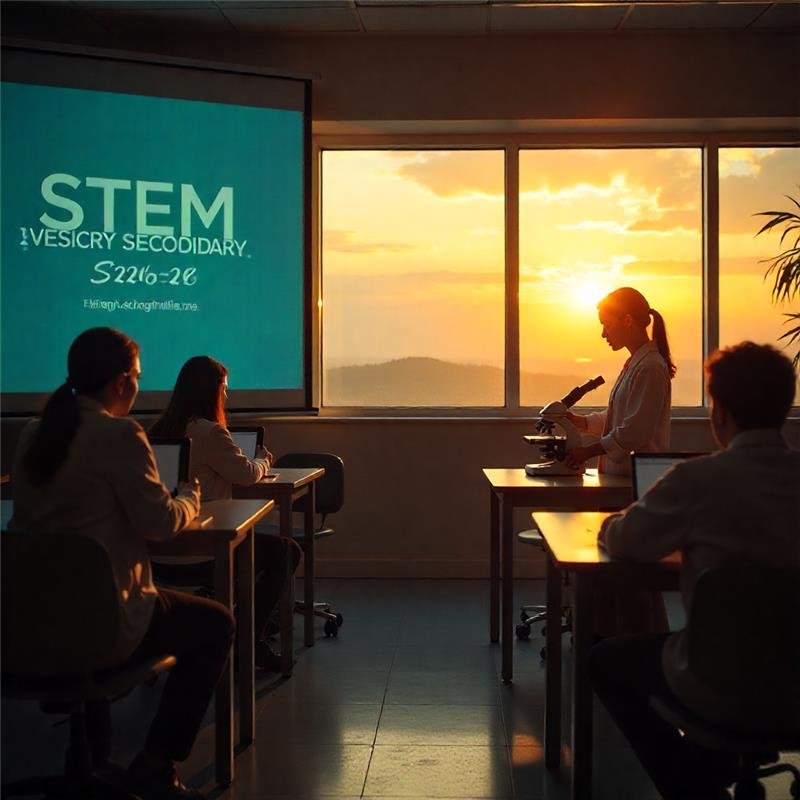
All of this is free and designed to be used in smart classrooms, ICT labs, or even on personal devices, making it possible to create a “digital lab” experience even in schools with limited infrastructure.
Why This Expansion Matters
Until now, this structured STEM support was available only in government secondary schools. By 2025–26, it will be extended to all government‑aided and self‑financed secondary schools, which is a game‑changer for several reasons:
- Equity in STEM Education
Students in aided and private schools will now have the same level of digital support as those in government schools, reducing the gap in access to quality STEM resources. - Better Conceptual Understanding
Instead of just memorising formulas and definitions, students will be able to watch, practice, and revise concepts repeatedly, leading to deeper understanding and better board exam performance. - Teacher Empowerment
Teachers get ready‑made teaching–learning materials, so they can focus on innovative, participatory classroom practices rather than spending hours creating notes and worksheets. - Digital Literacy & Future Readiness
Regular use of the platform in smart classrooms and ICT labs will also build students’ digital skills, preparing them for higher education and careers in a tech‑driven world.
What Schools Need to Do Now
The state has already issued a notice to district inspectors of schools and joint directors, asking them to direct principals and headmasters of all secondary schools (government, aided, and self‑financed) to:
- Encourage students to register on the digital learning platform.
- Monitor the regular use of the platform in classrooms and labs.
- Integrate the digital resources into the daily teaching–learning process for Maths and Science.
For school leaders, this is a clear signal: the future of STEM education in UP is digital, structured, and accessible to every child.
The Bigger Picture: UP’s Vision for STEM
This expansion is part of UP’s larger vision to make secondary education more concept‑driven, practice‑rich, and student‑centred. By combining:
- Digital STEM resources (videos, quizzes, tests),
- Smart classrooms and ICT labs, and
- Teacher support and monitoring,
UP is creating a model where no student is left behind in Maths and Science, and every school becomes a mini “digital lab” for STEM learning.
For educators and edtech partners, this is a powerful opportunity to show how digital tools, when integrated well, can transform traditional classrooms into vibrant, future‑ready learning spaces.