CBSE competency-based exams: Why robotics projects suddenly matter more
CBSE’s shift to competency-based exams is quietly rewriting the rules of learning in Indian schools—especially for subjects like robotics. Suddenly, those “extra” robotics projects are no longer just cool add-ons; they’re becoming powerful evidence of real understanding.
New CBSE wave: From rote to real
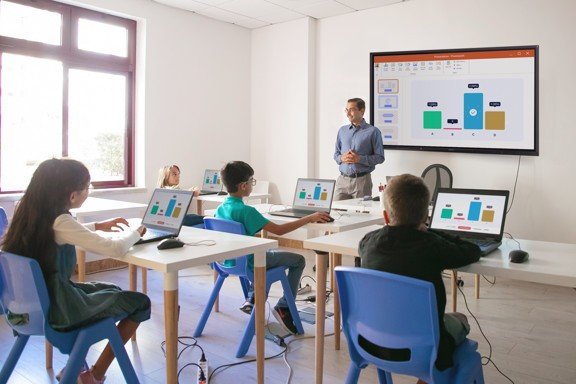
For years, many students prepared for board exams by memorising definitions, formulas, and long answers. Marks often depended on how well they could reproduce textbook content on exam day. But CBSE’s competency-based exam framework is changing that. These exams focus more on what a student can do with knowledge rather than what they can recall.
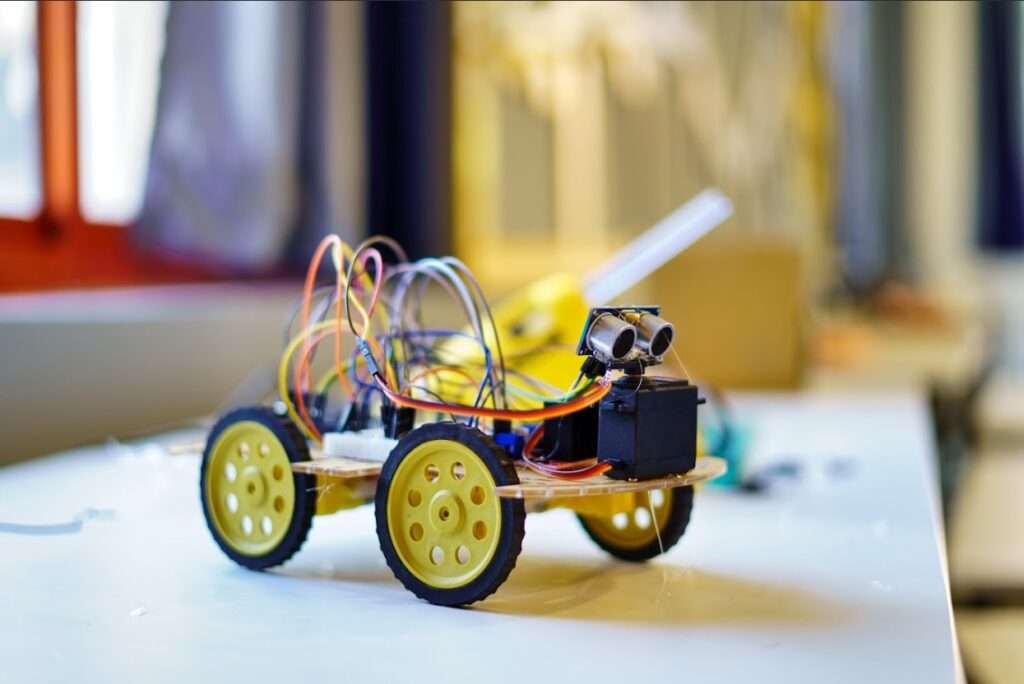
Competency-based questions test application, analysis, problem-solving, and real-world use of concepts. That means a student who has built a small line-following robot or coded a traffic signal model in a robotics project has a clearer edge. They have already worked with logic, sensors, flowcharts, and algorithms—exactly the kind of thinking that competency-based questions demand.
A classroom story: Two students, one exam
Imagine two Class 9 students: Riya and Arjun.
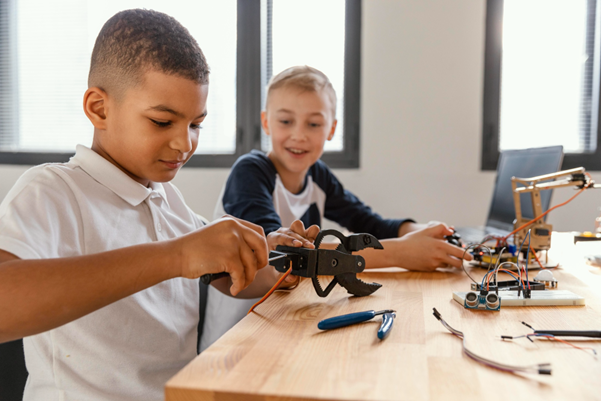
Riya studies science the traditional way—notes, guides, and repeated revision. She scores well in term tests, especially on direct questions. Arjun, on the other hand, spends extra hours in the school’s STEM lab. He builds a simple obstacle-avoiding robot using sensors and codes it using block programming. When their science paper includes a competency-based question asking how sensors could be used to prevent accidents in factories, Arjun doesn’t need to guess. He has seen sensors work. He simply applies his project experience to the question.
This is exactly why robotics projects now matter more. They turn abstract ideas into lived experiences, making students naturally better at competency-based questions.
Why robotics aligns perfectly with competency-based learning
Robotics is not just about building cool machines. It naturally brings together physics, maths, coding, and design thinking in one hands-on experience. Each project requires students to:
- Identify a real-world problem (like waste management, traffic control, or automation).
- Break it into smaller logical steps.
- Design, prototype, test, fail, and improve.
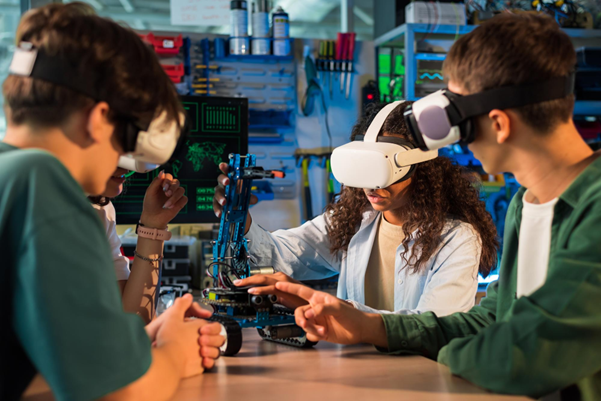
These steps mirror the core competencies CBSE is increasingly assessing: critical thinking, creativity, problem-solving, collaboration, and technological literacy. When students work on robotics projects, they are unknowingly practising exactly what competency-based exams want to measure.
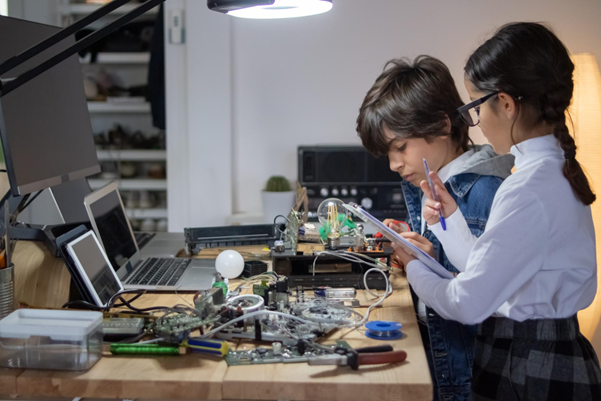
So, while a textbook might show a circuit diagram, a robotics project makes that circuit come alive through LEDs, motors, or sensors. This “learning by doing” becomes a powerful preparation tool for higher-order questions.
How schools can integrate robotics with CBSE competencies
Robotics doesn’t have to sit outside the curriculum as a fancy club activity. Smart schools are beginning to integrate robotics projects with CBSE learning outcomes. For example:
- In science, a unit on electricity can be linked to building a simple robot or an automatic streetlight model.
- In maths, concepts like angles, coordinates, and measurement can be taught via robot movement and navigation.
- In computer science, students can relate algorithms and flowcharts directly to robot behaviours.
Teachers can also turn robotics projects into assessment tools. Instead of only written tests, students can be evaluated on how well they design, explain, and refine a project. This creates a strong portfolio that reflects real competencies—perfectly aligned with CBSE’s direction.
For parents and students: Robotics as exam preparation, not a distraction
Many parents still worry that robotics is a “distraction” from board exam preparation. But in a competency-based world, it’s the opposite. Robotics helps:
- Strengthen conceptual clarity through hands-on practice.
- Improve confidence in applying knowledge to unfamiliar situations.
- Build communication skills when students present or explain their projects.
In storytelling terms, the narrative is shifting: the child who plays with robots after school is no longer just “having fun”—they may actually be preparing more effectively for the new-style questions that leave pure rote learners confused.
The future belongs to builders, not memorisers
CBSE’s competency-based exams are sending a clear message: marks will increasingly favour those who can think, create, and apply. Robotics projects sit right at the heart of this shift. They transform students from passive receivers of information into active problem-solvers and innovators.
For schools, it’s time to move robotics from the sidelines to the core of learning. For students, saying “yes” to a robotics project today might be the smartest way to prepare for tomorrow’s exams. And for parents, supporting hands-on STEM work is no longer optional—it’s becoming essential in a world where competencies matter more than copied answers.