
Robotic Revolution: Tamil Nadu’s Hands-On STEM Labs Transform School Education
Tamil Nadu is quietly scripting a STEM revolution in its government schools. In classrooms that once relied only on blackboards and textbooks, students are now assembling robots, programming sensors, and experimenting with drones. The state’s new hands-on robotics and STEM Education labs are not just adding technology to schools—they are changing how children learn, think, and imagine their future.
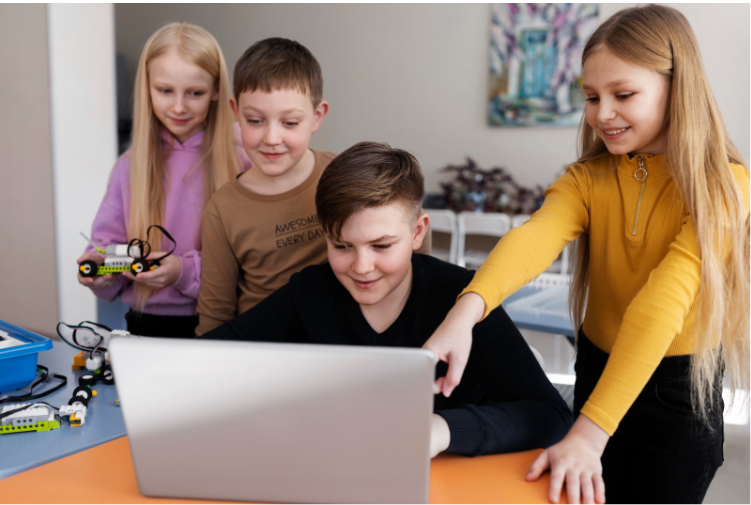
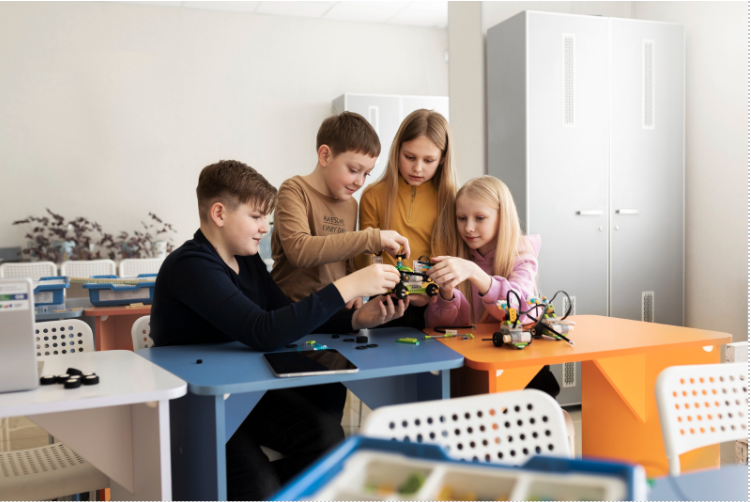
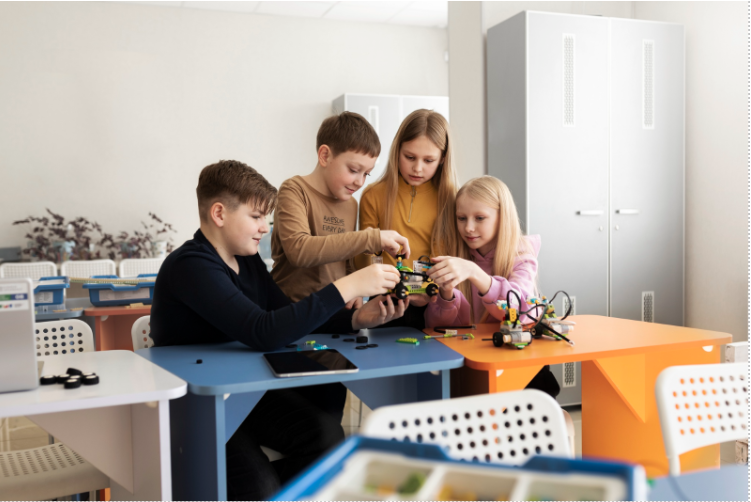
At the heart of this initiative is a simple yet powerful idea: students learn best by doing. Instead of memorising definitions of “sensors” and “motors”, students are now wiring them, coding them, and watching their creations come alive. In one government school, a group of Class 8 students recently built a line-following robot that can navigate a simple path on the floor. For many of them, it was the first time they realised that technology is not something distant and complex—it is something they can build with their own hands.
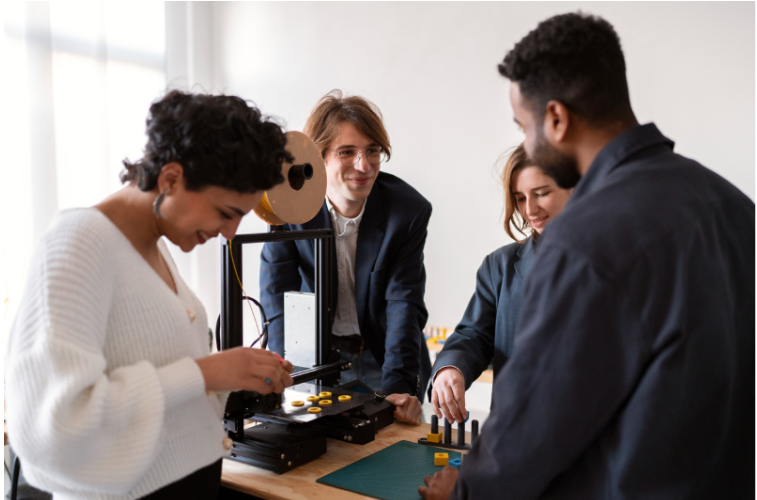
The state’s plan focuses on setting up dedicated robotics and STEM labs in government schools, especially for students from Classes 6 to 9. These labs are equipped with robotics kits, microcontrollers, basic electronics components, laptops, and in some cases, drone and IoT modules. The vision is clear: expose students early to emerging technologies so that coding, electronics, and automation become as familiar as maths and science. Each lab is designed as a “learning playground” where students can experiment, fail, fix, and improve.
A key strength of the programme is its emphasis on hands-on learning. The proposed model allocates most of the timetable to practical work rather than theory. Students are guided through structured projects: building obstacle-avoiding robots, designing simple security systems with sensors, or creating automatic lighting solutions. Teachers are trained to act as mentors, helping students turn their ideas into working prototypes. This project-based learning approach not only boosts technical skills but also builds confidence, teamwork, and problem-solving abilities.
What makes this transformation even more remarkable is that it is reaching students who often have the least access to technology. Many of these government school children do not have computers or internet at home. For them, the robotics lab is more than a classroom—it is their first window into the world of AI, automation, and Industry 4.0. By placing advanced tools in the hands of these students, the Tamil Nadu government is attempting to narrow the digital divide and ensure that future jobs in robotics and automation are not limited to a privileged few.
The initiative is also aligned with the broader goals of the National Education Policy, which stresses experiential learning, skill development, and integration of coding and computational thinking in school education. By introducing robotics and STEM labs at the middle-school level, Tamil Nadu is positioning its students to be future-ready for careers in engineering, AI, data science, and automation. These experiences can later translate into participation in national and international competitions, hackathons, and innovation challenges.
Early feedback from schools suggests that student interest in science and maths has risen significantly where such labs are introduced. Concepts that once felt abstract—like sensors, circuits, algorithms—now make sense when linked to real projects. Teachers report that even students who were previously disengaged are now eager to attend lab sessions, ask questions, and showcase their prototypes during school events. Parents, too, are beginning to see government schools as spaces of innovation rather than mere exam centres.
For MakersMuse and the wider STEM ecosystem, Tamil Nadu’s robotics lab initiative signals a powerful shift: when government schools embrace hands-on STEM education, the impact is both deep and wide. It nurtures a generation of creators instead of mere consumers of technology. If sustained and scaled, this robotics revolution in Tamil Nadu’s classrooms could become a model for other states in India—and a reminder that the future of education lies in learning by building, experimenting, and imagining without limits.