

Introduction
Space science is becoming an increasingly engaging part of STEM learning as students gain opportunities to understand rockets, satellites, space exploration and the technologies used beyond Earth. World Space Week 2026 is providing another platform for connecting students with these areas through educational and outreach activities.
In India, organisations associated with the Indian Space Research Organisation are using the occasion to introduce students to space technology and encourage curiosity about science and engineering. The celebrations are being coordinated by the Vikram Sarabhai Space Centre, Liquid Propulsion Systems Centre, ISRO Inertial Systems Unit and Indian Institute of Space Science and Technology.
The theme for World Space Week 2026 is “Rocket Revolution”, which focuses on changes in launch systems and the growing accessibility of space through developments involving commercial organisations, academia and new space companies.
World Space Week Connects Space Science With STEM Learning
Space science education can help students connect classroom concepts with technologies that have practical applications. Physics, mathematics, electronics, computer science and engineering all contribute to the development of spacecraft and launch systems.
World Space Week provides an opportunity to present these subjects through a broader context. Instead of studying scientific principles only as textbook concepts, students can see how those principles contribute to rockets, satellites, navigation systems and other space technologies.
The 2026 theme also highlights how the space sector is changing. The VSSC explains that access to space is expanding beyond traditional government programmes, with commercial launch providers, academic institutions and startups becoming increasingly involved.
This makes space science education relevant to a wider range of STEM interests. Students interested in physics may become curious about propulsion, while those interested in computing may explore satellite data, automation or simulation.
ISRO Scientists Take Space Technology Into Schools
One of the student-focused activities organised in Kerala is a series of interactive lectures on space technology. Scientists from ISRO centres including VSSC, LPSC, IISU and IIST are delivering sessions for students during World Space Week.
The sessions are available through on-campus and online formats, allowing schools to participate in different ways. This approach can help bring expert knowledge into classrooms without requiring every student to visit a research or space facility.
Interaction with scientists can also give students a clearer understanding of how scientific careers work. Rather than presenting STEM careers only through conventional descriptions, direct interaction can help students understand the questions scientists investigate, the technologies they develop and the skills involved in research.
For teachers, such programmes can also provide useful material for connecting science lessons with current developments in space technology.
Students Explore Space Technology Through Creative Activities
World Space Week 2026 is not limited to lectures. Students are also being encouraged to express their understanding of space technology through creative work.
The “Your SPACE” student activity invites schools to present ideas related to space technology for sustainable local development through video presentations.
This kind of activity gives students an opportunity to think beyond space exploration itself. Space technologies can support communication, weather observation, environmental monitoring, navigation and disaster management. Asking students to consider local applications can therefore encourage them to connect space science with problems they see around them.
Such activities also support communication and presentation skills. Students need to understand a scientific idea, identify its relevance and explain it clearly to an audience.
Why Space-Based Learning Matters in Schools
Space science can serve as a useful interdisciplinary entry point into STEM education. A single space-related project can involve several subjects at once.
For example, students can study the physics of motion while learning about rockets. Mathematics can be applied to trajectories and measurements. Computer science can be introduced through simulations and automation. Environmental science can be connected with Earth observation satellites.
This interdisciplinary approach is particularly useful for experiential learning because students can see how different areas of knowledge work together.
The VSSC also describes World Space Week as an opportunity to inspire future workers, educate the public about space activities and promote international cooperation in space outreach and education.
Space Education Can Encourage Scientific Curiosity
One of the strengths of space science education is its ability to encourage questions. Students may begin with simple questions about how rockets launch or how satellites remain in orbit and gradually move towards more complex scientific concepts.
Curiosity is important in STEM because scientific learning involves observing, questioning, testing and refining ideas. Space-related examples can make these processes easier to visualise.
Teachers can also use space topics to introduce students to research-based learning. A lesson on satellites, for instance, can lead into discussions about remote sensing, climate observation, communication and geographic information.
The aim is not necessarily to turn every student into a space scientist. Instead, space science can provide an engaging context through which students develop scientific reasoning and an interest in technology.
India’s Space Ecosystem Creates Wider Learning Opportunities
India’s space ecosystem offers students exposure to a broad range of scientific and engineering fields. ISRO’s centres work across areas connected with launch vehicles, satellites, propulsion, navigation and space science.
The U R Rao Satellite Centre is also highlighting World Space Week 2026 and continues to provide information about student access to its space exhibition. The centre describes these visits as part of ISRO’s efforts to make space science accessible to students.
These outreach opportunities can complement formal classroom learning. A student who encounters a satellite model, watches a demonstration or speaks with a scientist may gain a more concrete understanding of concepts that can otherwise seem abstract.
Schools Can Build Space Science Into STEM Activities
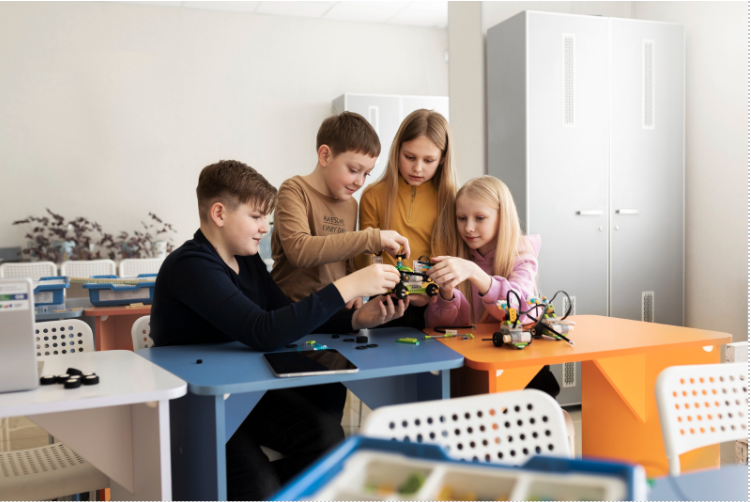
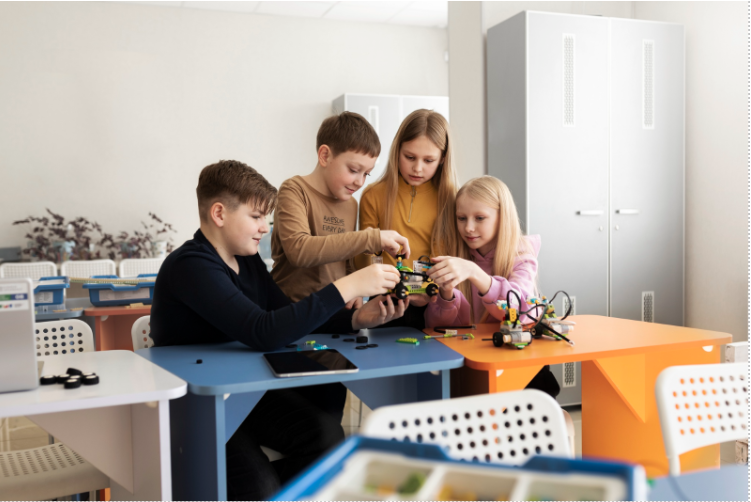
Schools can use space-related events as starting points for classroom projects. Students can investigate rocket propulsion, create simple models, study satellite applications or examine how space technology supports environmental monitoring.
Teachers can also encourage students to investigate local problems that could benefit from space-based technologies. This can turn space science from a purely theoretical topic into an exercise in problem-solving.
The emphasis should remain on inquiry and understanding rather than simply producing a finished model. Students benefit when they are encouraged to ask why a technology works, identify limitations and consider possible improvements.
Conclusion
World Space Week 2026 is giving students an opportunity to engage with space science through lectures, creative activities and outreach programmes. In Kerala, ISRO-associated organisations are bringing scientists and space technology discussions closer to schools, while student activities encourage learners to consider practical applications of space technology.
For STEM education, such programmes show how science can move beyond textbooks and become connected with real technologies and research. Space science education can help students build curiosity, understand interdisciplinary connections and see how physics, mathematics, engineering and computing contribute to major technological developments.
FAQs
World Space Week 2026 is an annual international celebration of space science and technology. The 2026 theme is “Rocket Revolution”, focusing on developments that are changing access to space and launch systems.
Students can participate through space technology lectures, creative activities and outreach programmes. In Kerala, ISRO-associated organisations are offering interactive lectures and a student video activity connected with space technology and sustainable local development.
Space science combines concepts from physics, mathematics, engineering, electronics and computing. It can therefore provide an interdisciplinary context for STEM learning and practical problem-solving.
Yes. Teachers can use topics such as rockets, satellites, Earth observation and space technology to develop experiments, research activities, models and problem-solving projects.
Space outreach can help students interact with scientists, understand real applications of science and learn about potential STEM careers. It can also encourage curiosity and scientific thinking.