Quick Guide for Parents to STEM in Education
STEM in education has completely changed how children see, analyse, and interact with their environment. Children are not just forced to remember correct answers – they are encouraged to think and question, and then create their own correct answers through logic.
Parents need to be aware of STEM in education, since their children’s future will depend not only on how well they remember things but also on how well they think.
Our world has changed a lot in the last few decades due to tremendous advances in technology, automation, and information-based systems. Learners will need to be thinkers who can analyse information and solve new problems. Children are encouraged to think and analyse through STEM education.

STEM is made up of four major disciplines: science, technology, engineering, and mathematics. Each of these disciplines offers a different type of thinking that can improve a person’s cognitive skills.
- Science: develops observation, experimentation, and evidence-based thinking
- Technology: builds digital understanding and tool awareness
- Engineering: strengthens design thinking and structured problem-solving
- Mathematics: develops logic, precision, and pattern recognition
Together, they create learners who think systematically and act independently.
Does STEM Change the Way Children Learn?

STEM learning replaces passive instruction with active discovery. Children are encouraged to explore concepts through doing rather than only reading about them. This shift improves comprehension, retention, and curiosity.
Instead of treating subjects as isolated theories, STEM connects them to real experiences. This helps children understand not just what happens, but why it happens.
Concept-to-Experience Learning Examples:
- Gravity is understood by comparing the fall of different objects
- Ratios become clear while adjusting recipes in cooking
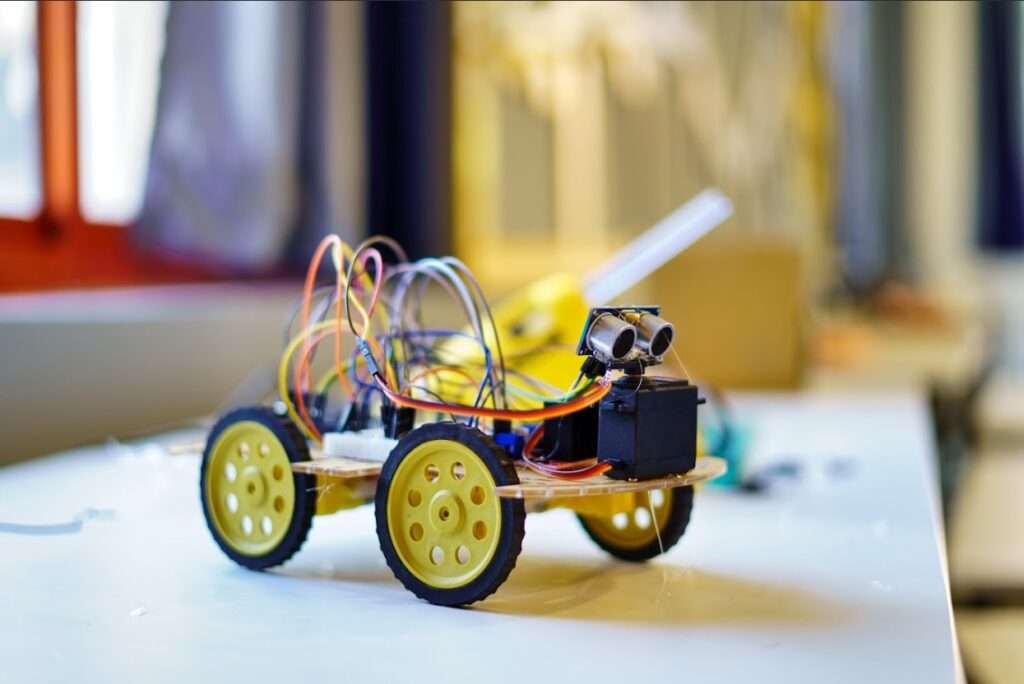
- Coding logic is built through step-by-step interactive challenges
- Engineering principles emerge while constructing stable structures
This learning approach reduces dependency on memorisation and increases analytical thinking. It also builds comfort with trial-and-error, which is essential for long-term learning growth.
Why Parents Are Central to STEM in Education
The role of parents in this context is critical since their attitude toward curiosity, errors, and hard work directly impacts their child’s attitude toward learning challenges.
A child who is encouraged will be more willing to explore new and complex ideas without any apprehension. On the other hand, a child who is pressured to be correct will not be able to explore and be curious.
Effective Ways Parents Support STEM Learning:
- Encourage questions that begin with “how” and “why”
- Allow children to test ideas even if outcomes are uncertain
- Focus on learning effort instead of final answers
- Relate academic concepts to real-life situations
Over time, these interactions develop independent thinking habits. Children begin to approach problems with confidence rather than hesitation.
STEM Learning Through Everyday Environments

One of the strongest aspects of STEM education is its presence in daily life. Learning does not require specialised tools when observation is actively encouraged.
| Everyday Activity | STEM Concept Developed |
| Cooking | Measurement, chemical reactions, and sequencing |
| Grocery shopping | Budgeting, estimation, and numerical reasoning |
| Gardening | Biological systems, growth cycles, and environmental awareness |
| DIY building or puzzles | Spatial reasoning, engineering logic, and problem-solving |
Beyond these, parents can create informal learning moments through simple interactions such as comparing weights, estimating distances, or tracking time during activities. These experiences help children see STEM not as a subject, but as a way of understanding everyday decisions.
Why Should Parents Begin Early with STEM Learning?
The value of STEM education extends far beyond school years. It shapes how children think, evaluate, and respond to challenges throughout life.
Long-Term Developmental Outcomes:
- Stronger decision-making through logical evaluation
- Improved adaptability in changing environments
- Enhanced creativity and innovation capacity
- Greater resilience in problem-solving situations
- Continuous curiosity and self-directed learning ability
These skills remain relevant in academic progression, career development, and everyday life decisions.
Confidence Development Through Practical Learning
Confidence in STEM grows when children see tangible outcomes of their ideas. Unlike theoretical learning, STEM provides immediate feedback through visible results. This reinforces self-belief and encourages deeper engagement with learning challenges.
Examples of Confidence-Building Activities:
- Constructing simple electrical circuits that produce light or motion
- Designing basic coding projects with visual outputs
- Building structural models using everyday materials
- Solving real-world measurement or estimation problems
Equally important is how failure is perceived. In STEM learning, incorrect outcomes are not setbacks but data points. This mindset helps children develop resilience and persistence.
Collaboration Between Parents and Schools

STEM education becomes significantly more effective when reinforced across environments. Schools provide structured learning frameworks, while parents extend these ideas into everyday contexts.
This continuity strengthens understanding and reduces learning gaps.
Effective Collaboration Practices:
- Reinforcing classroom concepts through home-based examples
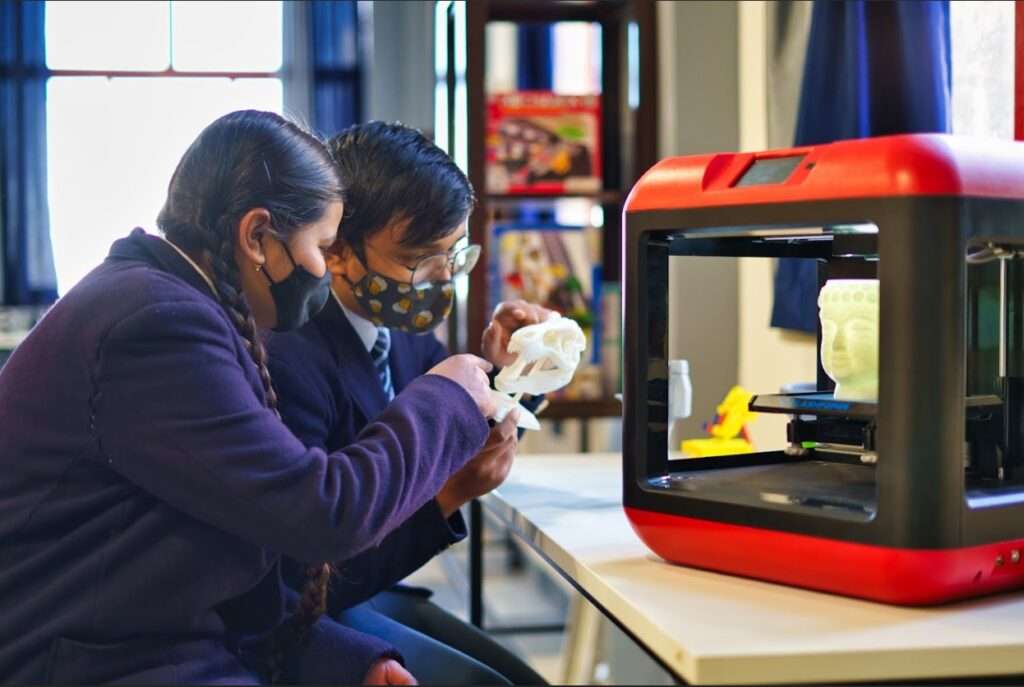
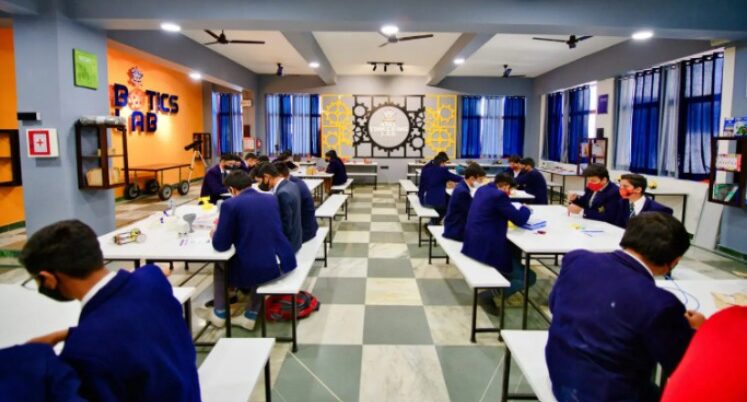
- Encouraging participation in STEM labs and project work
- Supporting curiosity-driven exploration rather than limiting questions
- Engaging in school-led STEM events and demonstrations
When both environments align, children experience learning as a continuous process rather than separate academic tasks.
Makers’ Muse Connects Parents and Learners in STEM Learning
Makers’ Muse plays an important role in bridging learning gaps between school and home. It creates shared STEM experiences where children actively learn together. This makes learning more structured, engaging, and meaningful for families.
- Instead of isolated learning, children participate in guided hands-on activities. Parents are not passive observers. They become part of the learning journey. This shared participation improves understanding and strengthens parent-child bonding naturally.
- Makers’ Muse focuses on practical, hands-on learning journeys that are easy to follow. Children build, test, and explore concepts step by step while parents observe and guide. This creates a strong connection between theory and real-world understanding.
- It transforms STEM into a collaborative family experience rather than an individual task. Parents gain clearer insight into how their children think and solve problems. Children, in turn, feel more confident while exploring complex ideas in a simple way.
Structured STEM Programs by Makers’ Muse
Makers’ Muse also offers structured programs designed to bring STEM learning into real environments. The SES Program focuses on consistent, activity-based learning that builds strong conceptual clarity. The One-Time STEM Lab Setup Program helps schools and institutions create ready-to-use STEM learning spaces. Both programs ensure that learning is practical, guided, and easy to implement.
Misconceptions Around STEM in Education
Despite its growing importance, STEM is still misunderstood by many parents. These misconceptions often limit early exposure.
Common Misconceptions:
- STEM is only suitable for academically strong students
- STEM is limited to coding and computers
- STEM is too complex for early learners
- STEM only leads to science or engineering careers
Reality:
STEM is designed for all learners, regardless of ability or interest. It develops foundational thinking skills applicable across all professions. Early exposure simplifies complex ideas rather than complicating them.
Conclusion
The concept of STEM in education is not merely a shift in the educational curriculum, but rather a cognitive development. A child is ready to think independently, solve problems, and be able to cope with uncertainty.
One of the most important aspects of a child’s cognitive development is the role parents play in the child’s life. They are the ones who mould the child’s attitude toward curiosity and learning. Every interaction, although small, plays a significant role in the child’s future.
By introducing the concept early on, the child is not only taught to learn but also to learn in a meaningful way. This is one of the most valuable skills in the ever-changing world.