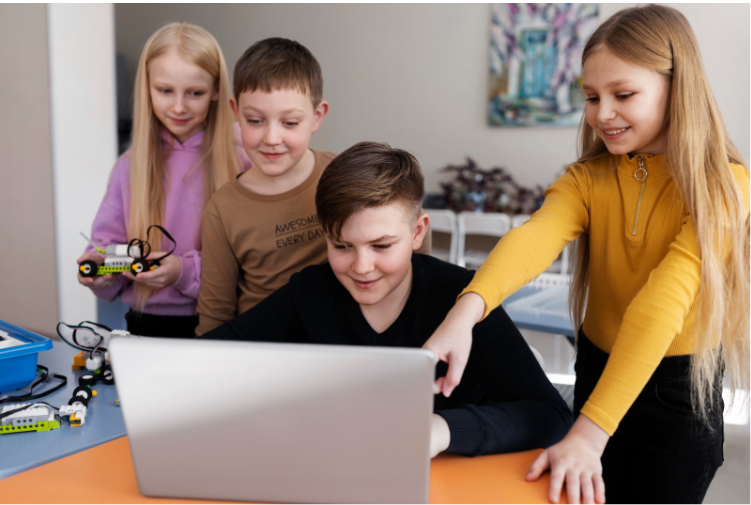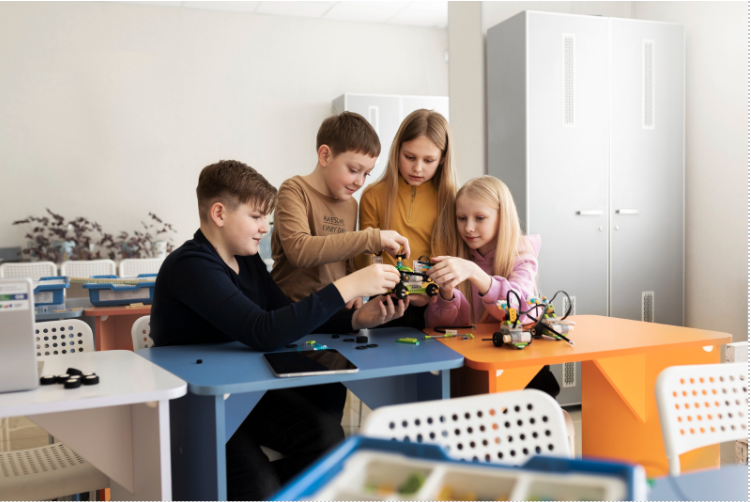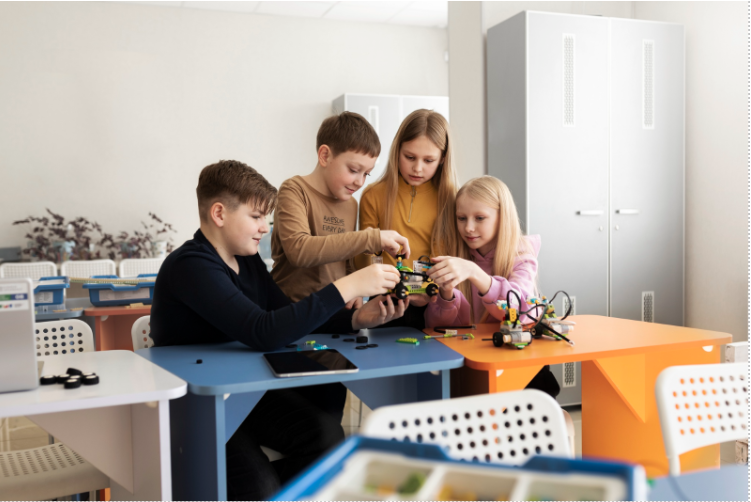


A team spends three months on a robot that solves one task in under two minutes on the day. That’s not really the point. The point is the three months before it: the thing not working, then half-working, then breaking again the night before.
Robotics competitions for students run on exactly that rhythm, and two names come up more than any others once a school starts looking into robotics competition India options.
Two Major Robotics Competitions for Students
World Robot Olympiad (WRO)
WRO splits into four categories:
- RoboMission: the classic format, a robot solving tasks on a game field within a time limit, mostly LEGO-based
- RoboSports: robots competing head-to-head in a sports-style challenge
- Future Innovators: teams research a real problem and build a prototype addressing it, judged on the idea as much as the robot
- Future Engineers: open-hardware, aimed at experienced teams with far fewer component restrictions
Age groups generally run Elementary, Junior and Senior, spanning roughly 8 to 19 depending on category, though exact brackets shift season to season. Teams typically work in twos or threes with a coach. WRO for students tends to work well as a first competitive experience because RoboMission hands beginners a defined problem instead of an open brief.
RoboCup Junior
RoboCup Junior runs three main leagues:
- Soccer: autonomous robots playing against an opposing team on a small field
- Rescue: robots navigate a simulated disaster scenario, following a line or mapping a maze to find victims
- OnStage: the creative league, robots performing choreographed routines or storytelling for an audience
International events generally set ages around 14 to 19, though many regions and school-level events run entry or “primary” divisions for younger students, so the international floor shouldn’t be assumed to apply locally. RoboCup Junior India runs its own qualifying structure into national and international rounds.
Rules and dates for both competitions get revised each season, so checking the official WRO or RoboCup Junior India site before registering is worth doing every year, not just the first.
Comparing Formats of Robotics Competitions for Students
| WRO | RoboCup Junior |
Core categories | RoboMission, RoboSports, Future Innovators, Future Engineers | Soccer, Rescue, OnStage |
Typical age range | Roughly 8-19, varies by category | Around 14-19 internationally, younger at entry level |
Best first category | RoboMission | Rescue Line |
Emphasis | Structured tasks, real-world framing in Future Innovators | Autonomous performance under competitive or creative pressure |
What Competing Actually Builds
Skills Beyond the Robot Itself
Competition prep builds a fairly specific mix: iterative debugging on a real deadline, working within fixed constraints like time limits and robot size, and presenting technical work to judges who weren’t there for the three months of failed attempts. That last one gets underrated constantly. A team with a brilliant robot but no clear explanation of their design choices tends to score worse than a team with a simpler build and a sharp pitch.
Preparing a Team
A realistic prep timeline runs longer than most schools budget for at first.
Weeks out | Focus |
12+ | Concept, initial build, basic testing |
8 | First full run-throughs, early failures expected |
4 | Mock competition day, full time pressure |
1 | Documentation finalised, presentation rehearsed |
A few habits separate teams that hold up under pressure from teams that scramble:
- Treating early failures as data, not a reason to panic
- Rotating who explains the project to outsiders, so the whole team can present
- Running that mock competition day for real, timer included, no shortcuts
Project Documentation
Most formats require written documentation alongside the robot, a design log, code explanation, or engineering notebook depending on the competition. Treat this as a real deliverable from day one, not something scribbled together the week before. A dated log of decisions and failed attempts tells a judge far more about a team’s actual process than a polished summary written after the fact ever does.
Team Roles
Role | Focus |
Build lead | Mechanical construction and hardware |
Programmer | Code and logic |
Documentation lead | Keeping the design log current throughout |
Presenter | Explaining the project fluently to judges |
Roles can rotate through the season, but defining them early avoids the common trap of three students all touching the code while nobody owns the write-up.
Building a Lasting School Programme
Sustainable robotics competitions for school students rarely run on one enthusiastic teacher alone. A workable school mentoring pathway usually includes:
- A beginner track in earlier grades using simpler formats
- A coach who stays with the programme across seasons, not one who starts fresh every year
- Senior students mentoring newer teams once they’ve competed themselves
That last piece does more for a programme’s survival than almost anything else. It stops the whole effort collapsing the moment one experienced student graduates.
Where Makers’ Muse Fits In
Makers’ Muse supports school teams preparing for WRO and RoboCup Junior with mentorship through the full season, not just the weeks before competition day, helping build the kind of school robotics competition pathway that outlasts any single graduating class.
FAQs
Entry-level formats in both WRO and RoboCup Junior generally welcome students from around 8 years old, though international-level events set higher minimums, so checking current rules for a specific category matters.
WRO’s RoboMission category is often considered the more accessible starting point, since it gives teams a defined task rather than the more open-ended demands of Rescue or OnStage.
Not necessarily. WRO’s RoboMission runs on widely available LEGO-based kits, and many RoboCup Junior entry divisions accept basic, low-cost hardware for newer teams.
A minimum of two to three months of regular practice is realistic for a first attempt at robotics competitions for students, though established teams often prepare across an entire school year.