

With its potential for uniting many types of electronics into one cohesive system through communication via the Internet, if you know what the Internet of Things (IoT) is, you must be aware that it is revolutionizing our relationship with technology. IoT is driving the future of engineering and technology innovation from smart homes to medical devices to industrial automation systems and smart cities worldwide.
For students who are interested in getting started with invention, there is access to low-cost, programmable Arduino platforms that make it fast and easy to build IoT applications. Arduino’s simplicity, affordability, and extensive ecosystem of sensors and modules make it ideal for learning IoT concepts through hands-on projects.
In this blog, we explore some of the most practical and popular IoT projects for school students and beginners using Arduino, inspired by real-world applications. These projects are suitable for beginners in STEM enabled schools India, academic mini-projects, and even final-year engineering work with further enhancements.
Why Choose Arduino for IoT Projects?
Arduino is widely adopted in IoT development because it bridges the gap between hardware and software with minimal complexity. It allows developers to focus on logic and creativity rather than low-level electronics.
Quick Fact: IoT (Internet of Things) is a network of interconnected physical devices embedded with sensors and software that collect and share data to enable smarter decision-making. IoT projects involve building such connected systems where devices communicate and operate autonomously using internet connectivity.
Top IoT Projects for School Students Using Arduino
Below are some of the most useful and educational IoT projects for school students and beginners using Arduino that demonstrate real-world problem-solving.
1. Smart Dustbin Using IoT
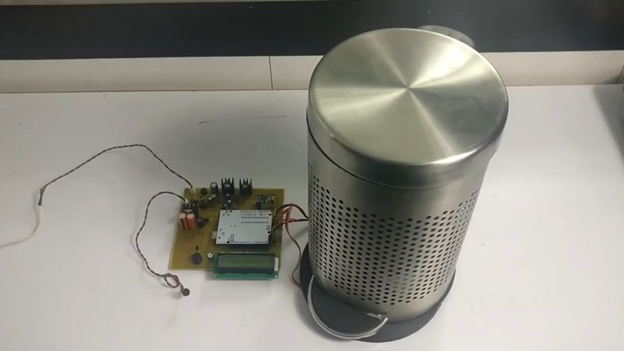
Waste disposal in cities can be hard to manage, but the smart dustbin allows for automated waste monitoring and cleanliness improvement. The smart dustbin uses ultrasonic sensors to determine the amount of waste in the bin. As soon as the bin reaches a specified level, the dustbin sends a signal to the cloud and/or notifies authorities. This eliminates the need for waste collection personnel to inspect each bin manually and optimises routes for waste collection.
2. IoT-Based Weighing Scale
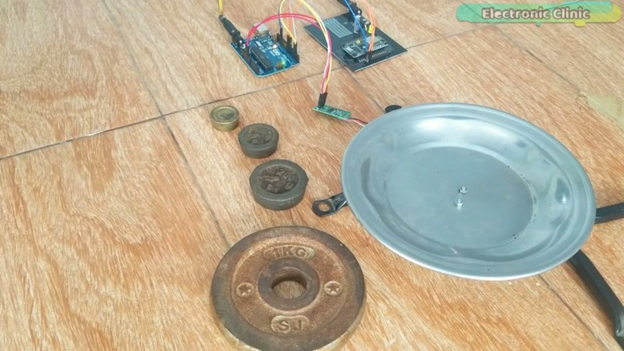
The IoT weighing scales can remotely monitor weight in the Logistics and Industrial Processes, as well as Inventory Systems. For this project, we will use a Load Cell to measure the weight and utilize a Wi-Fi module to send that data to a web dashboard or mobile application. This allows users to track the changes in the weight without having to be physically near the scale.
3. Gas Leakage Detection System
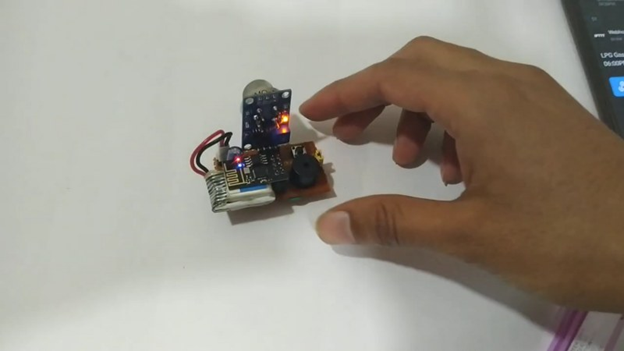
Gas leaks can result in hazardous consequences inside and outside of homes as well as the workplace. To help to prevent incidents related to gas leaks caused by an IoT-enabled Gas Detection System, it provides real-time warnings through its gas sensors that can identify dangerous gases including LPG and methane. An alarm can also automatically turn on if the amount of gas exceeds what is considered safe; this notification would occur via the Internet directly to the user.
4. Food Spoilage Monitoring System
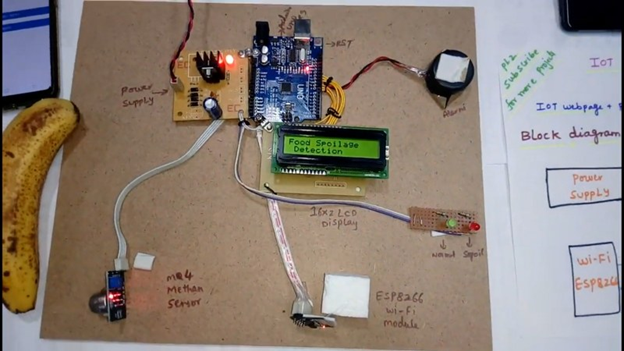
Food wastage is a global issue. IoT can help by monitoring food freshness and preventing spoilage. Gas sensors are used to detect gases released by spoiled food. The sensor data is transmitted online, and users are notified about the condition of stored food. This project is especially useful in cold storage facilities and smart refrigerators.
5. IoT Attendance Monitoring System
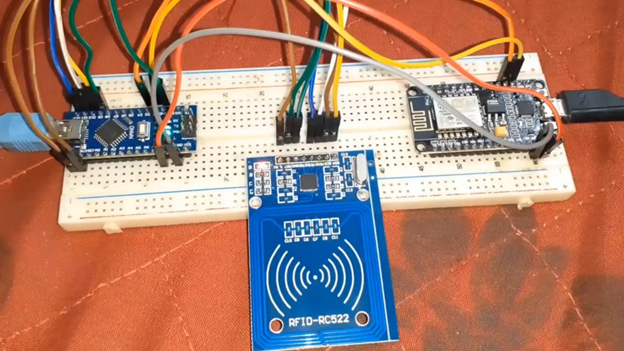
Many traditional attendance systems take too much time and can contain errors. An IoT attendance system can achieve attendance records faster by automatically recording attendance data and sending it to a cloud database using RFID cards, fingerprint, or facial recognition. This makes your attendance information very transparent and available at your convenience!
6. IoT-Controlled Robotic Arm
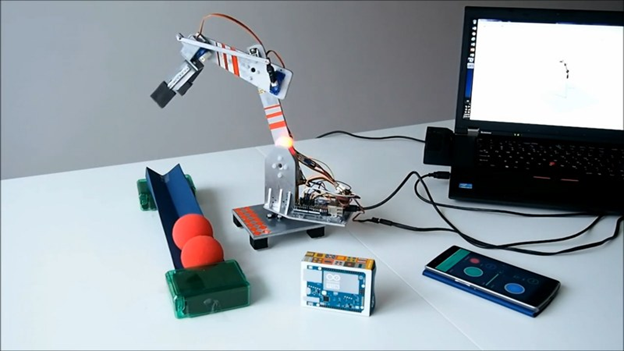
Through a web-based interface, users can control an automated robotic arm via the Internet (IoT). The robotic arm is controlled using Arduino and servo motors, which allow for the controlled movement of the arm. Commands are sent to the robotic arm via the internet (via the web-based or mobile user interface), thus allowing for remote operation of the robotic arm from anywhere in the world.
7. Water Quality Monitoring System
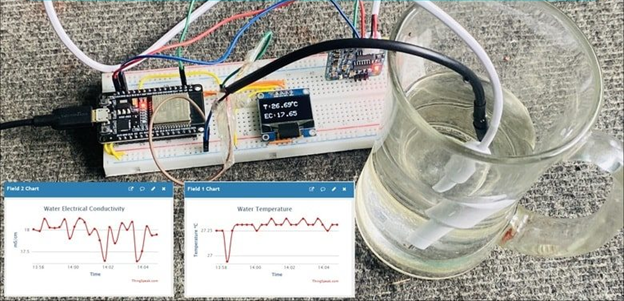
Monitoring water quality is crucial for maintaining public health and protecting the environment. In this project, sensors such as pH and turbidity sensors collect water quality parameters. The data is uploaded to a cloud platform for real-time analysis and monitoring. It is a popular choice among IoT projects for school students.
8. Smart Car Parking System
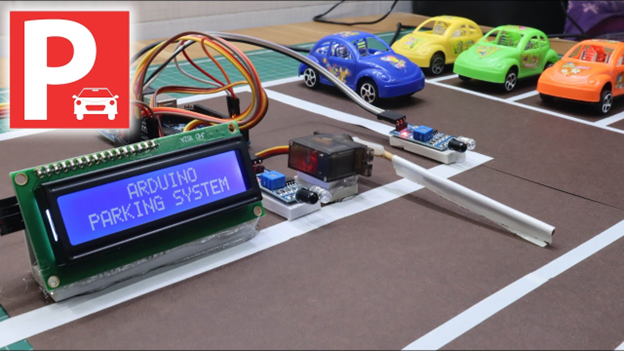
Finding parking spaces in crowded areas is a common problem. A smart parking system utilises IoT to efficiently solve this issue. Sensors detect whether parking slots are occupied or free. This information is sent to a centralised server or mobile app, helping drivers locate available spaces easily.
9. Remote Health Monitoring System
Healthcare IoT projects for school students and engineers have gained massive importance in recent years. A remote health monitoring system enables continuous patient monitoring. Sensors such as temperature and heart rate sensors collect vital health data and upload it to the cloud. Doctors or caretakers can monitor patients remotely and respond quickly in case of emergencies.
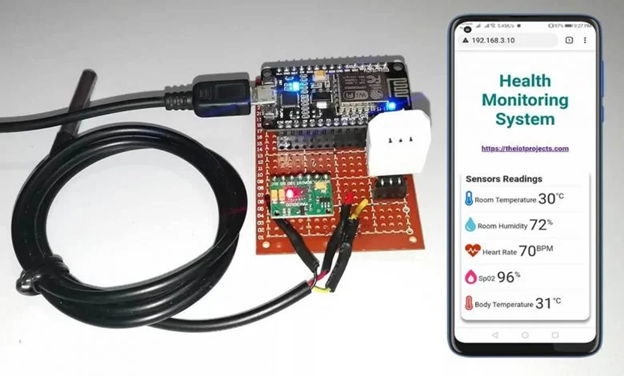
Project Idea: Make a cost-effective, easy-to-build IoT-based Remote Patient Monitoring (RPM) system that records vital signs like temperature, blood pressure, and heart rate with a single start command. The device logs data with timestamps to Google Sheets for seamless tracking. It also enables doctors and caregivers to monitor patients remotely in real time.
10. LPG Detection with Automatic Exhaust Control
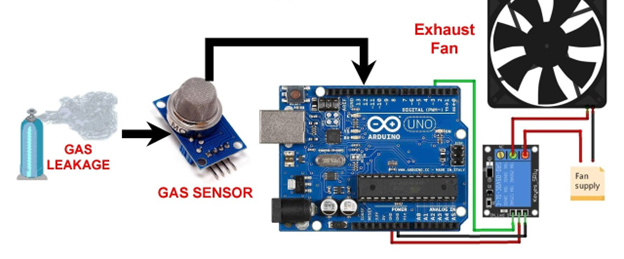
This project improves safety related to the use of gas by linking detection with self-activation. When a gas leak is detected, the gas detection system will alert you to the existence of a possible leak. The gas detection system will automatically activate an exhaust fan that will help reduce the concentration of gases in the area as well. The intelligent action taken by the gas detectors makes them significantly more effective than merely relying on basic gas detection alone.
How These Projects Help Students and Developers
Conclusion
Arduino-supported IoT projects for school students and beginners are an excellent way to understand how technology works today. By creating IoT projects, learners will investigate many different types of real-world applications that fall under the umbrella of IoT, such as smart cities, health care, security, and automation. Arduino is an easy-to-use platform to give first-time developers or designers an opportunity to gain hands-on experience working with today’s technologies. With guidance from structured learning environments and communities in STEM enabled schools India, these skills can grow into meaningful innovations for the future
If you are looking to provide future-ready education for your child, a student, or anyone eager to learn modern technologies, hands-on STEM learning is essential. To explore structured programs, innovative STEM labs, and real-world learning experiences, connect with Makers’ Muse and empower the next generation of creators and innovators.