How to Make Free Electricity Generator Working Model Using DC Motor Project
Introduction
Electricity plays an important role in our everyday lives, from powering homes to running machines and electronic devices. Learning how electricity is generated helps students understand the science behind energy and technology. One interesting way to explore this concept is by building a generator model using simple components.
A working model generator project is a great way for students to learn about energy conversion. In this project, mechanical energy is converted into electrical energy using a motor, magnets, and rotating parts. When students build this project, they get a hands-on understanding of how generators work and how energy can be produced through motion.
This project is simple enough for school demonstrations but also powerful enough to explain important engineering concepts such as energy transfer, rotation, inertia, and electrical circuits.
What is a Free Energy Generator?
A free energy generator model is a learning project that demonstrates how electrical energy can be generated from mechanical motion. In simple terms, when a motor shaft rotates, it can produce electricity through electromagnetic induction.
In this project model, the system usually includes a rotating flywheel, a motor acting as a generator, magnets, and sometimes capacitors that store and release electrical energy. When the rotating part moves continuously, it produces an electrical output that can power small devices like LEDs.
It is important to understand that in real physics, there is no unlimited free energy. Energy always comes from a source such as mechanical motion, magnets, or stored energy in capacitors. The term free energy in school projects generally refers to demonstrating how energy can be generated from motion or reused efficiently within a system.
This type of model helps students understand how generators in power plants work, where turbines rotate large generators to produce electricity.
Flywheel Moment of Inertia Derivation
A flywheel is a rotating mechanical device used to store energy. In generator models, a flywheel helps maintain rotational motion even when the initial force stops. This happens because of inertia, which is the tendency of a rotating object to keep moving.
The moment of inertia represents how resistant an object is to changes in its rotational motion. For a flywheel, the moment of inertia depends on its mass and the distance of that mass from the centre.
In simple terms, the moment of inertia of a flywheel can be described as the distribution of mass around the rotating axis. The heavier the flywheel and the farther the mass is from the centre, the greater the inertia. This means the flywheel will continue spinning for a longer time once it starts moving.
In a generator project, this property helps keep the motor shaft rotating smoothly, which helps maintain continuous electricity generation.
Flywheel Working
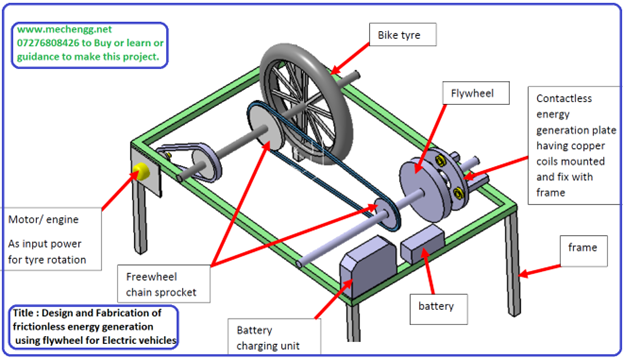
The flywheel plays a very important role in maintaining continuous motion in a generator model. It is usually a circular disc attached to the motor shaft.
When the system starts rotating, the flywheel stores rotational energy. Even if the input force decreases, the stored energy in the flywheel keeps the system rotating for some time. This helps stabilise the motion of the motor and improves the efficiency of energy generation.
In the generator model, once the motor begins spinning, the flywheel keeps the rotation smooth and consistent. This stable rotation allows the motor to produce electricity more efficiently.
Flywheels are widely used in machines, vehicles, and power systems to regulate energy flow and maintain steady mechanical motion.
Making of Free Energy Using a Capacitor
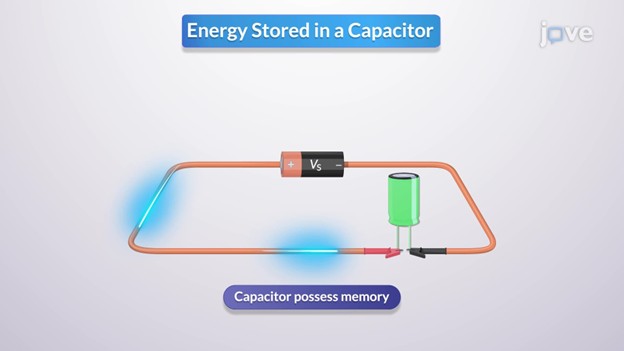
Capacitors play an interesting role in generator models because they store electrical energy and release it when required. A capacitor works like a small rechargeable energy storage device.
In this generator project, electricity generated by the motor can be stored temporarily inside the capacitor. Once the capacitor charges, it can release energy back into the circuit to help maintain system operation or power small loads.
This process helps demonstrate energy storage and energy release concepts. Students can observe how electrical energy can be collected, stored, and reused within a circuit.
Capacitors are commonly used in many electronic devices, including power supplies, audio equipment, and renewable energy systems.
Permanent Magnet DC Motor
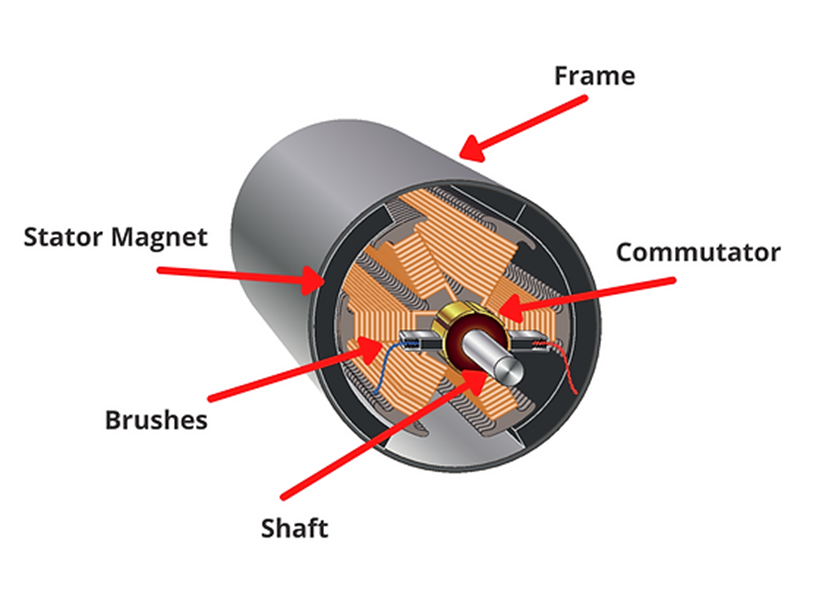
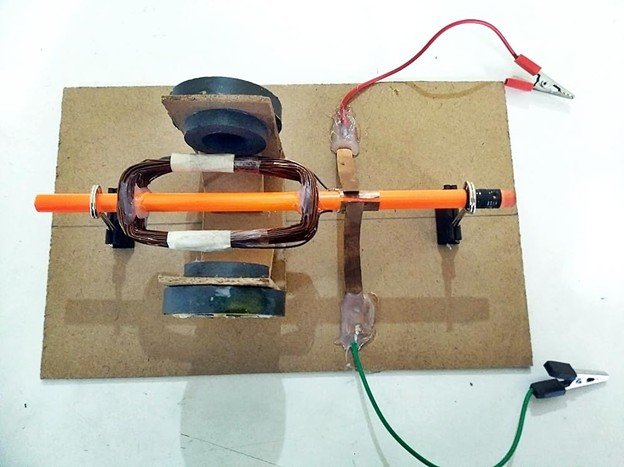
A permanent magnet DC motor is one of the main components used in this generator project. Normally, a DC motor converts electrical energy into mechanical motion. However, when the motor shaft is rotated externally, it can also work in reverse and generate electricity.
Inside the motor, permanent magnets create a magnetic field. When the rotor spins within this magnetic field, electrical voltage is produced across the motor terminals.
This phenomenon is called electromagnetic induction. It is the same principle used in real power generators.
Permanent magnet DC motors are commonly used in toys, robotics projects, electric fans, and small appliances. Because they are compact and efficient, they are perfect for school science models and demonstrations.
Free Energy Generator Advantages and Disadvantages
Building a working model of a generator provides several educational advantages for students.
One major advantage is that it helps students understand energy conversion virtually. Instead of only reading about generators in textbooks, they can see the process happening in front of them. This makes learning more interactive and memorable.
Another benefit is that it encourages creativity and innovation. Students can experiment with different designs, materials, and components to improve the efficiency of their model.
The project also introduces students to basic engineering concepts such as mechanical motion, electrical circuits, and energy storage.
However, there are also a few limitations to understand. The electricity produced by small generator models is usually very low and can only power small devices such as LEDs. It cannot replace large-scale electricity sources.
Another important point is that these projects demonstrate energy conversion rather than producing unlimited energy. Real-world energy systems always require some form of input energy.
Despite these limitations, the educational value of such projects is extremely high because they help students connect science concepts with practical applications.
Conclusion
Building a working model of a generator using a DC motor is a fascinating way for students to explore the science of electricity and energy conversion. Through this project, learners can understand how motion can produce electrical power and how mechanical components like flywheels help maintain system stability.
By experimenting with components such as motors, capacitors, and rotating systems, students gain hands-on knowledge about engineering principles and energy systems. These practical experiences make science more exciting and help develop curiosity, creativity, and problem-solving skills.
Projects like this not only improve understanding of physics concepts but also inspire students to explore future innovations in energy and technology.
Learn More about STEM Education