
Basics of Electronics: Introduction to Circuits and Connections
Understanding the World of Basic Electronics
Electronics is a branch of science that deals with the flow of electric current through different components to perform useful tasks. From mobile phones and computers to fans and lights in our homes, electronics play an important role in our daily lives. Learning basic electronics helps students understand how these devices work and builds a strong foundation for future studies in science, engineering, and technology.
At its core, electronics focuses on controlling electricity in a safe and meaningful way. By learning about simple circuits and connections, students can begin to explore how electrical energy is converted into light, motion, or sound.
Introduction to Basic Electronics Concepts
Basic electronics begins with understanding a few simple ideas. Electricity flows through a closed path known as a circuit. For electricity to flow, there must be a power source, a conducting path, and a device that uses the electrical energy.
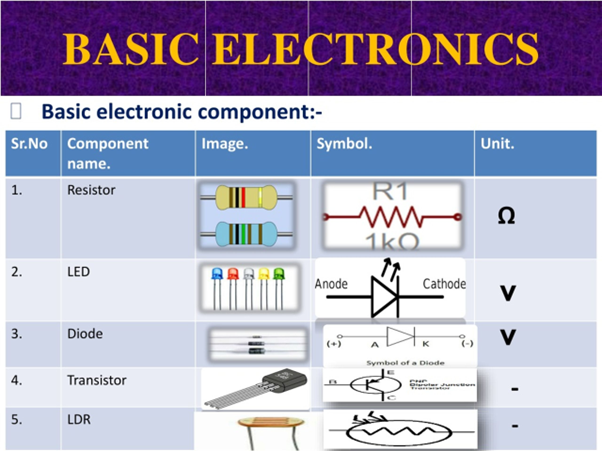
Common electronic components include batteries, wires, switches, resistors, and light-emitting diodes. Each component has a specific function. Batteries provide energy, wires carry current, switches control the flow of electricity, and output devices like LEDs show visible results.
By combining these components correctly, students can build simple electronic systems that demonstrate how electricity behaves in real life.
Exploring the Structure of an Electric Circuit
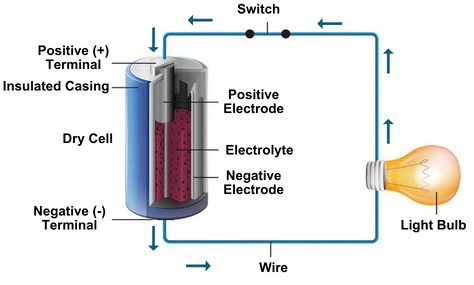
An electric circuit is a complete loop through which electric current flows. If the loop is broken at any point, the current stops flowing. This simple idea explains why devices stop working when a switch is turned off or a wire is disconnected.
A basic circuit usually includes a power source such as a battery, conducting wires, and a load such as a bulb or LED. The circuit must be properly connected so that electricity flows from the battery, through the load, and back to the battery.
Understanding circuits helps students learn how electrical devices are designed and why safety and correct connections are important.
Lighting Up Learning with a Simple LED Circuit
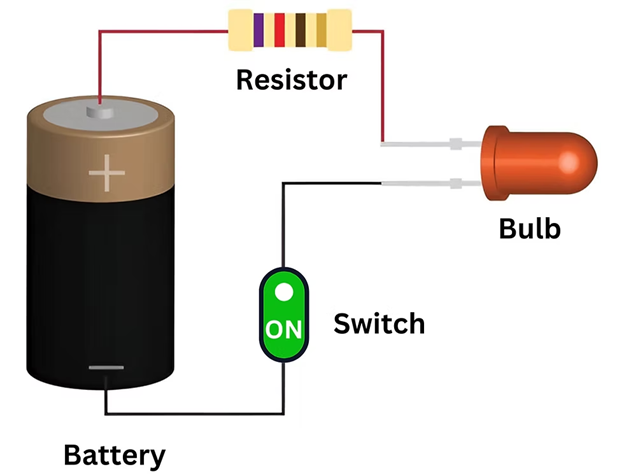
One of the easiest and most exciting electronic projects for beginners is building a simple LED circuit. An LED is a small component that produces light when an electric current flows through it in the correct direction.
In a simple LED circuit, a battery is connected to an LED using wires. When the circuit is completed, the LED lights up, showing that electricity is flowing. This experiment helps students visually understand how a circuit works.
It is important to connect the LED correctly because it allows current to flow in only one direction. This teaches students about polarity and the importance of correct connections in electronics.
Controlling Light Using a Switch
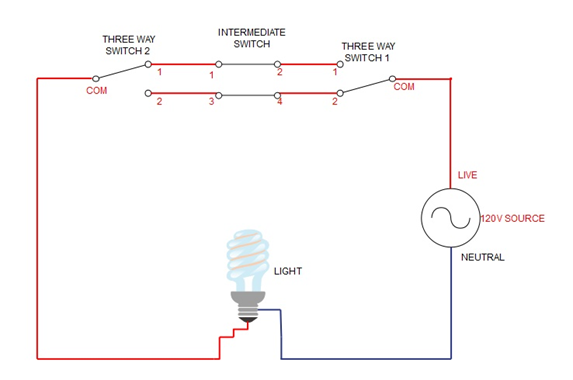
Adding a switch to an LED circuit introduces the idea of control. A switch is a component that opens or closes a circuit, allowing the user to decide when electricity flows.
When the switch is turned on, the circuit is completed, and the LED glows. When the switch is turned off, the circuit breaks and the LED turns off. This simple action demonstrates how many everyday devices work, such as room lights and electronic toys.
Using a switch helps students understand how electrical systems can be controlled safely and efficiently. It also shows how small components work together to create useful functions.
Understanding Switching Circuits in Daily Life
A switching circuit is a circuit that uses a switch to control the flow of electricity. These circuits are found everywhere, from household lighting systems to electronic appliances.
In a switching circuit, the switch acts as a gate. When closed, electricity flows freely. When open, the flow stops. This concept is important because it allows devices to be turned on and off without disconnecting the power source.
Learning about switching circuits helps students understand safety mechanisms and the importance of controlling electrical energy in practical applications.
Learning About Series Connections
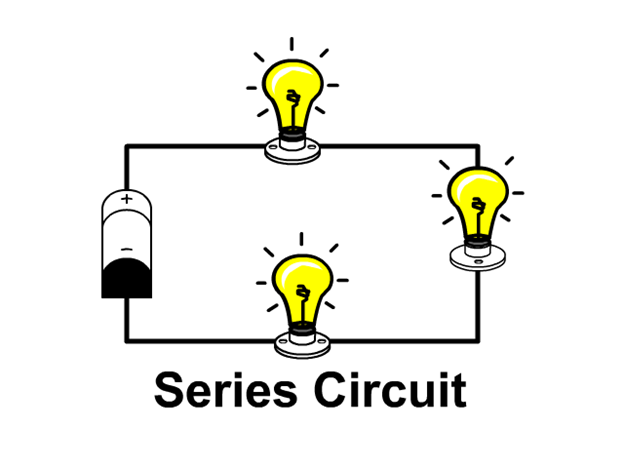
In a series connection, electronic components are connected one after another in a single path. Electricity flows through each component in sequence.
When multiple devices are connected in series, the same current flows through all of them. However, if one component stops working or is removed, the entire circuit stops functioning. This is because the circuit path is broken.
Series connections help students understand how current behaves and why some circuits fail when one part is damaged. This type of connection is simple and easy to build, making it ideal for learning purposes.
Exploring Parallel Connections for Better Performance
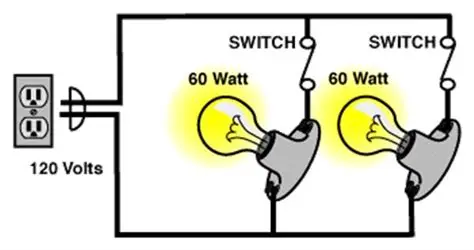
In a parallel connection, components are connected across separate paths, but all are connected to the same power source. Electricity has multiple paths to flow through.
One major advantage of parallel connections is that if one component fails, the others continue to work. This is why most household wiring systems use parallel connections instead of series connections.
Parallel circuits help students understand how voltage remains the same across components and why this type of connection is more reliable for real-world applications.
Comparing Series and Parallel Circuits
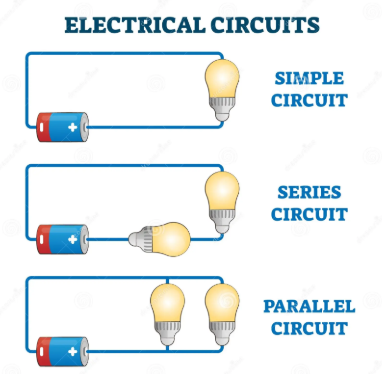
Understanding the difference between series and parallel connections is an important part of basic electronics education. Series circuits are simple but less reliable, while parallel circuits are more complex but more efficient.
In series circuits, current is the same everywhere, but voltage is divided among components. In parallel circuits, voltage remains constant, but current is divided among different paths.
By comparing these two types of connections, students gain a deeper understanding of circuit design and electrical behaviour.
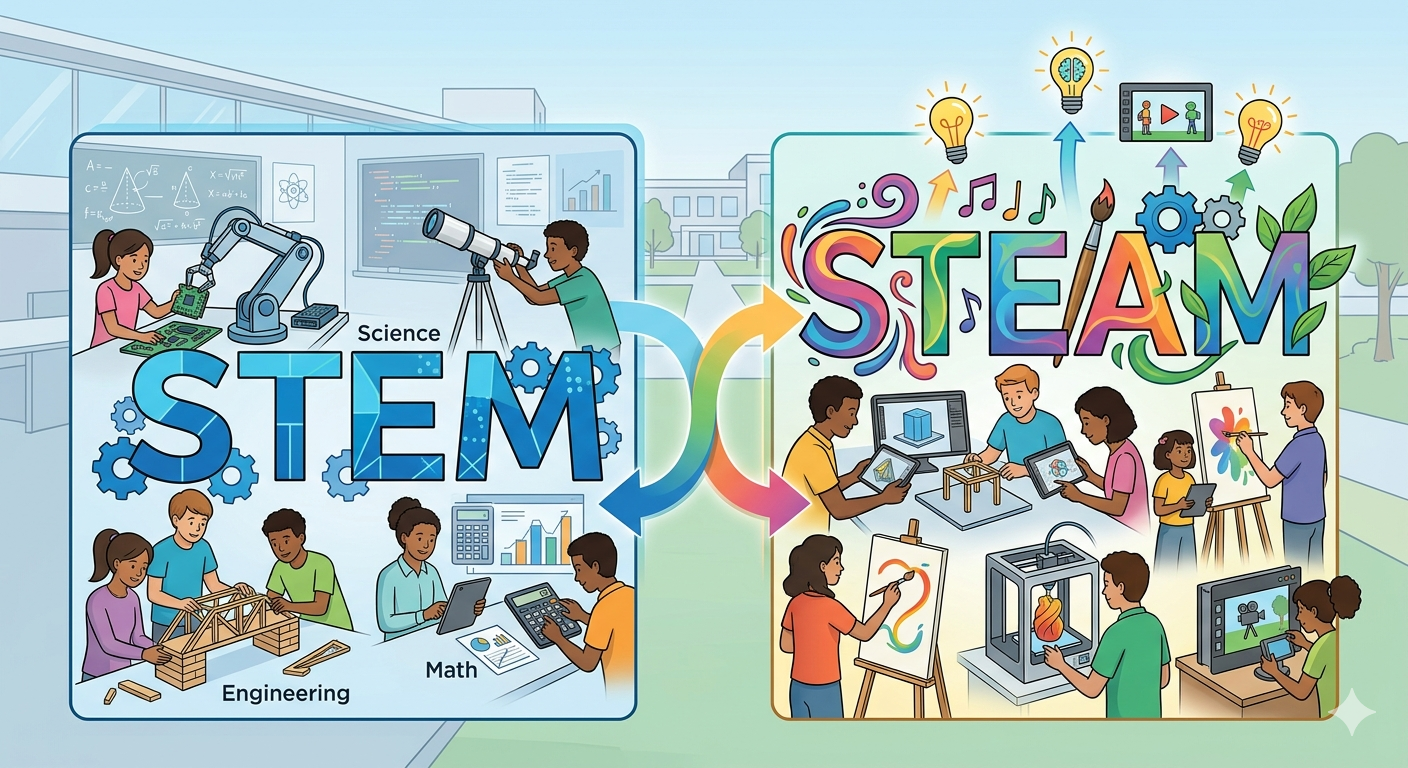
Learn More About: STEM Education
Why Learning Basic Electronics Matters for Students
Learning basic electronics helps students develop problem-solving skills, logical thinking, and curiosity. It encourages hands-on learning, where students can see the results of their actions immediately.
Electronics education also prepares students for future studies in science, technology, engineering, and mathematics. Even for students who do not pursue technical careers, understanding electronics helps them become informed users of modern technology.
Most importantly, learning electronics builds confidence by showing students that they can create, experiment, and understand how things work.
Conclusion
The basics of electronics introduce students to the fascinating world of circuits and connections. By learning about simple LED circuits, switches, switching systems, and series and parallel connections, students build a strong foundation in electrical concepts.
These ideas form the basis for more advanced learning in electronics and technology. Through simple experiments and clear understanding, students move from curiosity to confidence, making electronics an exciting and valuable subject to explore.