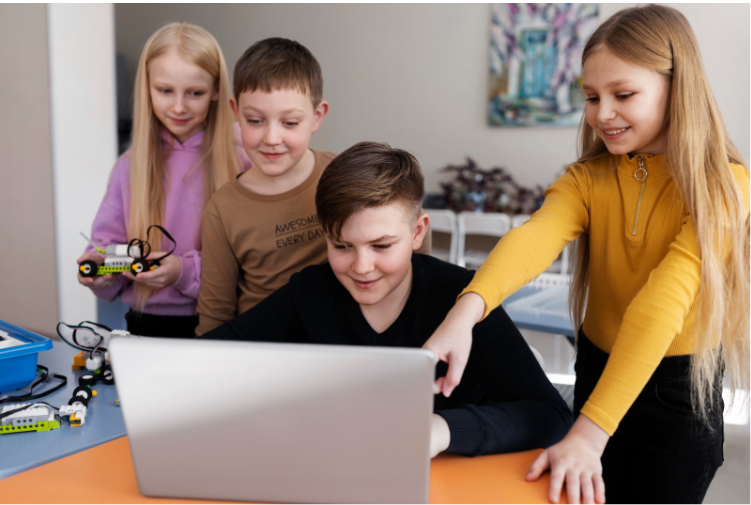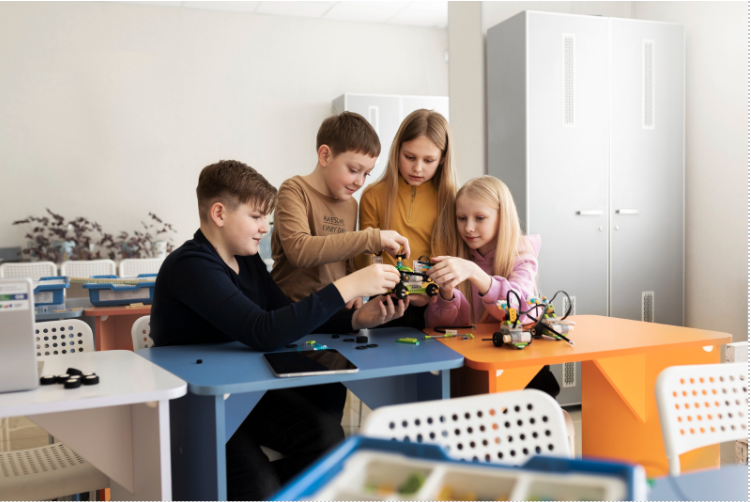
5 STEM Inventions Students Can Build at Home This Weekend (Under ₹500)
The most creative ideas do not come from new materials and equipment but rather are created through a need to discover and learn about how things work. Students understand theories that underlie scientific concepts by working on hands-on STEM projects or DIY projects than if they were to continue with only studying the theory.
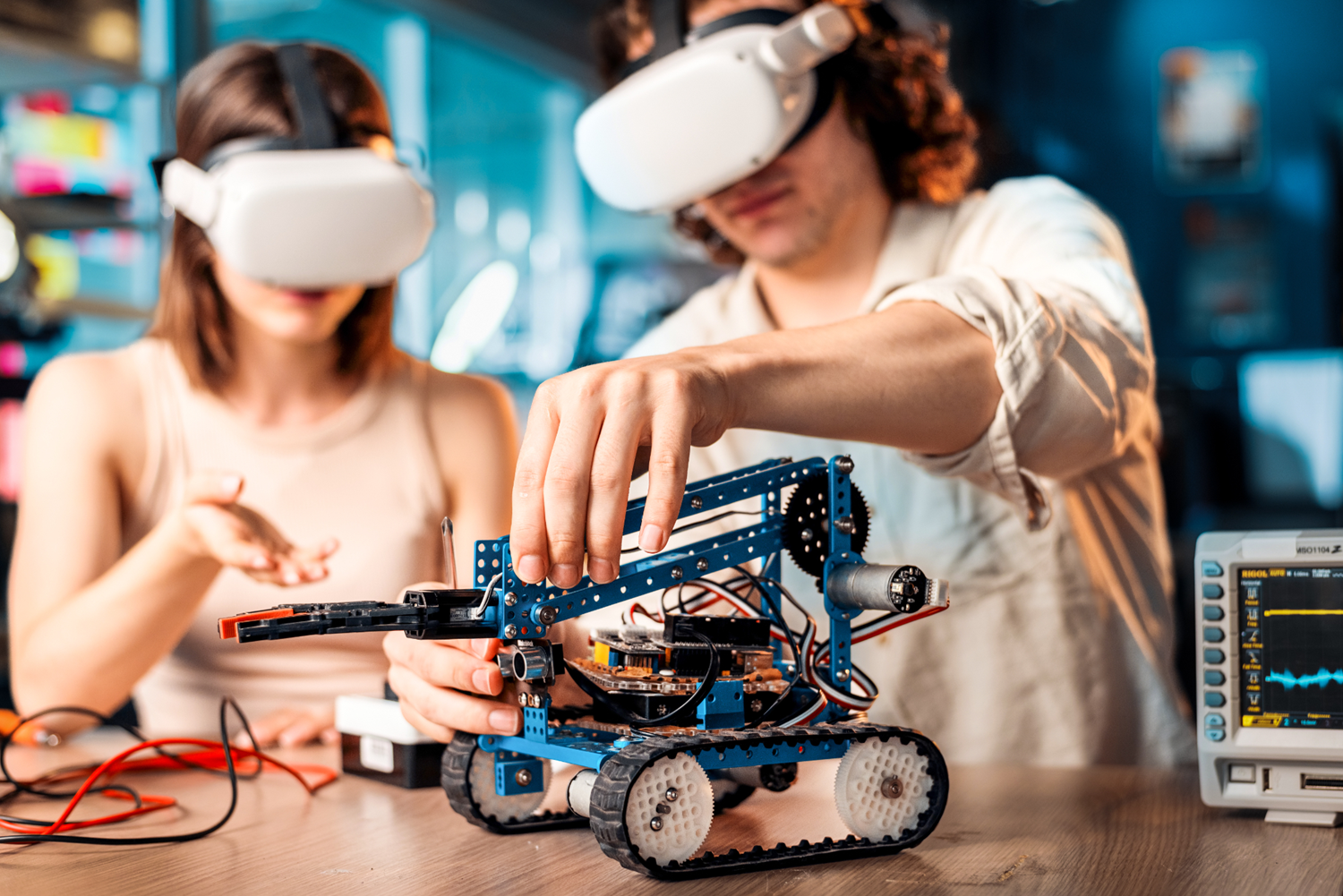
You can create well-designed functional STEM inventions at home with items costing no more than ₹500, with just a little creativity, using materials that you already have around the house. The majority of these do-it-yourself projects can be created to provide the student with the same type of hands-on experience that would be encouraged if they were attending a STEM-enabled school where students use their textbook knowledge and apply it to real-life situations.
5 STEM Inventions to Build at Home
Below are five detailed STEM inventions that students can build over a weekend while gaining practical knowledge that lasts far beyond the project itself.
1. Smart Water Level Indicator
Water wastage is a common problem in many households. A smart water level indicator is a simple yet impactful invention that helps monitor tank levels and prevent overflow. Projects like this are commonly included in a STEM programme because they connect scientific concepts with everyday problems.
This project works on the basic principle of electrical conductivity. Water conducts electricity, so when it reaches a certain level, it completes a circuit and triggers an alert.
Materials Required:
- 9V battery
- Buzzer or LED
- Insulated wires
- Metal probes such as nails or copper strips
- Plastic container for testing
How It Works:
- Insert probes at different heights inside a container.
- When water touches the probes, it completes the circuit between them. This allows current to flow and activates the buzzer or LED.
- You can create multiple levels, such as low, medium, and full, by placing probes at different heights.
Learning Outcome
Students understand conductivity, circuit completion, and basic sensor logic. A STEM enabled school often promotes such models to help learners visualise automation systems used in real homes and industries.
Approximate Cost
₹150 to ₹300
2. DIY LED Torch
A flashlight is one of the simplest yet most important electronic devices. Building one from scratch helps students understand how electrical circuits function in real life. This is a foundational activity in any STEM programme.
Materials Required:
- LED bulb
- Coin cell or AA battery
- Switch or push button
- Wires
- Cardboard or plastic casing
How It Works:
- An LED emits light when current flows through it in the correct direction.
- The battery provides power, and the switch controls the circuit.
- When the switch is turned on, the circuit is completed, and the LED lights up.
- You can design your own casing using cardboard to hold the components together and make it portable.
Learning Outcome
This project teaches polarity, circuit design, and energy conversion. In a STEM Enabled School, such exercises are used to build strong foundational knowledge before moving to advanced electronics.
Approximate Cost
₹50 to ₹150
3. Simple Electric Motor
An electric motor is one of the most important inventions in modern engineering. It powers fans, mixers, pumps, and even electric vehicles. Building a basic version at home reflects the practical approach followed in a STEM programme.
Materials Required:
- Copper wire
- AA battery
- Strong magnet
- Safety pins or paper clips
- Rubber bands
How It Works:
- When electric current flows through a coil of copper wire placed in a magnetic field, it experiences a force that causes it to spin. This is based on the interaction between magnetic fields and electric current.
- You will create a coil using copper wire and balance it on supports. When connected to the battery and placed near a magnet, the coil starts rotating.
Learning Outcome
Students learn about electromagnetism, magnetic fields, and energy conversion. A STEM enabled school integrates such experiments to make physics concepts more tangible and engaging.
Approximate Cost
₹100 to ₹250
4. Solar Powered Mini Fan
Renewable energy is one of the most important areas of innovation today. A solar-powered mini fan is a great beginner project that demonstrates how sunlight can be converted into usable electrical energy. It is a popular inclusion in many STEM programme activities.
Materials Required:
- Small solar panel
- DC motor
- Fan blade or lightweight plastic sheet
- Connecting wires
How It Works:
- The solar panel converts sunlight into electrical energy. This electricity powers the DC motor, which rotates the fan blades. The stronger the sunlight, the faster the fan spins.
- You can experiment by placing the panel under different light conditions to observe changes in performance.
Learning Outcome
Students understand solar energy, energy conversion, and basic motor functionality. A STEM enabled school often uses such projects to introduce sustainability and green technology concepts early on.
Approximate Cost
₹250 to ₹500
5. Hydraulic Lift Model
Not all inventions require electricity. A hydraulic lift model demonstrates powerful mechanical principles using fluids. This type of model is widely used in a STEM programme to explain real-world engineering systems.
Materials Required:
- 2 or 3 syringes
- Plastic tubing
- Cardboard base
- Water
How It Works:
- Hydraulic systems work on Pascal’s Principle. When pressure is applied to a fluid in a closed system, it is transmitted equally in all directions.
- By connecting syringes with tubing and filling them with water, pushing one syringe transfers pressure to another. This movement can be used to lift small objects placed on a platform.
Learning Outcome
Students learn about fluid mechanics, pressure, and force multiplication. In a STEM Enabled School, such models are often used to demonstrate how cranes and heavy machines operate.
Approximate Cost
₹150 to ₹300
Why a STEM Programme Matters More Than Ever
These inventions go beyond basic school experiments. They represent a shift in how students learn today. A STEM programme focuses on applying knowledge rather than memorising it.
Hands-on learning helps students:
- Develop problem-solving skills
- Understand real-world applications of science
- Build confidence in creating things independently
- Improve logical thinking and creativity
A STEM Enabled School creates an environment where students are encouraged to experiment, fail, and improve. This approach prepares them for future careers in technology, engineering, and innovation.
Approach to Inventions at Home
To make the most of these projects, students should follow a structured approach similar to a STEM programme. You do not need a lab to think like a builder. What matters is consistency and curiosity.
- Start with simple builds and gradually move to complex ones.
- Keep your workspace organised and distraction-free.
- Test each component before assembling the full project.
- Use diagrams or references to avoid wiring errors.
- Document your process to understand what worked and what did not.
By following this approach, you recreate the mindset of a STEM Enabled School, where learning happens through action, reflection, and improvement.
Conclusion
Anyone can be an inventor. All you need is curiosity and the guts to try. You can build actual, real, usable inventions for less than ₹500 - this goes to show how innovation is open to any person. All these hands-on projects will help develop your problem-solving and thinking patterns in a STEM-enabled programme. The next free weekend you have, build something from this list. Although it may seem like just a small effort, it could become much more.