
CBSE’s Big Move: AI & Coding from Class 3! What Schools & Teachers Need to Know in 2026
In a landmark decision that will reshape Indian classrooms, the Central Board of Secondary Education (CBSE) is rolling out a new Artificial Intelligence and Computational Thinking (AI & CT) curriculum for Classes 3 to 12, starting in the 2026–27 academic session. This isn’t just another subject addition — it’s a national push to make every child future‑ready in an AI‑driven world.
What’s Changing in the Curriculum?
From 2026–27, CBSE schools will introduce AI and Computational Thinking concepts from Class 3 onwards, as part of the National Curriculum Framework (NCF) 2023 and NEP 2020 vision. The curriculum is being developed by an expert committee led by Prof. Karthik Raman of IIT Madras and is currently under review by NCERT.
Key highlights:
- Classes 3–5: Computational Thinking (CT) will be embedded in subjects like Mathematics, EVS, and “The World Around Us” through puzzles, games, and simple projects.
- Classes 6–8: Students will explore core AI ideas through projects, presentations, and reflective journals, with CT and AI integrated across disciplines.
- Classes 9–10: AI becomes a compulsory subject, with a dedicated syllabus and time allocation.
- Classes 11–12: AI is offered as an elective, alongside Data Science and other advanced topics.
The focus is not on turning every child into a coder, but on building problem‑solving, logical thinking, and ethical awareness — skills that matter in any career.
How Will AI Be Taught in Primary Classes?
For Classes 3–5, CBSE is taking a play‑based, age‑appropriate approach. Instead of complex code, students will learn through:
- Storytelling and role‑plays to understand patterns, cause-and-effect, and fairness in AI.
- Simple puzzles and games that teach sequencing, loops, and decision‑making.
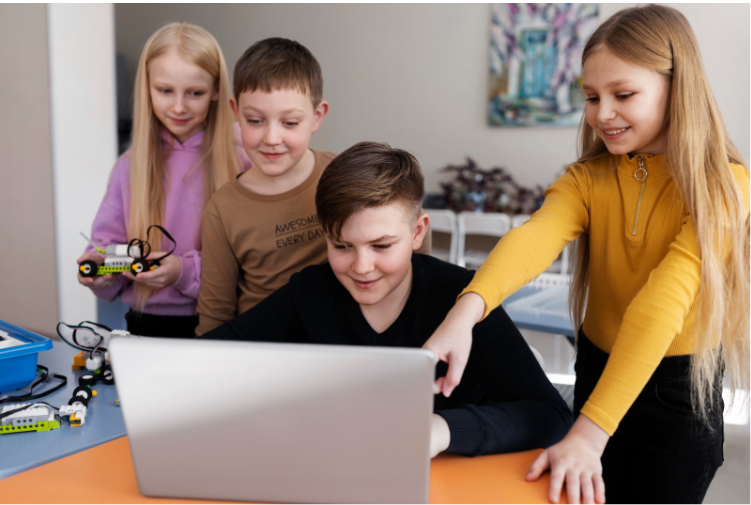
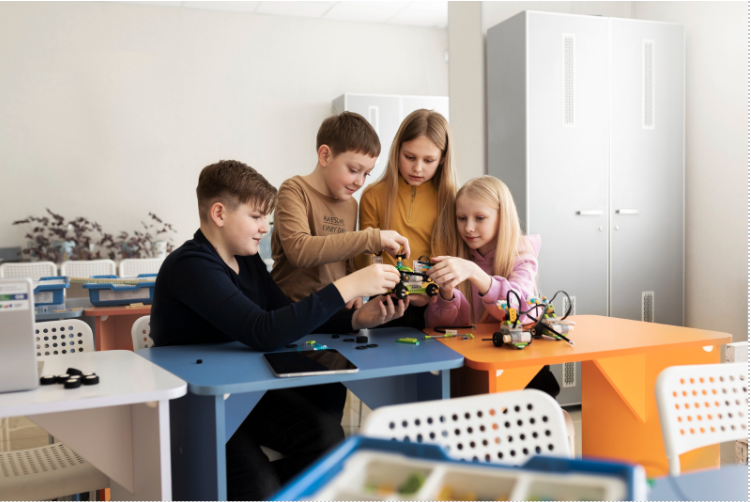
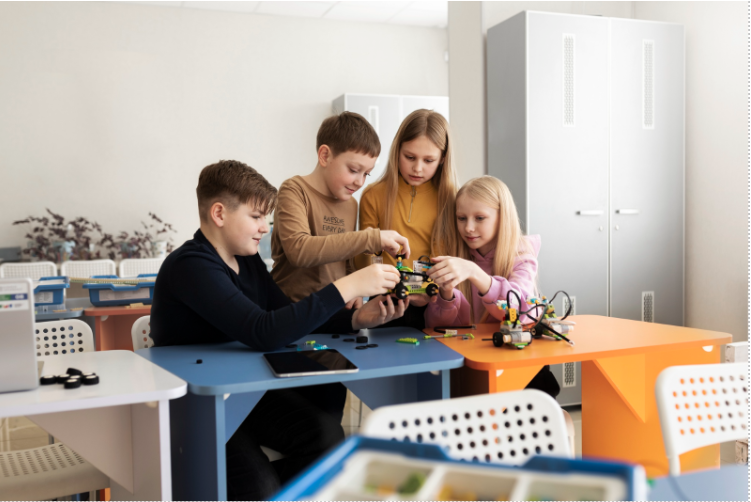
- Hands‑on activities like building basic circuits, using block‑based coding tools, and creating simple models.
Teachers of Mathematics and EVS will be trained to integrate CT into their lessons, making AI a natural part of everyday learning rather than a separate “tech class”.
What’s Coming for Middle and High School?
In Classes 6–8, students will move from concepts to real‑world applications. They’ll work on projects like:
- Designing a simple chatbot for school information.
- Creating a smart waste bin or traffic light system using sensors.
- Exploring how AI is used in agriculture, healthcare, and climate action.
From Class 9, AI becomes a formal subject with a structured syllabus covering:
- Fundamentals of AI and machine learning.
- Data handling, algorithms, and model training.
- Ethics, bias, and “AI for Public Good” projects.
Computer Science teachers will lead these classes, supported by digital resources and teacher training modules.
What Schools and Teachers Need to Do Now
CBSE and NCERT are working with KVS, NVS, and state boards to ensure smooth implementation, but schools must act now to prepare.
Key steps for schools:
- Review the draft AI & CT curriculum and align it with existing STEM/Atal Tinkering Lab activities.
- Identify teachers (Maths, EVS, CS) who can lead CT and AI integration from Class 3 onwards.
- Plan for teacher training under NISHTHA and other national programmes to build confidence in teaching AI concepts.
- Upgrade labs with block‑based coding tools, robotics kits, and basic AI/ML platforms suitable for school use.
For teachers, the message is clear: AI is not about replacing teachers, but about empowering students to think, create, and solve problems in a digital world.
Why This Matters for India’s Future
By introducing AI from Class 3, India is positioning itself as a global leader in school‑level AI education. This move aims to:
- Make AI a universal skill, not just for elite schools or urban centres.
- Prepare students for careers in AI, robotics, data science, and emerging technologies.
- Foster a culture of innovation, ethics, and “AI for Public Good” from an early age.
For schools, this is not just a curriculum change — it’s an opportunity to transform classrooms into innovation hubs where every child learns to think like a problem‑solver and create like an innovator.