
IIT Indore Makes Hindi the Language of STEM—Revolutionising CBSE Science Classrooms
IIT Indore’s decision to push Hindi into the heart of STEM teaching is rewriting the script of Indian science classrooms—and sending a powerful signal to CBSE schools across the country. For decades, English has been the gatekeeper of engineering and research; now, through the National Technical Hindi Seminar Abhyuday–3, held on January 5–6, 2026, the institute is proving that complex ideas in AI, robotics, and digital technology can be taught, debated, and published in fluent, precise Hindi.
Hindi Enters the IIT STEM Classroom
On a crisp winter morning in Indore, first-year students file into a lecture hall expecting the usual English jargon on mechanics and circuits—only to find their professor explaining Newton’s laws, algorithms, and sensor data in clear, confident Hindi. At IIT Indore, select first-year lectures are now delivered in Hindi, classroom discussions actively encourage Hindi explanations of scientific concepts, and research abstracts are prepared following official Hindi language standards.
The shift is deliberate, not symbolic. Faculty members say the goal is to reduce language barriers in technical education and strengthen conceptual clarity for students from Hindi-medium schools who often understand physics but struggle with English terminology. Instead of quietly memorising formulas, these students are now debating robotics, climate models, and coding logic in a language they think and dream in, creating a more inclusive and confident STEM ecosystem.
Abhyuday–3: A National Moment for Technical Hindi
Abhyuday–3, the two-day National Technical Hindi Seminar hosted on the IIT Indore campus, has become the flagship platform for this linguistic shift. Jointly organised with IIT Jodhpur and CSIR–National Institute of Science Communication and Policy Research (CSIR–NIScPR), the event gathered scientists, educators, language officers, and researchers from across India to discuss one central question: can Hindi carry the full weight of modern science and technology?
One of the most striking answers came in the form of “Smarika”—a compilation of 26 peer‑reviewed research papers written entirely in Hindi, spanning two technical sessions on science & engineering and digital technology & innovation. From AI and startups to higher education reforms, these papers demonstrate that technical Hindi is not just sentimental or ceremonial; it is research-ready, exam-ready, and industry-ready.
The seminar blended scholarship with culture: along with paper presentations and panels on AI, innovation, and administration in Hindi, participants enjoyed a science-themed kavi sammelan and folk performances, turning the campus into a living celebration of language, logic, and creativity.
National Vision, CBSE Ripples
IIT Indore director Prof. Suhas Joshi calls the initiative a “strong step” towards the national vision of connecting knowledge and science with Indian languages, echoing NEP 2020’s mandate to promote instruction in mother tongues and regional languages. The move is supported by schemes like the Bharatiya Bhasha Pustak Scheme (BBPS), which promises digital textbooks in Indian languages for higher education, lowering the cost of entry for institutions that want to follow.
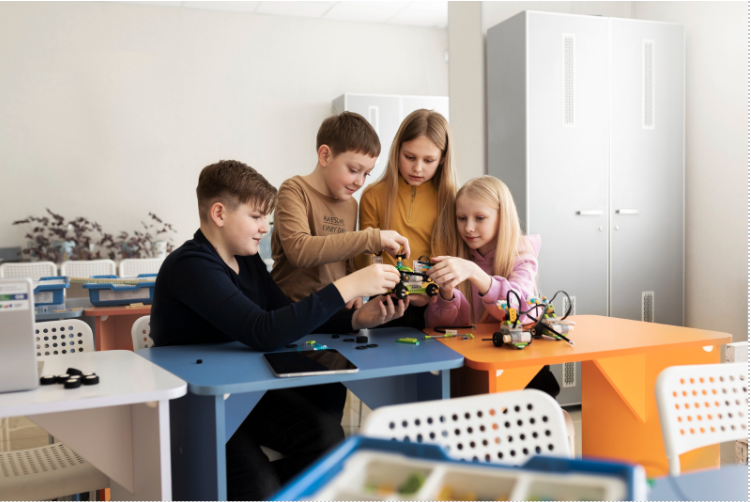
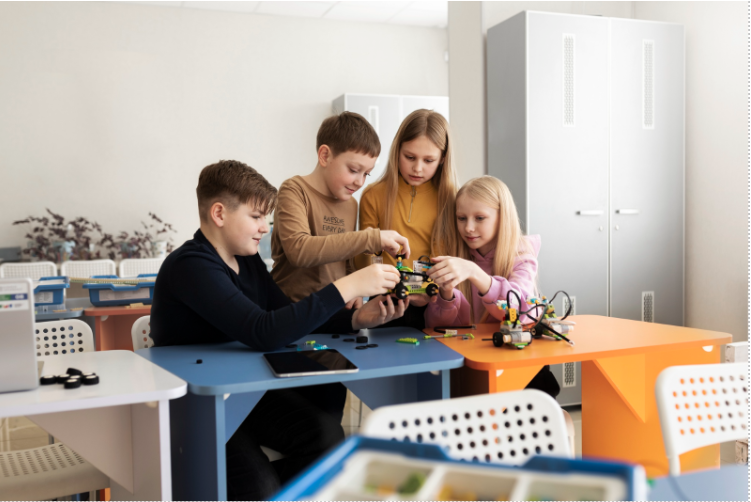
For CBSE and state-board schools, especially in Hindi-speaking belts, the message is clear: if IITs can teach and publish serious STEM in Hindi, school classrooms can confidently adopt bilingual or Hindi-first approaches for science, maths, and coding without fearing loss of “standard”. Teacher-training modules, robotics clubs, and ATL-style labs in government schools now have a blueprint—start where students are linguistically comfortable, then build bridges to global English resources instead of using language as a filter.
Will Hindi-Powered STEM Change Who Becomes an Engineer?
The stakes go far beyond vocabulary. By lowering the linguistic barrier, IIT Indore hopes to widen the talent pipeline—bringing first-generation learners, rural toppers, and government-school students into advanced fields like AI, robotics, and quantum computing. Supporters argue that when students can design experiments, write code comments, and defend projects in Hindi, they spend less energy translating and more energy innovating, which is exactly what India needs in its STEM workforce.
Critics worry about international competitiveness, but faculty stress this is not about replacing English; it is about adding Hindi as a strong parallel channel of understanding. With conferences like Abhyuday–3 and publications like Smarika, IIT Indore is betting that a confident Hindi-speaking scientist, who can later learn the English jargon, is better than a hesitant student silenced by language from day one.
As the seminar banners come down and students return to class, one thing is clear: the experiment has already begun. Somewhere in a CBSE school, a science teacher scrolling this news on a smartphone is wondering: “If IIT can teach robotics in Hindi, why can’t I explain circuits the same way?” That simple question may be the first step towards a quieter revolution across India’s science classrooms.