
VijAIpatha: Karnataka Government Schools Get World-Class AI, STEM and Robotics Labs
In classrooms once filled with chalkboards and wooden benches, a quiet revolution is taking place. Children who once dreamed of technology now get to touch it, code it, and build it. This transformation is powered by VijAIpatha—an ambitious project launched in Karnataka to bring AI, STEM, and Robotics Labs to government schools across the state.
Turning Chalkboards into Innovation Hubs
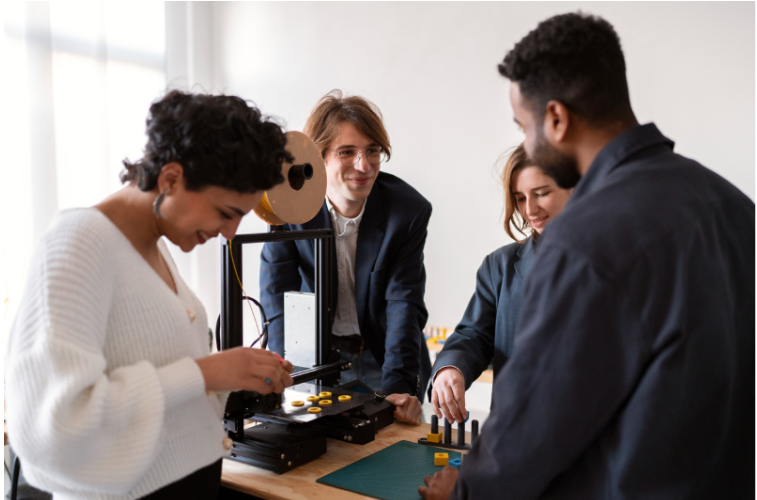
The VijAIpatha initiative, supported by the Ministry of Finance and the Government of Karnataka, aims to equip selected government schools with cutting-edge tools for STEM (Science, Technology, Engineering, and Mathematics) learning. These labs are not just computer rooms—they are mini innovation ecosystems featuring robotics kits, IoT-enabled systems, 3D printers, microcontrollers, and AI training stations.
Each lab has been designed to host over 40 students at a time, offering hands-on sessions in coding, electronic circuit design, and robotic prototyping. The vision is simple yet powerful: make India’s most underprivileged students future-ready. The project also includes the training of over 200 teachers to integrate robotics and AI into the curriculum, ensuring every lab becomes self-sustaining.
Finance Minister Nirmala Sitharaman, while launching the pilot, emphasised, “When children learn by doing, they don’t just understand technology—they become creators of it.” Her words encapsulate the essence of VijAIpatha: democratizing innovation.
Students as Innovators, Not Observers
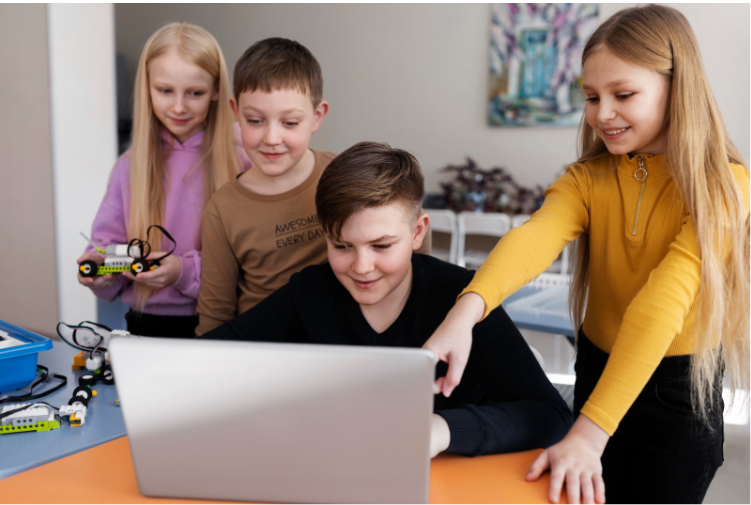
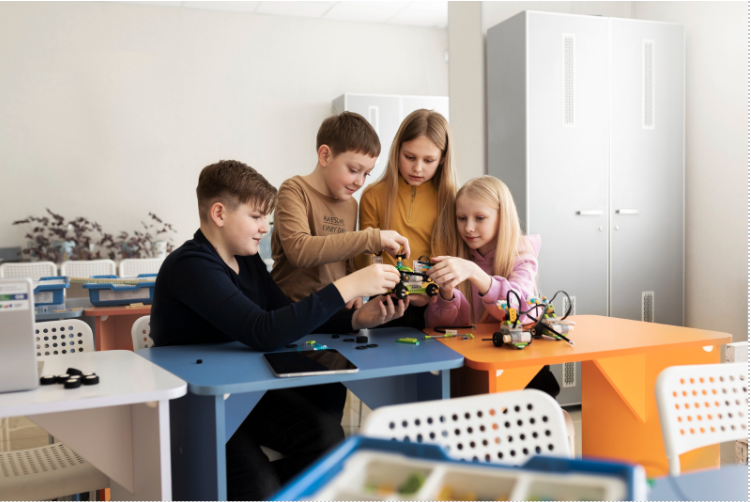
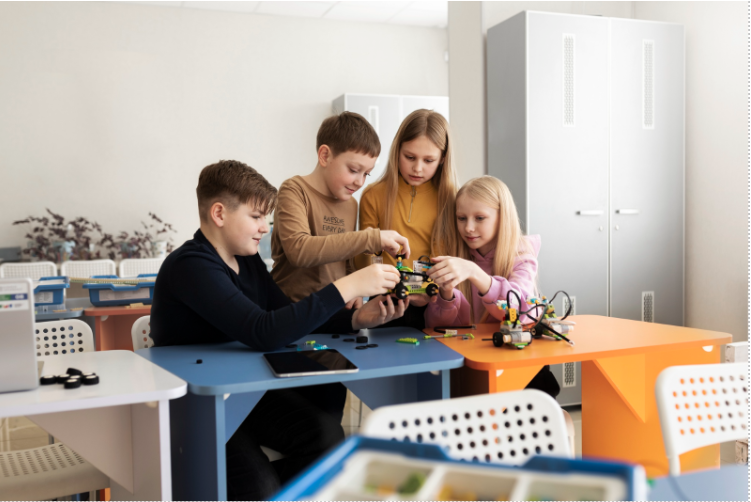
A typical day inside a VijAIpatha lab feels more like a startup workspace than a classroom. Students huddle around computers, sensors, and servo motors, experimenting with robot designs and coding logic. The excitement is contagious—when a robot moves for the first time or a sensor triggers a light, the entire group bursts into cheers.
For many of these children, it’s their first encounter with modern technology. “I never imagined I could make something move with code,” says Kavya, a class 8 student from Bengaluru Rural. “Now, I want to become an engineer and build a waste-collecting robot for my village.” Her story is one among hundreds that prove how practical exposure can reshape aspirations.
Teachers, too, are witnessing a shift. Instead of being mere instructors, they have become facilitators of discovery. Through VijAIpatha training modules, they learn to guide experiments, troubleshoot devices, and encourage students to take creative ownership of projects.
Why This Matters for India’s Future
India has over 10 lakh government schools, and introducing AI and robotics education within this ecosystem could revolutionise the country’s innovation landscape. Historically, advanced STEM education has been limited to private or urban institutions. By targeting government schools, Karnataka has taken a decisive step toward inclusive technological empowerment.
The focus of VijAIpatha aligns seamlessly with the National Education Policy (NEP 2020) and Atal Tinkering Lab models implemented nationwide. Together, they form the backbone of India’s vision to spark scientific curiosity early in life. When students are exposed to hands-on problem-solving, the impact reflects not just in academic performance, but in mindset change.
Moreover, integrating AI literacy at the school level ensures that India’s next generation is prepared to navigate and shape an increasingly automated world. These children won’t merely adapt to technology—they’ll define its boundaries.
The MakersMuse Perspective
For platforms like MakersMuse, VijAIpatha embodies the future of STEM education storytelling. It’s a case study on how policy meets passion: a government initiative brought to life by the imagination of students and the dedication of educators.
Such stories make perfect social content, engaging audiences with visuals of young students working with robots and coding panels. Posts highlighting student innovators, teacher-led experiments, or “before vs after” transformations of classrooms can generate high engagement across social media channels.
The Dawn of AI-Driven Classrooms
VijAIpatha is more than an infrastructure upgrade—it’s a paradigm shift. In these AI, STEM, and robotics labs, curiosity takes center stage, and every child with access gains the power to invent. What started as a pilot in Karnataka could soon become a blueprint for all Indian states.
If India’s education system continues to nurture innovation through such forward-thinking programmes, then the classrooms of today might just produce the technologists, inventors, and problem-solvers of tomorrow. And that’s what VijAIpatha truly represents—the path to a brighter, more intelligent future.