
Making Engineers Who Can Engineer a Nation’s Success: Rethinking India’s Technical Education Ecosystem
The aim of education is not to simply develop more engineers, but to develop engineers who are capable of invention, creating complex solutions, providing sustainable solutions, and making valuable contributions to national advancement. For future engineers to be successful in these roles, there needs to be a complete change in India's technical education framework, starting well before college and continuing throughout a student's entire schooling.

STEM Enabled School India Builds the Foundation for Future Engineers
Industry Expectations Are Rapidly Changing
STEM Enabled School India Encourages Innovation and Problem-Solving
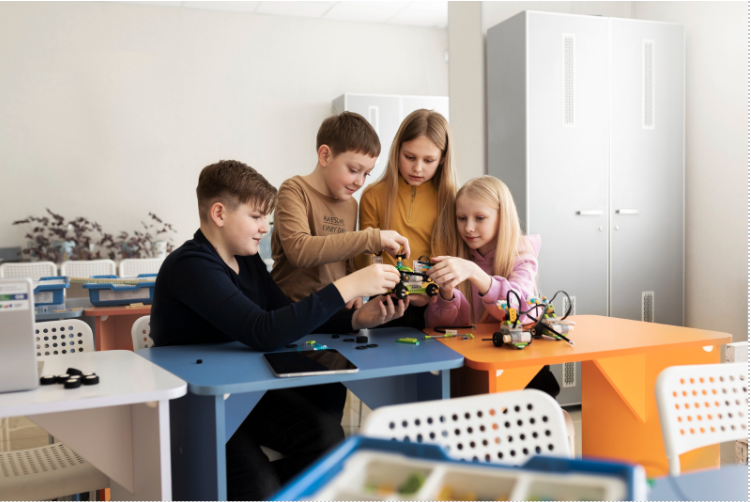
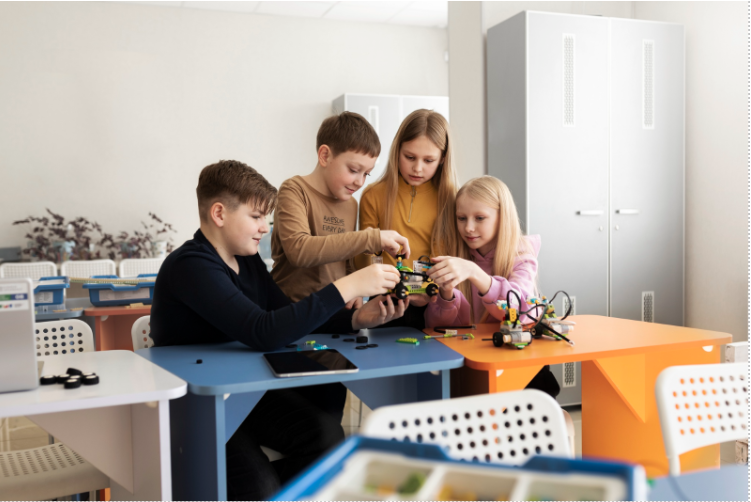
One of the defining characteristics of a STEM enabled school India model is its emphasis on innovation. Students are encouraged to identify real-world problems, conduct research, test ideas, and develop practical solutions.
Activities such as robotics competitions, maker spaces, coding workshops, engineering design projects, and scientific investigations help learners understand how knowledge can be applied to address societal challenges.
These experiences cultivate analytical thinking, resilience, and creativity—qualities that are essential for future engineers. By fostering innovation at the school level, educators can help create a stronger pipeline of students prepared for advanced technical education.
Research and Entrepreneurship Must Become Core Priorities
Numerous experts in the education industry agree that the Indian technical education system needs to focus more on research and entrepreneurship. As engineering students have primarily sought employment after graduation, it is clear that there is a significant need for innovation-driven start-ups.
Student's engagement in research creates the development of critical thought and the development of skills needed to research an issue. By providing entrepreneurial education, students learn how to turn those thoughts into actual businesses. Through the skill-sets developed by researchers and entrepreneurs, these skills can lead to new technology and help stimulate the global economy.
In schools where students are allowed to pursue innovation, numerous forms of the creation of an environment that allows for working in a collaborative manner on projects that all provide opportunities to apply their technical skills through experimentation, design creation, and work with industry are present. Innovation labs, start-up incubators, research facilities, and industry partnerships are examples of platforms through which students can explore at a competitive and equitable level. The creation of the above environments aligns with the national vision of achieving technological independence, digitisation, and sustainability.
STEM Enabled School India Creates Future Innovators
The principles of innovation and entrepreneurship can be introduced at an early age through a STEM enabled school India approach. Students who participate in project-based learning environments gain valuable experience in teamwork, experimentation, and creative problem-solving.
Schools can encourage innovation by organizing science fairs, technology exhibitions, coding competitions, and engineering design challenges. These activities help students develop confidence in their abilities while fostering a culture of curiosity and exploration.
Educational leaders believe that nurturing innovation from childhood increases the likelihood that students will pursue research, engineering, and entrepreneurial opportunities later in life.
Building Engineers for National Progress
The success of India in achieving its goals of economic prosperity, technological innovation, and sustainable development is contingent on having an abundance of high-quality engineering professionals. In order to develop engineers who will assist the country in achieving its economic ambitions, there must be a comprehensive educational system, from school through post-secondary and professional development.
As India continues investing in educational reform and technological advancement, STEM-enabled learning environments will play a vital role in preparing the next generation of engineers, innovators, and leaders.
STEM Enabled School India Supports the Future of Technical Education
A well-designed STEM enabled school India ecosystem can serve as the foundation for this transformation. By integrating science, technology, engineering, and mathematics into engaging, hands-on learning experiences, schools can help students develop the competencies needed for future success.
A well-designed STEM enabled school India ecosystem can serve as the foundation for this transformation. By integrating science, technology, engineering, and mathematics into engaging, hands-on learning experiences, schools can help students develop the competencies needed for future success.
The future of technical education is not simply about producing graduates with degrees—it is about developing individuals who can design solutions, drive innovation, and contribute to the nation’s progress. By strengthening the educational pipeline through initiatives like STEM enabled school India, the country can build a generation of engineers capable of engineering not only products and systems but also India’s long-term success.