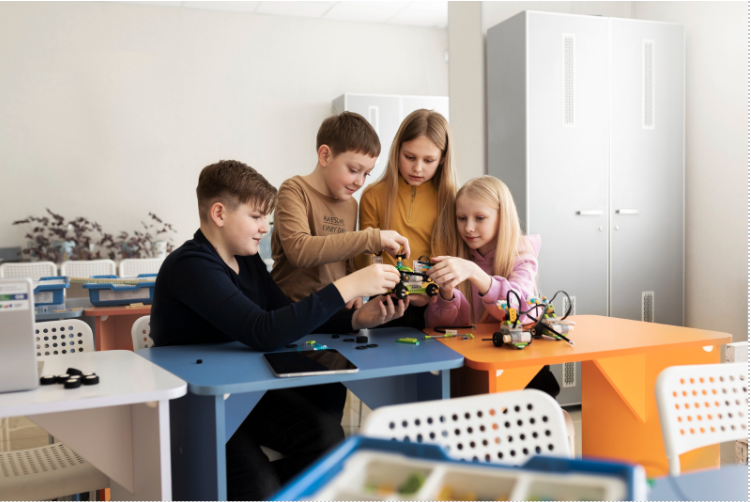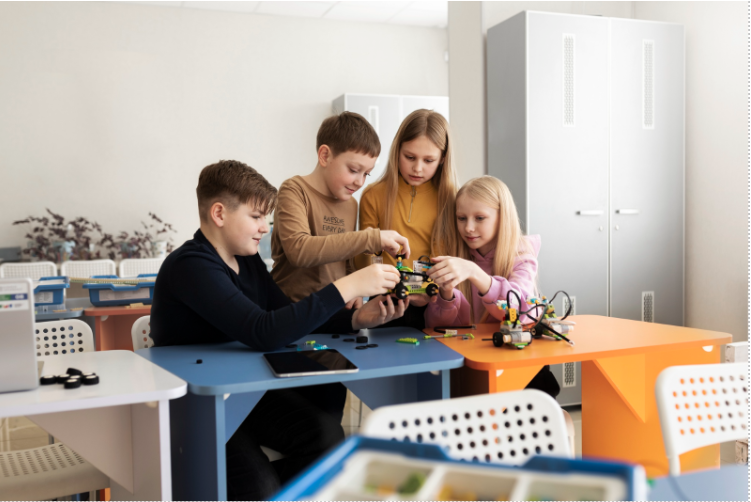


STEM labs are becoming an important part of modern education as schools worldwide move towards practical science and technology learning. These spaces allow students to experiment, build, programme and solve problems rather than relying only on textbook instruction.
International STEM initiatives are increasingly combining traditional science with robotics, artificial intelligence, coding and 3D design. UNESCO’s STEM programmes include practical science kits, robotics training and digital technologies designed to strengthen hands-on learning.
STEM Labs Make Learning More Practical
STEM labs give students opportunities to apply classroom concepts through experiments and projects. Learners can investigate scientific principles, build structures, programme robots or develop solutions to real-world challenges.
This approach encourages students to test ideas, analyse results and improve their designs. It can also strengthen collaboration, creativity and problem-solving skills.
UNESCO’s Global Microscience Experiments project demonstrates how practical science can be delivered through compact laboratory kits. Students can conduct experiments in subjects including physics, chemistry and biology using relatively small quantities of materials.
Robotics and Coding Expand STEM Labs
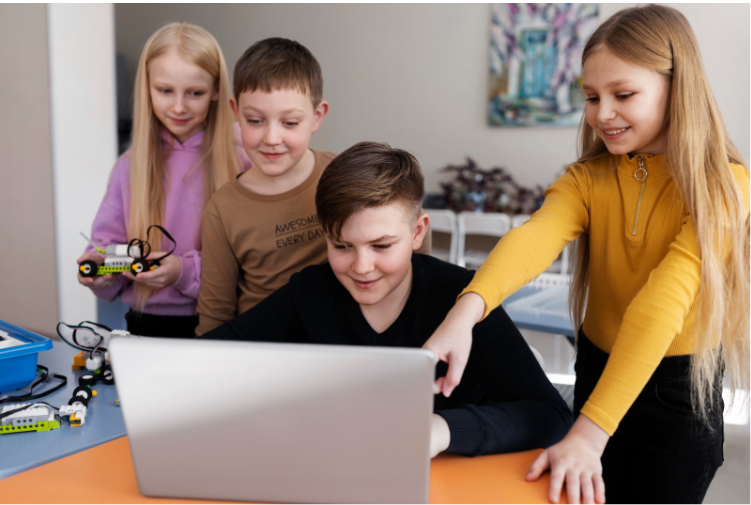
Robotics in schools has become a popular component of school STEM labs because it connects programming with engineering and physical experimentation.
Students can programme a robot, observe its response and modify their instructions. This process introduces computational thinking while making technical concepts more tangible.
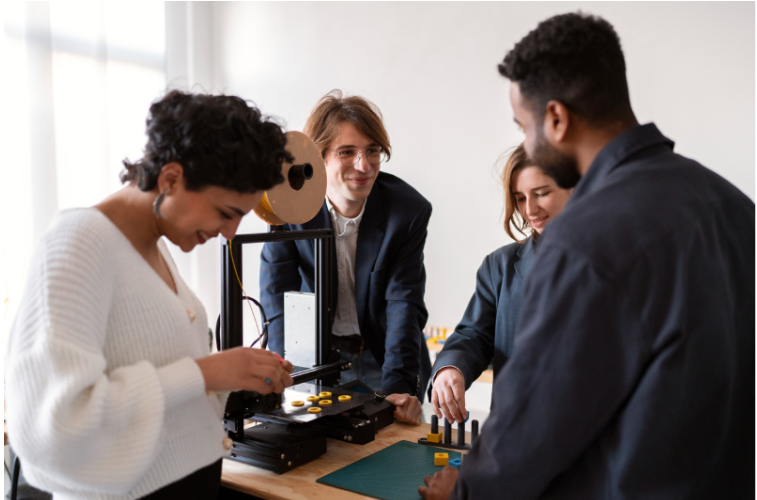
UNESCO’s STEM initiatives have included robotics, artificial intelligence and 3D design activities. Its CogLabs programme combines robotics, coding and machine learning with 3D printing and practical construction.
Teacher Training Remains Essential
Equipment alone cannot create an effective STEM laboratory. Teachers need training to design STEM lab activities, operate resources and connect projects with curriculum objectives.
International STEM programmes are therefore placing greater emphasis on educator development. UNESCO’s recent Asia-Pacific STEM training brought educators from many countries together to explore STEM, maker education, AI applications and interdisciplinary project design.
STEM Labs Can Improve Access
Not every school has the resources to establish a fully equipped laboratory. Mobile and low-cost models can help extend practical STEM education to underserved communities.
UNESCO’s Tinker on Wheels initiative uses mobile STEM innovation labs to bring STEM equipment and trained educators to schools. The programme has reported reaching more than 1000 students across schools in districts.
Such models show that effective STEM lab learning does not always require expensive infrastructure.
The Future of STEM Labs
The next generation of STEM labs is likely to combine traditional science equipment with robotics, coding, sensors, AI and digital design.
The focus is shifting from simply providing equipment to creating environments where students can experiment, collaborate and develop solutions. As STEM education becomes increasingly skills-oriented, these laboratories can provide a practical bridge between classroom learning and future technological careers.
FAQs
A STEM lab is a learning space where students explore science, technology, engineering and mathematics through experiments, projects and practical activities.
STEM lab activities can include science experiments, robotics, coding, engineering projects, AI activities and 3D design.
STEM labs allow students to apply theoretical concepts while developing problem-solving, creativity, collaboration and critical-thinking skills.
No. Compact science kits, low-cost materials and mobile laboratories can also support meaningful hands-on STEM learning.