What Screen-Free STEM Education Looks Like in Practice
Rather than relying on tablets or apps, the KidsEdu curriculum builds computational thinking
through physical, screen-free tools: code blocks, coding cards and code pads that give children
ages three to six real-time, hands-on feedback as they work through problems.
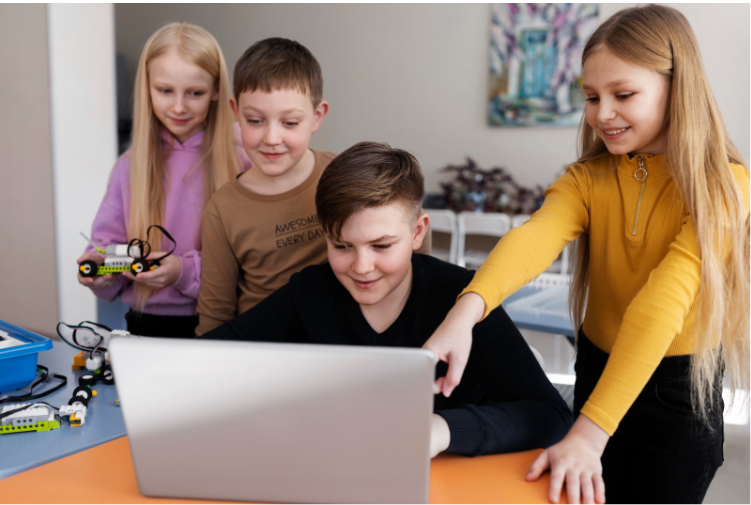
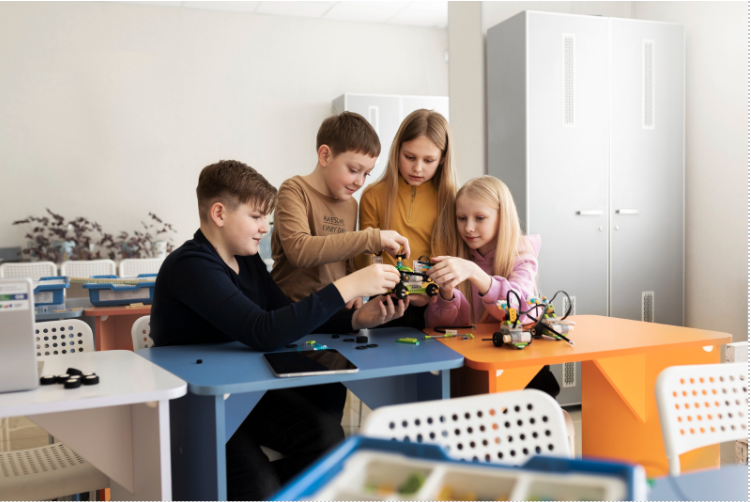
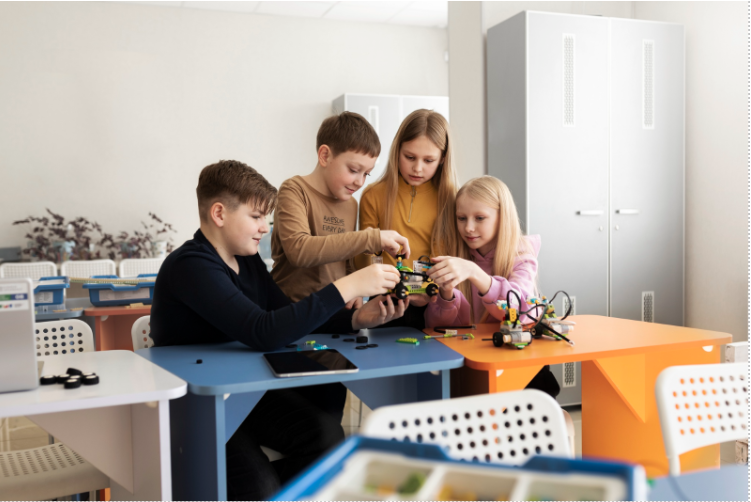
Robotics kits used in classrooms include sensor-based tools designed specifically for early learners, letting
children build and test ideas without staring at a screen, which is the core idea behind
screen-free STEM education at the preschool level.
The approach is built around the 5E discovery model, Engage, Explore, Explain, Evaluate, Elaborate, combined with an engineering design process, giving teachers a structured but
flexible way to introduce STEM concepts through play rather than instruction alone. For
preschool-age children, this screen-free STEM education format is meant to build focus,
persistence and problem-solving skills before more formal digital tools enter the classroom.
Making STEM Learning Affordable Beyond Big Cities
Before KidsEdu’s model took hold, preschool STEM classes in Vietnam were largely limited to
well-off families in major cities, often costing around VND 300,000 (about USD 13) per student
per month. KidsEdu has brought that down to as little as VND 90,000 (roughly USD 3.5) per
student per month by localising its curriculum, sponsoring the upfront cost of STEM lab setup in
kindergartens, and partnering with international STEM organisations to fund teacher training in
remote areas.
Kindergartens that can’t cover lab setup costs upfront repay KidsEdu through an interest-free
monthly fee, removing one of the biggest barriers smaller and rural preschools face when trying
to introduce screen-free STEM education into their classrooms.
Training Teachers as the Foundation of the Program
Rather than sending pre-packaged materials into classrooms and hoping teachers adapt,
KidsEdu treats teacher training as the starting point for its screen-free STEM education model.
The nearly 5,000 teachers trained since April 2023 went through full-day, tuition-free sessions
covering how to introduce STEM and robotics concepts to preschool-age children using the
46-hour STEM and 46-hour robotics curriculum built into the program.
Teachers also get access to an online KidsEdu STEM teaching hub for weekly activities and
ongoing project ideas, along with continuing support and regional STEM meetups organised by
KidsEdu. Several teachers trained through the screen-free STEM education program have gone
on to earn individual certification through STEM.org, a marker KidsEdu highlights as evidence of
the training’s depth.
Recognition and Reach
The KidsEdu STEM curriculum earned the STEM.org Reviewed badge in August 2023 and was
renewed for a second year in August 2024. In 2024, KidsEdu was shortlisted for the 100 Global
Education Innovation list by HundrED.org, recognising its work bringing digital literacy and
screen-free STEM education to preschoolers across Vietnam and Southeast Asia at low cost.
In
2025, KidsEdu was selected for the United Nations Development Programme’s inaugural SDG
Venture Scaler, tying its screen-free STEM education work directly to Sustainable Development
Goal 4 on access to quality education.
Why Screen-Free STEM Education Matters for Early
Learners
Early childhood specialists generally favour physical, hands-on tools over screen-based learning
for preschool-age children, since younger learners tend to build stronger foundational skills
through tactile, social interaction rather than passive screen time. KidsEdu’s screen-free STEM
education tools, physical cards, blocks and sensor-based robots, are built around that principle,
letting children experiment with cause-and-effect logic without needing a device in hand.
As STEM programs for early learners expand across Vietnam and neighbouring countries,
KidsEdu’s screen-free STEM education model offers a template built on three elements: an
approved curriculum, trained teachers, and affordable lab access – rather than treating STEM
education as an add-on that only well-funded schools can offer. It also points to a growing body
of STEM research suggesting that hands-on, screen-free methods suit early learners better than
app-based alternatives.
FAQs
KidsEdu has trained close to 5,000 preschool teachers across 10 provinces in Vietnam since
April 2023, as part of its screen-free STEM education programme.
It refers to teaching STEM and coding concepts through physical tools such as code blocks,
coding cards and sensor-based robotics kits, rather than tablets or screen-based apps.
The curriculum is designed for preschool children ages three to six.
Yes. It is validated by STEM.org, recognised by the Vietnam National Institute for Educational
Sciences, and was shortlisted by HundrED.org for its 100 Global Education Innovation list in
2024.
KidsEdu sponsors the upfront cost of setting up STEM labs, lets kindergartens repay through
interest-free monthly fees, and funds teacher training through partnerships with international
STEM organisations.
KidsEdu’s screen-free STEM education model reflects a broader international push toward
accessible STEM learning, aligning with the UN’s Sustainable Development Goal 4 on quality
education, which KidsEdu formally tied its work to in 2025 through the UNDP’s SDG Venture
Scaler.