Karnataka Expands STEAM Education to 300 Public Schools, Empowering Students Through Design Thinking and Innovation

The Government of Karnataka has announced the expansion of its STEAM (Science, Technology, Engineering, Arts, and Mathematics) education initiative to 300 public schools, marking a significant step toward strengthening innovation-driven learning in government classrooms. The initiative aims to equip students with future-ready skills by integrating design thinking, creativity, problem-solving, and hands-on learning into the school curriculum.


STEAM Education IB Results

The expansion illuminates Karnataka's determination to reform the teaching methodology and move away from conventional rote learning to experiential and interdisciplinary teaching. Education specialists opined that the programme would play an important role in bridging the gap between theoretical learning and practical skills acquiring. 

STEAM Education Moves Beyond Traditional Learning 

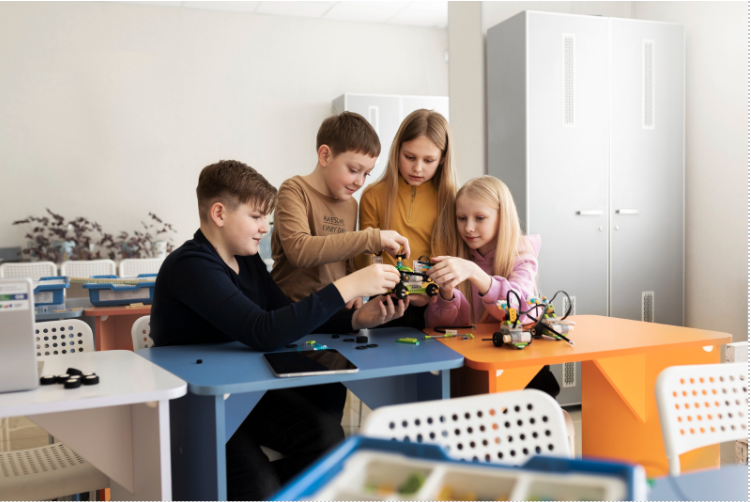
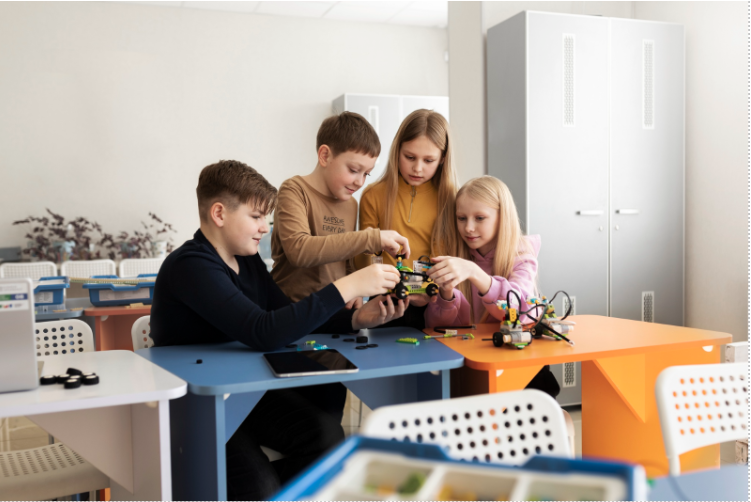
STEAM education is different from the traditional way of teaching as it does not treat different subjects as separate courses. Instead, it carries out a unity of science, technology, engineering, arts and mathematics to create collaborative learning activities.Students do hands-on projects, solve real life problems, make prototypes and look for creative solutions by using the knowledge from different subjects.  

This teaching technique develops students' interest in learning, cooperation with others, communication skills and analytical thinking abilities. Karnataka's objective to introduce STEAM education to 300 government schools is to teach students skills required by today’s education and labor market. 

Design Thinking Becomes a Core Learning Approach 

One of the central features of the initiative is the introduction of design thinking as a classroom learning methodology. 

Design thinking encourages students to: 

  • Identify real-world problems.  
  • Understand user needs.  
  • Generate creative ideas.  
  • Build and test prototypes.  
  • Improve solutions through continuous feedback.  

This structured approach helps learners become confident problem-solvers while promoting innovation, collaboration, and resilience. 

Education specialists believe that introducing design thinking at the school level helps students develop entrepreneurial mindsets and prepares them to tackle complex future challenges. 

Hands-On Learning Encourages Innovation 

The expanded programme places strong emphasis on experiential learning rather than memorization. 

Students participating in STEAM activities will engage in: 

  • Robotics and automation projects.  
  • Basic coding and computational thinking.  
  • Science experiments.  
  • Engineering design challenges.  
  • Creative arts integration.  
  • Environmental sustainability projects.  
  • Innovation and maker activities.  

These practical experiences help learners understand theoretical concepts through direct application while encouraging experimentation and critical thinking. 

Teachers are expected to facilitate project-based learning that enables students to work collaboratively and present innovative solutions to real-life issues. 

Supporting Future-Ready Skills 

As industries increasingly adopt artificial intelligence, automation, and digital technologies, schools are being encouraged to prepare students with skills that extend beyond academic knowledge. 

The Karnataka STEAM initiative supports the development of: 

  • Critical thinking.  
  • Creativity.  
  • Digital literacy.  
  • Communication.  
  • Collaboration.  
  • Leadership.  
  • Problem-solving.  
  • Adaptability.  

These competencies are widely recognized as essential for success in higher education, entrepreneurship, and the future workforce. 

Education experts note that strengthening these skills at an early age improves students’ confidence and long-term career readiness. 

Strengthening Public School Education 

The expansion of 300 schools operated by the government illustrates Karnataka’s dedication to enhancing quality of education provided by the public sector through inventive practices. 

When public educational institutions are endowed with STEAM education opportunities, it is possible to cut down the gap in education and enable the students from different backgrounds to enjoy up-to-date education. 

Furthermore, this project is supposed to provide opportunities for teacher skill upgrading through training in specifics of project-oriented instruction methods, cross-discipline aspects of education as well as IT integration. 

Experts in education consider that making teachers empowered is vital to a successful incorporation of STEAM education in schools participating in the project.

Building an Innovation Ecosystem in Schools 

Beyond classroom instruction, the programme seeks to create a broader culture of innovation within schools. 

Students will be encouraged to: 

  • Participate in innovation challenges.  
  • Develop community-based solutions.  
  • Collaborate on interdisciplinary projects.  
  • Present ideas through exhibitions and competitions.  
  • Build confidence in scientific inquiry and creative thinking.  

Such opportunities help foster an entrepreneurial mindset while encouraging students to view challenges as opportunities for innovation. 

Schools are also expected to strengthen partnerships with educational organizations, industry experts, and technology professionals to enrich student learning experiences. 

Looking Ahead 

The launch of STEAM education in 300 government schools in Karnataka is an important step toward reforming school education in the state. The goal of the programme is to incorporate elements of design thinking, creativity, innovation, and applied learning into public schools so that students acquire the necessary competence to thrive in the evolving technological landscape. 

While the programme is being implemented, it is necessary to ensure that there are ongoing investments made in teacher training, educational resources, and interactive educational partnerships. The expansion demonstrates that education around the world is starting to understand that students must not only rely on textbooks but also be able to think creatively, solve problems, and learn throughout their lives. 

Leave a Reply

Recent Posts

Gallery

Related Posts