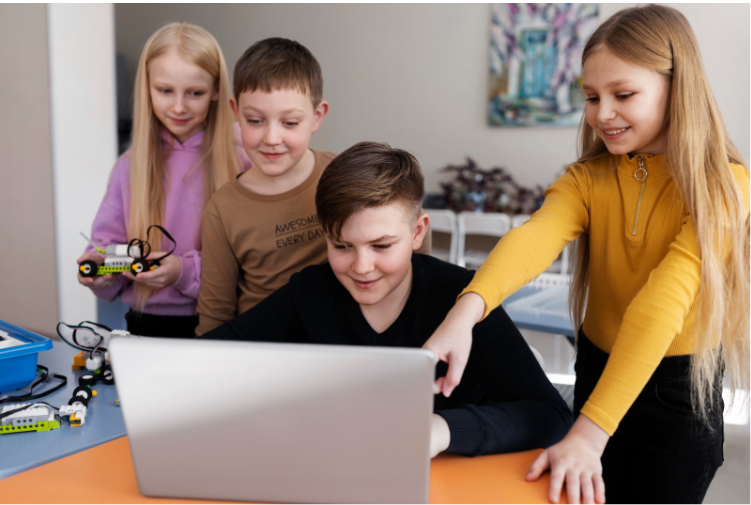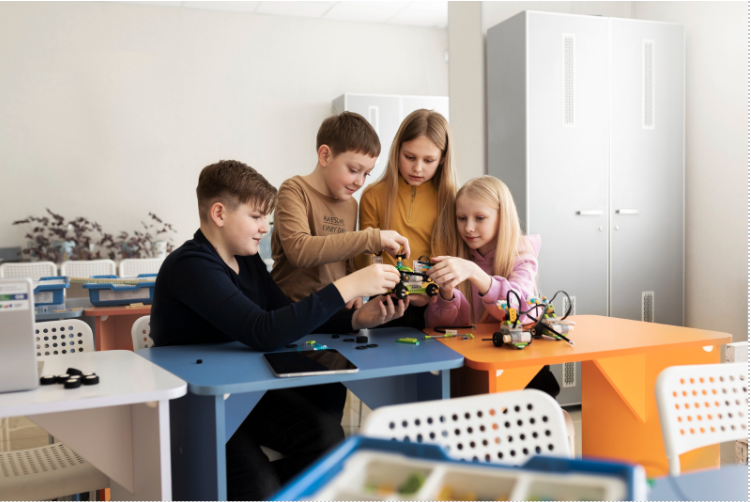


Encouraging girls in STEM education remains a global priority as women and girls continue to be underrepresented across science, technology, engineering and mathematics.
UNESCO reports that women account for only 35% of STEM graduates globally. Persistent stereotypes, social expectations and unequal access to opportunities can influence girls’ participation in STEM subjects and careers.
Challenging Stereotypes Early
Gender equality in STEM begins in the classroom. Girls can lose interest in technical subjects when social expectations suggest that science or technology is more suitable for boys.
Supporting girls in STEM education therefore requires learning environments where students can develop confidence without being limited by stereotypes.
UNESCO highlights the importance of addressing biases and social expectations that influence the subjects girls choose and the opportunities they receive.
The Power of Female Role Models
Visible female STEM role models can help students understand that scientific careers are accessible to them.
UNESCO’s recent work highlights teachers and women scientists who encourage girls by sharing their own experiences. Seeing women succeed in science can make technical careers feel more achievable.
For girls in STEM education, this visibility can strengthen confidence and encourage students to explore subjects they might otherwise avoid.
Mentorship Can Build Confidence
STEM mentorship programmes provide another way to support girls. Mentors can introduce students to different careers, answer questions and offer guidance about educational pathways.
UNESCO identifies mentorship and role-model programmes as important tools for increasing girls’ confidence and participation. Its wider work also highlights the value of connecting students with women working in STEM careers.
Effective STEM mentorship programmes can therefore complement classroom teaching by giving students access to professional perspectives.
Making STEM Education More Inclusive
Inclusive STEM education requires more than encouraging girls to enrol in science subjects. Schools also need supportive teaching practices and learning environments.
UNESCO’s approach to gender equality in STEM includes improving access to quality STEM learning, strengthening teacher training and challenging stereotypes.
For girls in STEM education, these measures can help create stronger pathways from school learning to higher education and employment.
Connecting Girls With STEM Careers
Career exposure can help students understand the range of opportunities available in science and technology.
STEM careers for girls extend across medicine, engineering, research, computing, environmental science and many other fields. UNESCO notes that career guidance, STEM professionals and workplace exposure can help students understand these possibilities.
Encouraging STEM careers for girls therefore requires showing students what these professions involve, not simply telling them that STEM is important.
Building the Next Generation of Women in Science
Increasing participation of girls in STEM education can contribute to a more diverse scientific workforce.
The goal is not only to increase enrolment but also to help girls remain engaged as they progress through education and eventually enter STEM careers.
Through inclusive STEM education, stronger mentorship and visible female STEM role models, schools can help challenge assumptions about who belongs in science and technology.
FAQs
Girls can face stereotypes, social expectations and unequal access to opportunities that influence their participation in STEM.
Schools can provide inclusive teaching, practical STEM experiences, mentorship and access to female STEM role models.
Female STEM role models can show students that women can build successful careers in science, technology, engineering and mathematics.
STEM mentorship programmes connect students with professionals who can provide guidance, encouragement and insight into STEM study and careers.
Gender equality in STEM can be strengthened through inclusive STEM education, teacher training, mentorship, career guidance and efforts to challenge stereotypes.