Firozabad Govt Schools Get 750 Smart Classrooms, ICT & Space Science Labs in Major Infrastructure Push
In a significant step toward strengthening foundational education in Uttar Pradesh, government schools across the Firozabad district have undergone a wide-ranging infrastructure upgrade that promises to transform the way students learn and interact with modern educational technologies. The district administration’s latest initiative has led to the establishment of 750 smart classrooms, 195 Information and Communication Technology (ICT) labs, and 55 space science labs across primary and basic schools bringing public sector education closer in line with facilities traditionally found in private schools.
This initiative, launched with the goal of enhancing learning outcomes and bridging the longstanding digital divide between rural and urban students, represents a major leap toward equitable access to quality education. District officials explained that the smart classrooms are equipped with audio-visual tools, which allow teachers to present concepts in a multisensory format that makes complex topics more understandable and engaging for young learners. Instead of relying solely on textbooks and chalkboards, students are now exposed to interactive videos, animations, and other digital content that support understanding and retention.
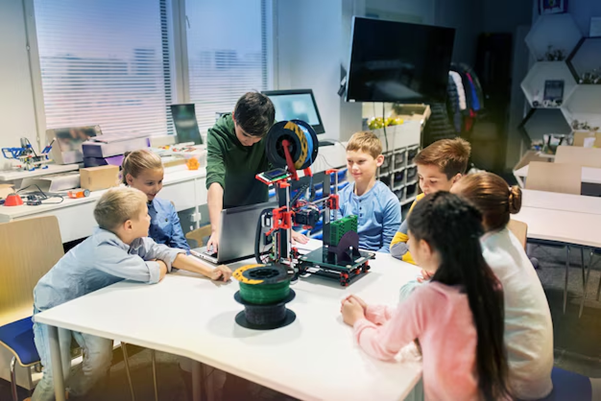
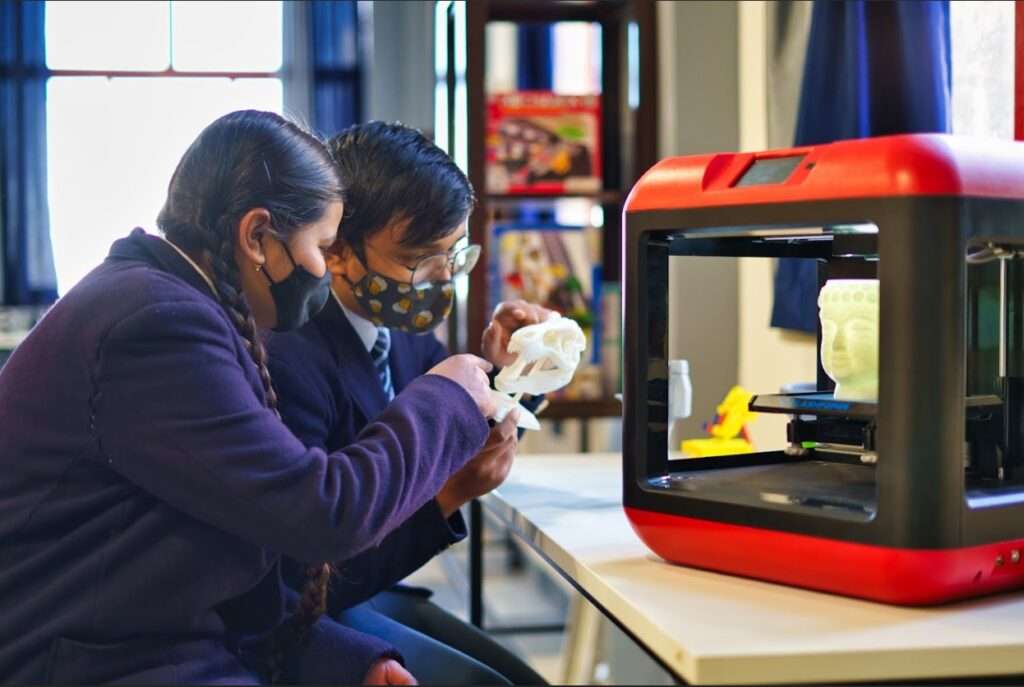
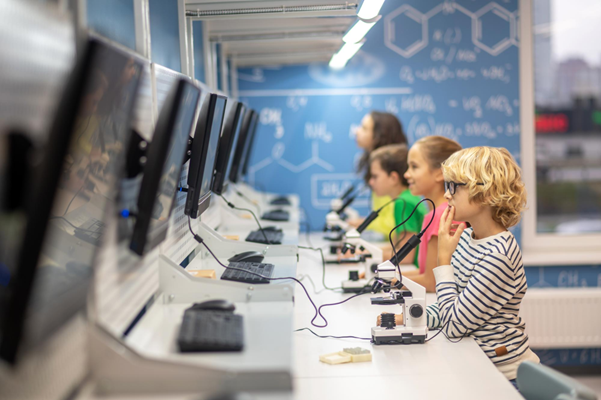
The introduction of ICT labs equips students with early exposure to computers and basic technology skills at a stage where digital literacy is increasingly essential. These labs allow learners to interact hands-on with devices and software that form the backbone of education and employment in the 21st century. Officials note this early exposure helps students gain confidence in using technology, encouraging curiosity and familiarizing them with tools they will encounter in higher education and professional environments.
Perhaps the most distinctive feature of the overhaul is the inclusion of 55 space science labs, which facilitate experiential learning in astronomy and space concepts. These labs are designed to foster curiosity and scientific temper among students by enabling them to explore subjects such as stars, planets and broader space phenomena via practical activities, an initiative that expands science education beyond conventional classroom theory.
Students themselves have already started to express the benefits of these upgrades. Many remarked that the new technology-aided learning environments make lessons more interesting and easier to grasp. “Earlier, it was only books and blackboards. Now, videos and visuals make difficult topics easier to understand,” said a sixth-grade student, highlighting the direct impact on student engagement and comprehension.
District Magistrate Ramesh Ranjan emphasised the broader ambition of the initiative: to ensure that a lack of resources does not become a barrier to any child’s education. As part of the wider effort, the administration has also improved basic facilities, with infrastructure upgrades ensuring that nearly 80% of primary schools now have proper seating and desks, which further enhances the overall learning environment and boosts student confidence.
In addition to the tech upgrades, three Kasturba Gandhi residential schools are being run in the district to support girls’ education, underscoring a continuing commitment to inclusivity and opportunity for all. Taken together, these measures reflect a broader strategy to ensure that government schools are equipped not just to teach, but to inspire future generations with the knowledge and skills necessary for success in an increasingly competitive and technology-driven world.
Learn More about STEM Education