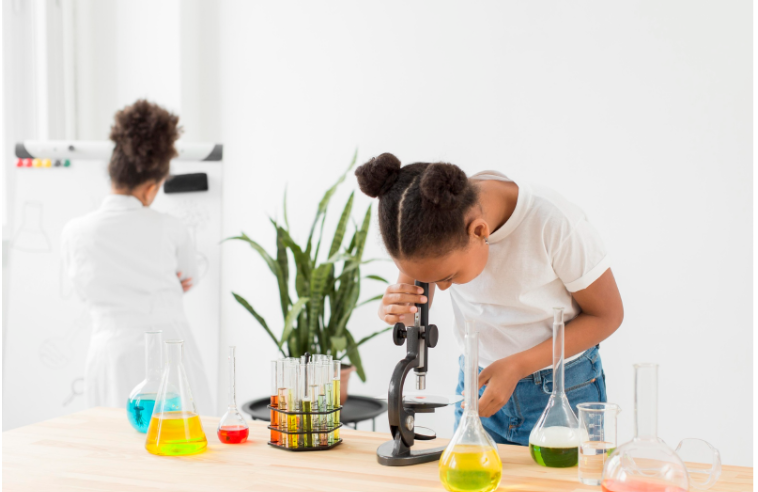


The transformation of STEM education is happening beyond individual countries.
Universities are responding to the same broad pressures: rapidly developing technology,
changing employer expectations and the need to prepare students for careers that may look
very different from today’s jobs.
The response has not been uniform. Some institutions are redesigning introductory courses. Others are expanding practical learning, introducing AI training or building stronger relationships
with employers.
Together, these developments are changing the shape of global STEM education, with experiential STEM learning becoming an increasingly important part of how universities prepare students for an AI-driven future.
Gateway Courses Are Getting a Rethink
A student’s first year can have a major influence on whether they remain in a STEM field.
Calculus, introductory programming and other gateway subjects can become significant obstacles when students struggle to connect abstract concepts with their intended careers.
A recent US initiative involving public colleges and universities is redesigning Calculus I and II
rather than simply adding another technology tool to existing courses. The approach focuses on
course design, faculty collaboration and using student performance data to improve teaching.
This is an important distinction. STEM curriculum innovation does not always mean adding more technology. Sometimes it means reconsidering how a difficult subject is taught in the first place.
AI Learning Is Becoming More Accessible
AI education is also moving beyond specialist classrooms.
Santa Clara University’s AI Kitchen provides one example. Students and staff from different
backgrounds can experiment with AI through practical workshops without needing advanced
coding skills.
This model reflects a broader idea in AI in higher education: students in different disciplines will
need some level of AI literacy, even if they never become AI specialists.
The emphasis is increasingly on understanding and application rather than simply learning
technical terminology.
Universities Are Connecting Learning With Real
Problems
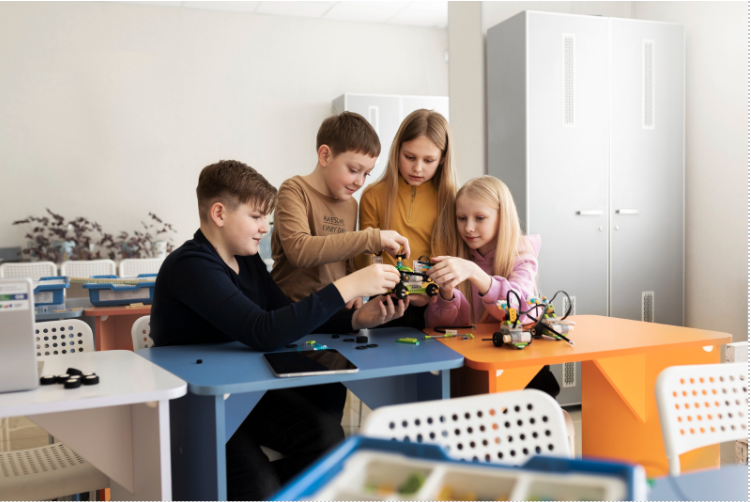
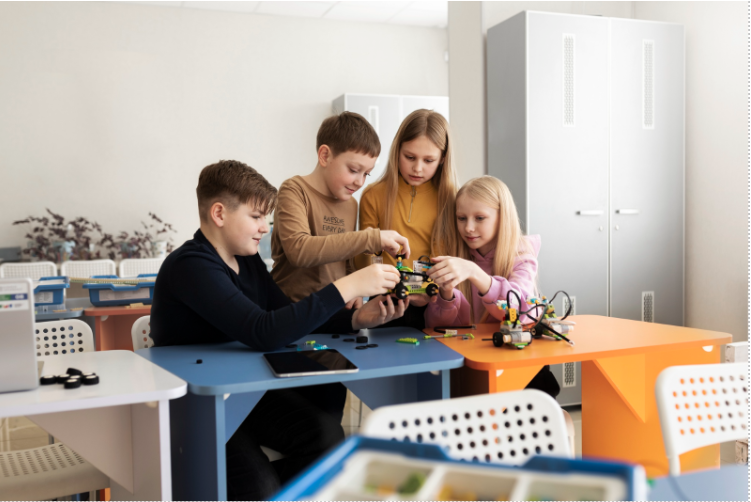
The move towards experiential STEM learning is another international trend. Students are being asked to investigate real problems instead of working exclusively with hypothetical classroom exercises. Projects can involve industry challenges, community issues, environmental questions or data from public sources.
Industry-integrated project-based learning can strengthen future-readiness among STEM
students, particularly through teamwork, adaptability and problem-solving.
Such models also give students a clearer idea of why a particular technical skill matters.
University-Industry Collaboration Is Expanding
Universities are increasingly looking outside campus boundaries for expertise.
Industry professionals can contribute current knowledge, practical case studies and career
perspectives.
Companies, in turn, can gain access to student talent and university research.
A 2025 review of STEM partnerships examined studies and programmes published between
2014 and 2024, showing the scale of interest in collaborative approaches to STEM learning.
In 2026, MIT RAISE and Georgia State University also announced PATH, a multi-year initiative
connecting research universities, community colleges, industry and government to expand
practical, industry-aligned AI training.
These developments show how university-industry collaboration is becoming part of the
education ecosystem rather than an occasional add-on.
Research and Learning Are Moving Closer Together
Another important development is the stronger relationship between teaching and research.
Students increasingly have opportunities to participate in research projects, collaborate with faculty and investigate questions connected to emerging technologies.
This is particularly relevant to STEM research, where students can gain experience with methods that cannot be fully replicated through textbooks.
Research exposure can also help students understand that science is not simply about
memorising established facts. It involves questioning assumptions, testing ideas and dealing with uncertainty.
That mindset is valuable whether students eventually become researchers, engineers,
entrepreneurs or technology professionals.
What Global Developments Mean for STEM Education
India
The international experience offers useful lessons for Indian colleges.
The most transferable idea is not any single technology. It is the move towards a more
connected model of education in which students learn concepts, apply them, work with others and understand where those skills are used.
India is already moving in this direction through curriculum reforms and partnerships between universities and technology companies. AI, data science, robotics, cybersecurity and other
emerging fields are being incorporated into higher education curricula.
The next challenge will be implementation.
Technology alone cannot transform education. Colleges also need faculty development,
appropriate infrastructure, meaningful assessment and enough time for students to work on
substantial projects.
That is what will determine whether the current STEM education trends produce lasting changes
or remain isolated initiatives.
FAQs
AI, automation, changing workforce requirements and demand for practical skills are
encouraging universities to rethink traditional STEM teaching models.
It gives students opportunities to apply technical concepts to practical situations while
developing problem-solving, teamwork and adaptability.
AI is being introduced through specialised courses, workshops, analytical tools and applied
projects, making AI literacy relevant to students beyond computer science.
They help connect academic learning with current workplace requirements while giving
students access to professional expertise, projects and technologies.
STEM education is likely to become more practical, interdisciplinary and research-oriented,
with stronger links between universities, industry and emerging technologies.