

Students are getting more chances to move past theory and work on problems from their own communities. The newly announced Seva First Innovation Challenge is built around that idea, asking young participants to identify local challenges and develop solutions that can be tested and improved. It reflects a wider move toward community-based STEM learning. The Union Ministry of Education, AICTE and UGC are organising the challenge, with IISc Bengaluru as the nodal institute.
Learners from schools, ITIs, polytechnics, colleges and universities take part at different levels. The junior category for school students focuses on identifying community problems and developing practical solutions or well-reasoned ideas. Higher levels involve more technical work, including engineering, fabrication, electronics and prototype development. Among student innovation challenges, this one stands out for the range of institutions it covers, and it adds momentum to youth innovation in India.
Connecting STEM learning with community problems
Community-based STEM learning gives students a reason to apply scientific and technical concepts outside classroom exercises. Instead of starting with a predetermined experiment, learners start with a problem they see around them. A local issue might involve waste management, water use, accessibility, agriculture, public health, energy or digital services. Students investigate it, work out its causes and weigh possible solutions.
That makes STEM more relevant, because the link between what students learn and what affects their community becomes visible. The Seva First Innovation Challenge is built on this problem-first model. Participants identify issues in their communities and develop solutions that can be tested, refined, and potentially taken toward implementation.
Encouraging students to become problem solvers
Problem-solving education moves students away from hunting for the correct answer and toward understanding a situation before responding to it. A student working on an innovation project may first need to identify the people affected by a problem, then collect information, examine existing solutions and decide what could be improved.
Doing this builds analytical thinking, since students have to tell symptoms from underlying causes. It also builds patience. A first idea may not work as expected, which pushes learners to question their assumptions and try another approach. Over time, students see that innovation is usually iterative.
Turning ideas into STEM innovation projects
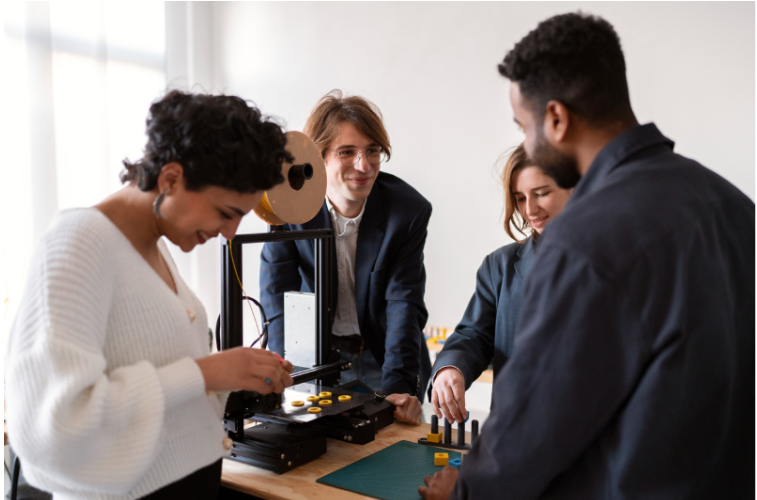
An idea means more once students get to develop and test it. STEM innovation projects give them a structured path from spotting a problem to building a possible solution. Students can sketch an idea, build a basic model, test how it works and gather feedback, then make changes based on what they observe.
The process pulls together science, technology, engineering and mathematics, along with communication, design and teamwork. The Seva First Innovation Challenge gives participants access to mentorship, laboratories, fabrication facilities, testing support and other guidance, so they can go beyond proposing an idea and think about how it might be developed further.
Making hands-on engineering education more relevant
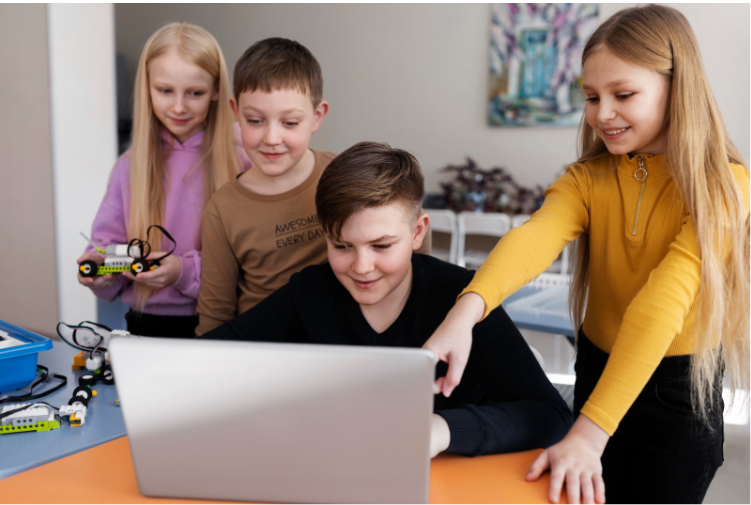
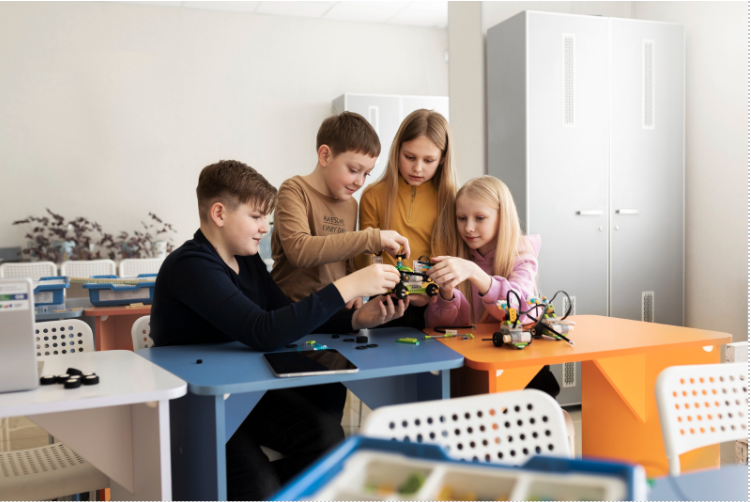
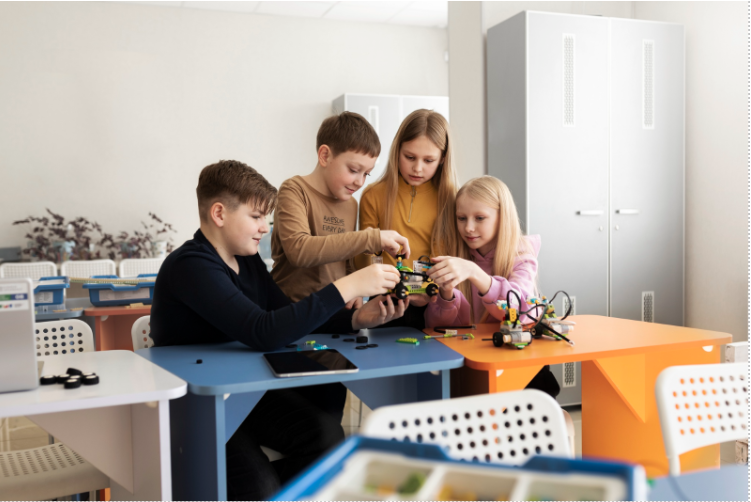
Hands-on engineering education shows students how technical knowledge applies to real situations. Building a prototype forces learners to think about materials, dimensions, functionality and practical limits. For school students, this introduces engineering thinking without requiring advanced technical knowledge at the start.
Even a simple model becomes a learning tool. Students test how it performs, find its weaknesses and think about how the design could change. They come to see engineering as a mix of knowledge, creativity and practical decision-making. The challenge carries this approach across educational levels, with technical participants working on engineering, fabrication, electronics and process solutions.
Encouraging local innovation
Innovation is often pictured in large laboratories and research centres, but community-based projects show it can start with everyday problems. Students may notice an issue because they experience it themselves or see its effect on family members, neighbours or local institutions. That personal connection makes a project more meaningful and lets learners understand a problem’s context before designing anything.
Local work also pushes students to think about affordability, accessibility and practicality. A technically impressive solution is of little use if the people who need it cannot maintain or adopt it. These questions introduce the social side of engineering and technology, and they show how youth innovation in India can grow from local needs.
Developing research skills through innovation
Innovation projects require students to gather information before building anything. They may need to research existing products, scientific concepts, technical methods or conditions in the community. This develops research skills alongside practical STEM abilities. Students learn to compare information, pick out relevant evidence and decide which ideas are useful for their project.
Research also keeps learners from recreating an existing solution without understanding its limits. By studying earlier approaches, students can spot gaps and think about how their own idea might respond differently or better. This is where problem-solving education and student innovation challenges reward careful groundwork, not just quick building.
Supporting interdisciplinary learning
Real-world problems rarely fit inside one school subject. A water problem, for example, can involve environmental science, engineering, mathematics, technology and social awareness. Community-based STEM learning pushes students to combine knowledge from several of these areas.
That makes classroom subjects feel more connected. Mathematics helps students analyse measurements, science explains the underlying process, and engineering guides the design of a solution. Technology then supports testing, data collection or communication. Students see that different subjects work together on complex challenges.
Giving students access to mentorship
Mentors help young innovators see how ideas develop in professional settings. They ask questions, point out technical limits and encourage students to refine their proposals. The Seva First Innovation Challenge includes academic and industry mentorship for participants, which exposes students to perspectives beyond the school environment.
Mentors also show that innovation involves documentation, testing, revision and communication, work that is easy to miss when you only see the finished technology. Good mentoring gives STEM innovation projects a realism that classroom guidance alone often can’t.
Moving from prototypes to practical solutions
Creating something and creating something useful are different achievements. A prototype may show that an idea is possible, but further testing is needed to see how it performs under realistic conditions. Students can learn to weigh durability, usability, safety, cost, accessibility and maintenance.
The challenge supports this with testing, field-testing and pathways toward possible adoption. That gives students a chance to see that successful innovation involves far more than an initial design, and it makes hands-on engineering education feel like preparation for real deployment.
Encouraging design thinking in schools
Design thinking asks students to approach a problem from the perspective of the people affected by it. Learners try to understand the problem first, then decide what to build. That tends to produce more thoughtful solutions, because students respond to actual needs instead of assumptions.
For school learners, the process can begin with observation and discussion. They identify a problem, understand its context, brainstorm possibilities and develop a simple prototype. Testing then gives feedback they can use to improve the idea, which keeps creativity tied to a practical goal.
Linking innovation with sustainability
The challenge includes themes on clean and sustainable development, agriculture, health, education and security. These give students room to explore how STEM can meet social and environmental needs. Sustainability can enter project design through resource use, energy efficiency, waste reduction and long-term usability.
Innovation can also mean finding a more efficient, accessible or sustainable way to handle an existing problem, not only producing something new.
Building confidence through making
In community-based STEM learning, students gain confidence when an idea moves from a drawing or discussion into a working model. Making gives learners visible evidence of progress. Even when a prototype fails, they can see what needs to change.
That encourages a constructive attitude toward mistakes. An unsuccessful experiment becomes information that guides the next version. Experiences like this strengthen perseverance, creativity and practical reasoning.
Connecting education with wider innovation ecosystems
The challenge links educational institutions with laboratories, industry, government bodies and other organisations, creating a broader environment where student ideas can be discussed and developed. Students see how innovation moves through stages: a problem starts in a community, students investigate it, mentors give technical guidance and the solution is eventually tested in a real setting. Seeing that whole path gives community-based STEM learning a realistic picture of how scientific and technological solutions develop.
FAQs
It uses real problems from local communities as starting points for science, technology, engineering and mathematics activities. Students investigate these problems and develop possible solutions through research, design and testing.
They encourage learners to identify problems, research possible solutions, build prototypes and refine their ideas, combining subject knowledge with practical problem-solving.
It lets students apply concepts by designing, building and testing, which helps them see how technical knowledge works in practical situations.
Problem-solving, research, communication, teamwork, creativity and critical thinking. Students also learn to test ideas and improve solutions based on evidence.
By asking students to observe local problems, research them and develop small-scale solutions. Teachers can support projects with mentorship, interdisciplinary activities and chances to present or test ideas.