Bulgaria Expands Access to International Education as More Students Enroll in IB and Global Learning Programmes
As global education continues to evolve, Bulgaria is emerging as a growing hub for international learning opportunities. An increasing number of students across the country are enrolling in International Baccalaureate (IB) programmes and other globally recognized academic pathways, reflecting a broader shift toward internationally focused education that prepares learners for a connected and technology-driven world.
Bulgaria's educational policy is motivated by an ever-increasing number of parents and students who desire access to higher level education based on the principles of critical thinking, research development, multilingualism and global/citizenship orientation. They want their children to receive an international education, qualify for university or entry to the workforce, and to develop skills needed for future jobs.
By establishing these previous two statements as a foundation for the implementation of IB and global learning initiatives in Bulgaria, the country is on the verge of taking a major step in raising the quality of education available to students in Bulgaria. This aims to aloo them compete with international candidates when applying to higher level institutions or when seeking job opportunities. There is a greater demand by universities and employers for individuals with strong analytical thinking and competence in solving problems and communicating with others from different cultures. Therefore the introduction of a globally recognized curriculum will continue to benefit students.
International Education Supports Future-Ready Learning
Parental interest in global education is increasing at an unprecedented rate, reflecting parents' changing expectations of and for their children in today's rapidly changing global environment. Today's educational practices are moving away from traditional education models that rely heavily on classroom instruction and concentrate on developing flexible, lifelong learners with the capability of solving complex global challenges.
Global organizations such as the International Baccalaureate are creating opportunities for students to learn through inquiry-based learning, interdisciplinary understanding, inquiry-based research, and connections with their communities.
These types of teaching methodologies provide students with academic knowledge and practical life skills. Educators believe that providing students with exposure to a variety of perspectives and curricula that are recognized around the world will better prepare students for postsecondary education and future employment opportunities. As a result, several schools are expanding access to programs that are recognized globally and are based on internationally accepted educational standards.
This trend is reflecting a larger shift in education systems around the world toward a focus on creativity, collaboration, and the application of knowledge.
STEM Curriculum for Schools India Reflects Similar Global Trends
Bulgaria's developments are indicative of similar educational priorities found across many different nations, including India, in addition to an increase in emphasis on STEM instruction within many Indian schools. As global education systems adapt to better suit the needs of rapidly changing economies, there is a growing emphasis on preparing children through high-quality early childhood and elementary-grade STEM programs.
Spanning all age groups and grade levels, the approach to integrating STEM into conventional curricula reflects a shift away from viewing these four disciplines as individual areas of study. It aims at moving towards utilizing interdisciplinary approaches to problem-solving through experimentation and project-based learning.
In developing a STEM program for schools in India, the objective is to support the development of critical thinking skills, creativity, teamwork, and innovation. These same competencies are reflected in many of the international education programs. As a result, global learning and STEM education programs can work together to prepare students for success in the future.
International Baccalaureate Programs Keep Gaining Popularity
Students enrolled in IB programs undertake challenging academic tasks in addition to completing extended essays, community service, or independent research projects as they pursue their academic interests. The curriculum meets the needs of 21st-century learners, helping them develop strong critical-thinking skills, communicate clearly and effectively, and view problems from multiple angles.
The IB is often perceived by parents as a means by which children may gain admission into highly regarded colleges/universities and pursue international job opportunities. The worldwide credibility of the IB allows its graduates to compete for admission at colleges/universities throughout the world, as well as develop transferable skills that will aid them in gaining employment in many different fields.
The increased acceptance of IB programs indicates the recognition that success in the future will require more than just success on a test; success will require complementary skills such as flexibility, leadership, and global awareness to be as important.
STEM Curriculum for Schools India Promotes Innovation and Research
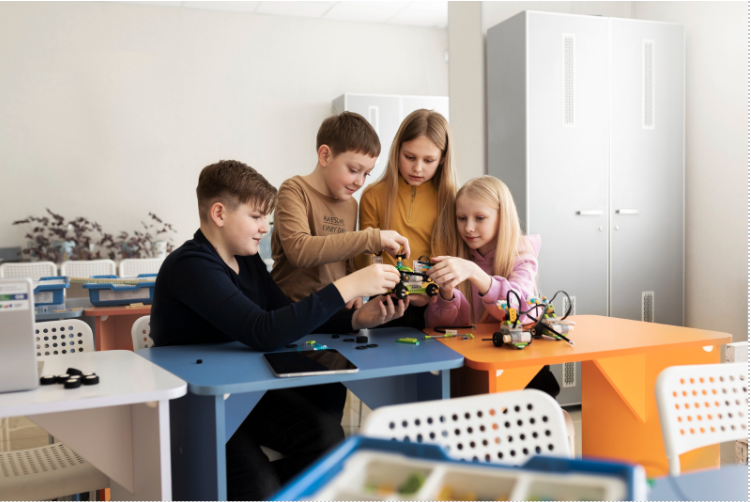
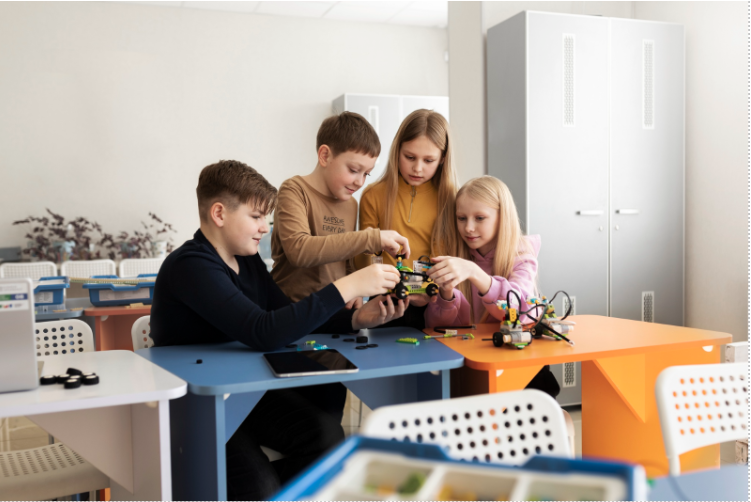
The growth of global education also emphasizes the significance of learning grounded in research. A contemporary STEM curriculum for schools in India strongly focuses on practical projects, innovation contests, coding tasks, robotics, and scientific inquiry.
STEM education fosters practical skills through the exploration of real-world issues, enhancing both academic performance and preparedness for careers. Research experiences instruct learners on gathering evidence, interpreting data, and conveying results efficiently.
Educational specialists argue that merging solid STEM bases with global learning experiences can produce versatile graduates equipped for various opportunities.
Global Learning Programmes Foster International Perspectives
In addition to academic success, international education programs seek to foster global citizenship. Students are urged to comprehend various cultures, interact with worldwide concerns, and cultivate appreciation for differing perspectives.
In a world that is becoming more interconnected, these traits are becoming vital. Employers, universities, and organizations appreciate people who can work together across cultures, communicate well, and participate in global communities.
Global learning initiatives typically encompass language enhancement, cross-cultural projects, worldwide exchanges, and cooperative learning opportunities. These chances assist students in building self-assurance and expanding their knowledge of the world.
Bulgaria's increasing involvement in global education shows a dedication to equipping students for achievement across international borders. By broadening access to internationally acknowledged programs, schools are establishing links that bridge local education with global prospects.
STEM Curriculum for Schools India and Global Education Share Common Goals
The educational systems of the various countries have many similarities, though there are also many differences among them. International education programs are designed to help students develop skills that are needed in many different sectors, and schools in India emphasize a strong STEM (Science, Technology, Engineering, and Math) curriculum, which helps develop higher-order thinking skills such as creative thinking, critical thinking, teamwork, and problem solving.
As various industries such as engineering, healthcare, technology, research, business, and entrepreneurship continue to advance through technological developments, schools will need to prepare their students with the skills necessary for their successful adaptation and advancement in those fields.
As various industries such as engineering, healthcare, technology, research, business, and entrepreneurship continue to advance through technological developments, schools will need to prepare their students with the skills necessary for their successful adaptation and advancement in those fields.
As more Bulgarian students are participating not only in International Baccalaureate programs, but also in other global education initiatives, Bulgaria is developing its reputation in the field of international education. The focus of this trend highlights the importance of globally recognized educational benchmarks and emphasizes the increasing importance of education models that integrate academic achievement and innovation with a global awareness.
For educators from around the world (and particularly for those who are involved in developing a STEM curriculum for schools in India), the experience of Bulgaria is a strong example of how contemporary education can allow students to become self-assured, effective, and globally connected learners.