

AI in STEM education is becoming a major international education priority as artificial intelligence
changes how students learn and how teachers approach classroom activities. Education systems
are increasingly exploring ways to use AI while ensuring that technology supports learning rather
than replacing human interaction.
UNESCO recently brought together education ministers, experts, educators and students to
discuss the future of artificial intelligence in education. The discussions focused on ensuring that
emerging technologies contribute to equity, opportunity and inclusion.
AI Becomes Part of Education Discussions
Artificial intelligence in schools can support a range of educational activities. Teachers can use
AI-assisted tools to develop learning resources, while students can interact with technology to
explore concepts and receive additional support.
However, AI in STEM education raises important questions about how students develop
independent thinking. Science and mathematics require students to understand processes,
evaluate evidence and solve problems, rather than simply receive answers.
This makes teacher guidance particularly important. AI can provide assistance, but students still
need opportunities to reason, experiment and explain their thinking.
Keeping Education Human-Centred
UNESCO’s recent international discussions emphasise the importance of maintaining education
as a human-centred process. The organisation has highlighted equity, opportunity and inclusion
as important considerations in the development and use of AI.
This approach is particularly relevant to AI in STEM education. Schools need to consider whether
students have equal access to technology and whether digital tools are being used in ways that
support different learning needs.
Artificial intelligence in schools should therefore be introduced alongside teacher training, clear
educational objectives and appropriate safeguards.
Supporting Digital STEM Learning
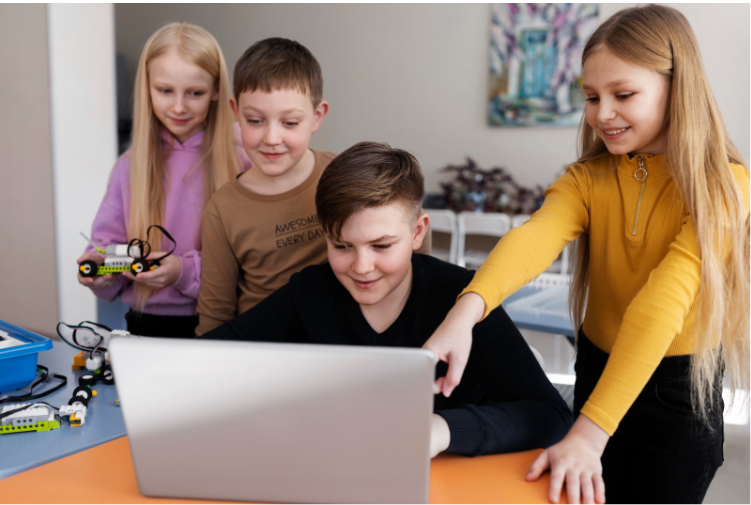
Digital STEM learning can benefit from AI when students use technology to investigate concepts
and explore problems. AI-supported simulations, interactive resources and learning platforms can
provide additional ways to engage with science and mathematics.
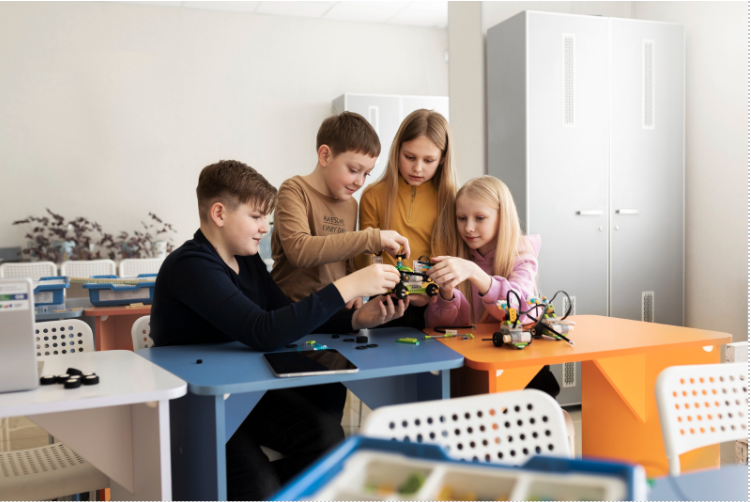
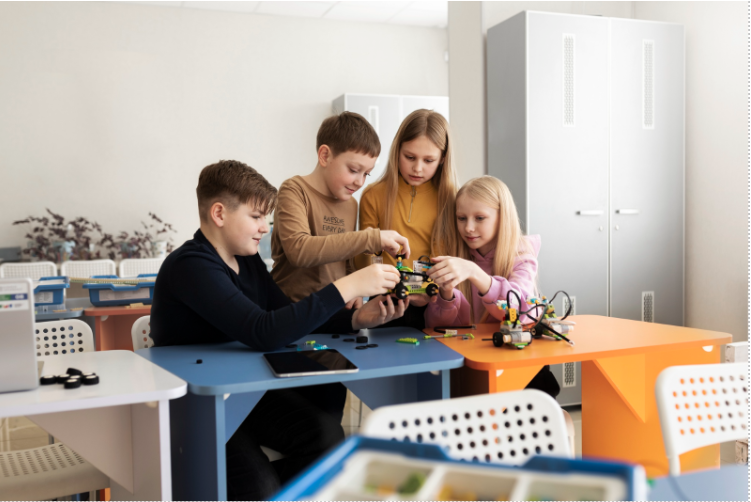
However, technology should not replace practical experiences. Students still need opportunities to
conduct experiments, work collaboratively and apply knowledge to real situations.
AI in STEM education can become more meaningful when digital tools are integrated with
project-based learning and scientific investigation.
Preparing Students for a Changing Future
The development of future-ready education requires students to understand both technology and
its limitations. Young people are likely to encounter AI across higher education, employment and
everyday life.
Learning how to question AI-generated information, check evidence and make responsible
decisions can therefore become an important part of STEM education.
Artificial intelligence in schools can support these skills when teachers encourage students to use
AI critically rather than treating its outputs as automatically correct.
Teacher Preparation Remains Essential
The effectiveness of AI in STEM education depends heavily on educators. Teachers need
opportunities to understand new tools and decide how they can support specific learning
objectives.
Professional development can help educators distinguish useful applications from technology that
adds little educational value.
This is particularly important for digital STEM learning, where technology can quickly become
more complex. Teachers need the confidence to combine digital resources with established
teaching methods, practical activities and classroom discussion.
Building Responsible AI Education
AI in STEM education offers significant possibilities, but its value will depend on how thoughtfully it
is implemented. Education systems need to balance innovation with inclusion, privacy, critical
thinking and teacher involvement.
UNESCO’s international work reflects a growing recognition that responsible AI education should
focus on people rather than technology alone.
As artificial intelligence in schools continues to develop, a balanced approach can help students
gain technological awareness while retaining the scientific reasoning and human skills essential
for meaningful learning.
FAQs
AI in STEM education refers to the use of artificial intelligence to support learning in science,
technology, engineering and mathematics. It can include AI-assisted resources, interactive
learning tools and systems that support teachers and students.
Artificial intelligence in schools can provide additional learning resources, support personalised
activities and help students explore complex concepts. Its use should remain guided by teachers
and clear educational objectives.
AI is not a replacement for teachers. Educators provide context, guidance and human interaction
that technology cannot fully replicate. Teachers also help students evaluate information and
develop independent reasoning.
Responsible AI education helps students understand both the opportunities and limitations of
artificial intelligence. It can encourage critical thinking, responsible technology use and careful
evaluation of information.
Digital STEM learning can use AI alongside experiments, projects and classroom discussion.
Combining technology with practical learning can help students develop technical knowledge
while strengthening problem-solving and scientific reasoning.