

STEM education is an approach to learning that integrates science, technology, engineering, and mathematics to help students solve real-world problems. Instead of teaching these subjects only through textbooks and theory, STEM education encourages hands-on learning, experimentation, design, and problem-solving. It helps students understand how different subjects work together while developing skills such as critical thinking, creativity, collaboration, and innovation.
To let learning flourish, STEM has put an end to the tense dust collection on books and cramming. STEM is a vibrant, practical, and interdisciplinary so that it supports all questions down to the last that are proposed in the human mind. With project-based learning, STEM is inculcated from the field of inquiry through experimentation. Therefore, STEM can create anything but stability, as its time frame does not envision the molding of STEM. Schools across the world have acknowledged that STEM education will open them up to making the next level of innovation, leadership requisite for global competitiveness.
The query of “Should we do STEM?” is now replaced with the inquiry of “How do we effectively implement STEM in our classrooms?” Accepted norms are not acceptable to reevaluation. There is a necessity to focus on the true meaning of STEM education, the graveness of the term in schooling, and how it shapes 21st-century learning.

What Does STEM Education Mean?
STEM education combines science, technology, engineering, and mathematics into an interdisciplinary approach to learning. Rather than teaching each subject separately, students apply concepts from multiple STEM fields to investigate questions, design solutions, conduct experiments, and solve practical problems.
STEM education nurtures the development of critical thinking and collaboration. Consider designing and developing sustainable water filtration: this might require applying scientific principles, manipulating engineering tools, intertwining mathematical calculations, and employing technological resources. Such a holistic approach to teaching contributes to the training of life skills that are in high demand in the present job market.
Additionally, STEM is adaptable and can cater to children of different ages. However, within that scope, the fostering of searching inquisitive young minds should be in place without worrying about the kind of education it is providing.
Why Is STEM Education Important in 21st-Century Learning?
STEM education has an influential role in countering the challenge of readying students for the complex nature of our contemporary world. In the 21st century, success is increasingly defined in terms of being able to think critically, adapt to change, and creatively solve problems-all the critical skills inculcated under the STEM setup. By putting forth STEM education into the classroom, this outlines that school will have given students favorable opportunities to acquire skills that go beyond academics, mainly dealing with their professional and personal lives. On a large scale, STEM education is compatible with the global trends that deal with serious challenges such as climate change, development in technology, and sustainable living. Set in an experiential-learning setting bordered by collaborative teamwork and interdisciplinary study.
Impact of STEM Education on the Classroom
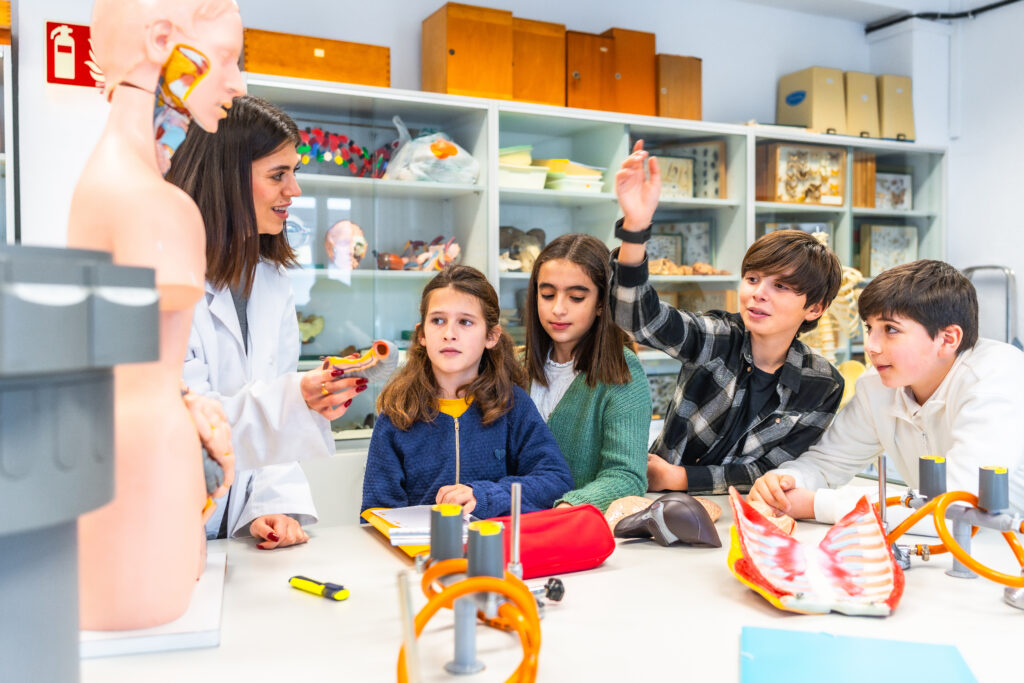
STEM education transforms classrooms into creative labs and experimental showcases. Lectures are thrown out the door, being replaced by interactive projects, coding challenges, and engineering design ventures, making learning both fun and memorable. For instance, suppose students in a STEM-based classroom set out to construct a robot or develop a mobile app that would incorporate technological applications such as electronics and coding but instill teamwork and problem-solving skills at the same time. Thus, schools are providing themselves with a unique source of plentiful opportunity just for the future by nature.
Why Is STEM Education Important in Schools?
The world is moving rapidly, and schools must adapt to the new requirements of a 21st-century society. With the huge emphasis on STEM, educational institutions are leading the pathway towards getting students ready now for a future where technological proficiency and a passion for creativity are indispensable. Schools that prioritize STEM-based education alongside academics have the potential to attract talented educators while also developing industry links, thereby creating a reputation that, in turn, adds value to their commitment toward modern teaching methods.
The Future of STEM Education
As technologies transform the world, the demand for those possessing STEM literacy will increasingly grow. AI and renewable energy certainly are two among numerous STEM field opportunities that provide numerous other creative and world-changing interests that never seem to end. Schools providing these students with STEM education will make students who are creators and problem-solvers of the tomorrow that we are all set to live. The future of education lies with curiosity, resilience building, and empowering students to contribute to society in a meaningful way-all outcomes of STEM.
How Schools Can Implement STEM Education
The time for investing in STEM has come. Imagine the doors that would swing open for schools that adopt this innovative approach to learning to help their students achieve consequently from their academic brilliance to adapt to global trends from their competence in running a tech-age world. Integrating STEM education provides a platform to bring out the future leaders, innovators, and problem-solvers among learners. Don’t make your school just another school neglected of STEM by not catching up; the essence of STEM education is to leapfrog any backward practice, and the simplest backward practice is shyness of schooling itself. So, to make your school bright, install STEM Lab with makers’ muse! Contact us to know more about STEM lab installation.








