STEM & STEAM – Understanding Differences in K-12 Education
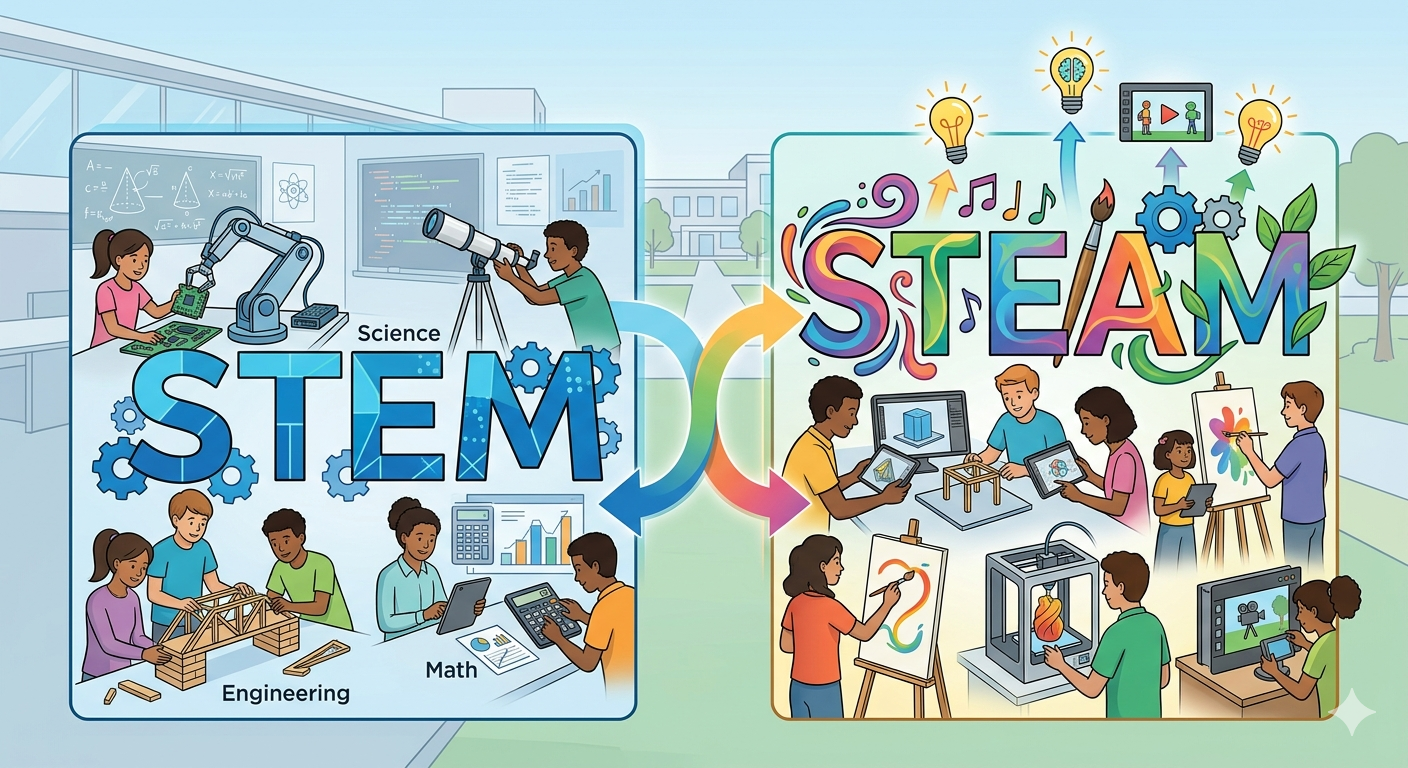
Today’s education system is changing to become more practical and creative rather than based on memorisation. Two educational methods used today in this changing education system to prepare students for future challenges are STEM & STEAM. These two methods of learning encourage students to learn by doing and to think critically in their classrooms.
Rather than considering them to be two different and competing education systems, these two methods of learning need to be considered to be complementary to each other. This is because both of these education systems have different strengths to help students learn in different ways.
In order to implement an effective education system for students in K-12 education, it is important to understand the difference between these two learning methods. This is because these learning methods have a very important role to play in helping to prepare students for their future.
What is STEM in K-12 Education?
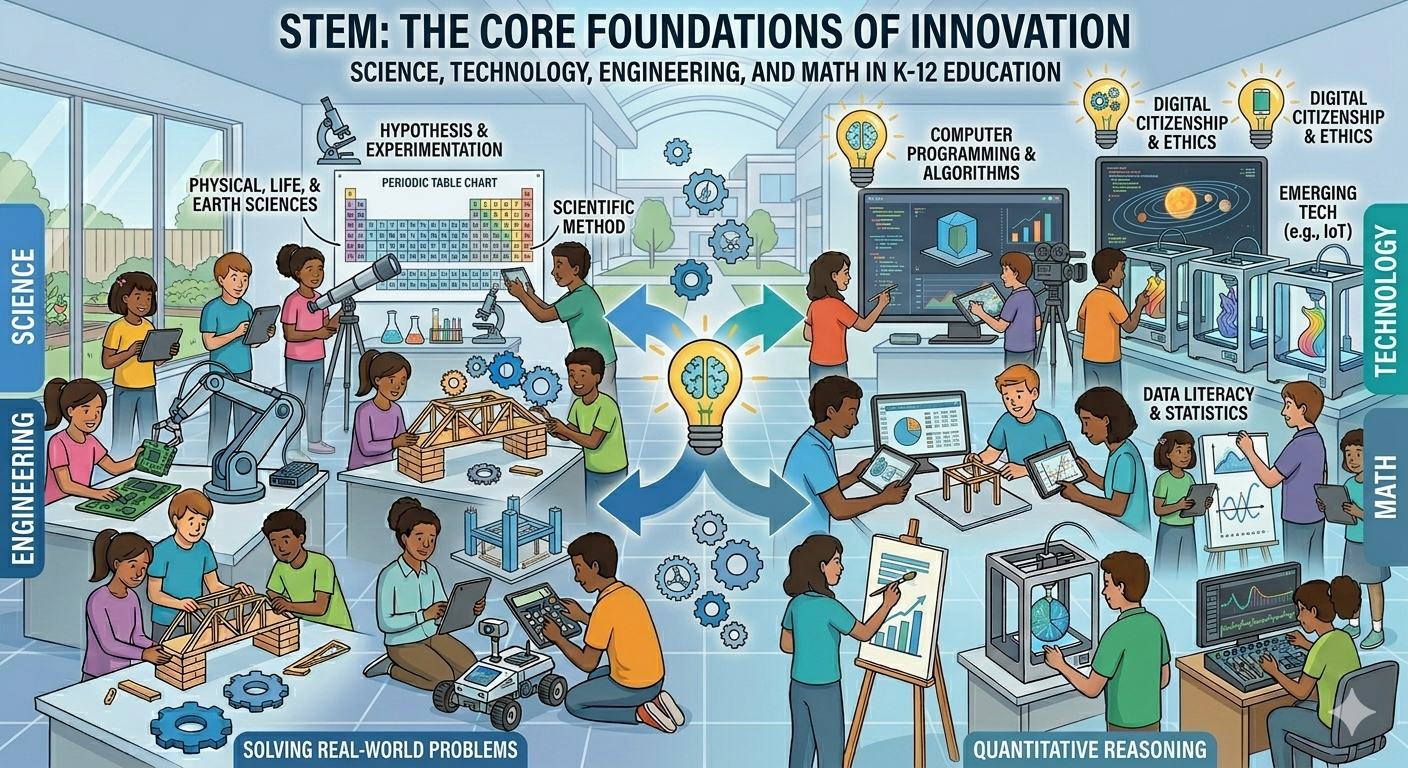
STEM refers to Science, Technology, Engineering, and Mathematics, forming the foundation of structured learning. This approach emphasises logic, accuracy, and step-by-step problem-solving. Students are guided to arrive at clear and measurable outcomes.
A Focus on Core Subjects
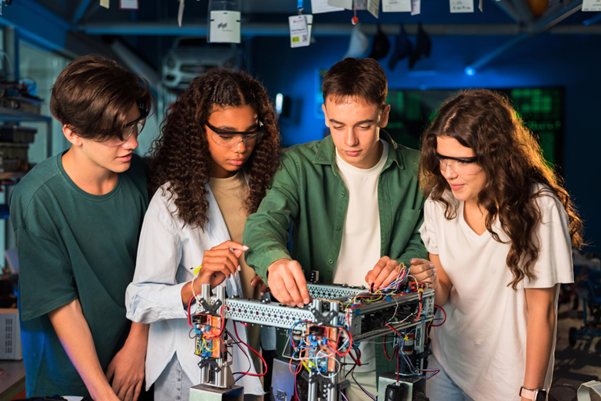
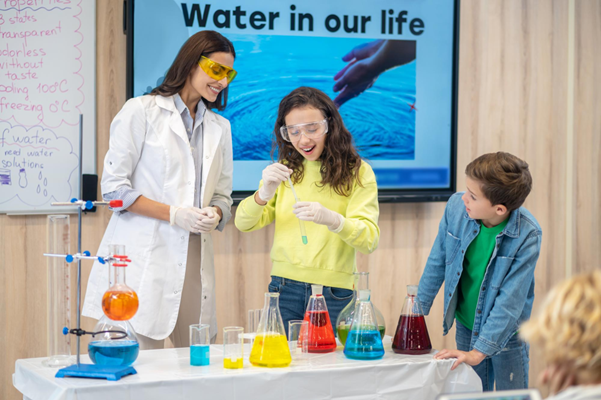
- STEM learning also aids in the acquisition of knowledge through experimentation, calculation, and technological investigation. For example, students may be required to build, research, or calculate mathematical problems. This helps the students cognitively as they realise the practicality of the acquired knowledge.
- STEM learning also provides students with the requirements necessary to pursue careers that require precision and technological knowledge. These include engineering, coding, and data analysis.
- It plays a significant role in laying the foundation for acquiring knowledge in academia.
What is STEAM in K-12 Education?
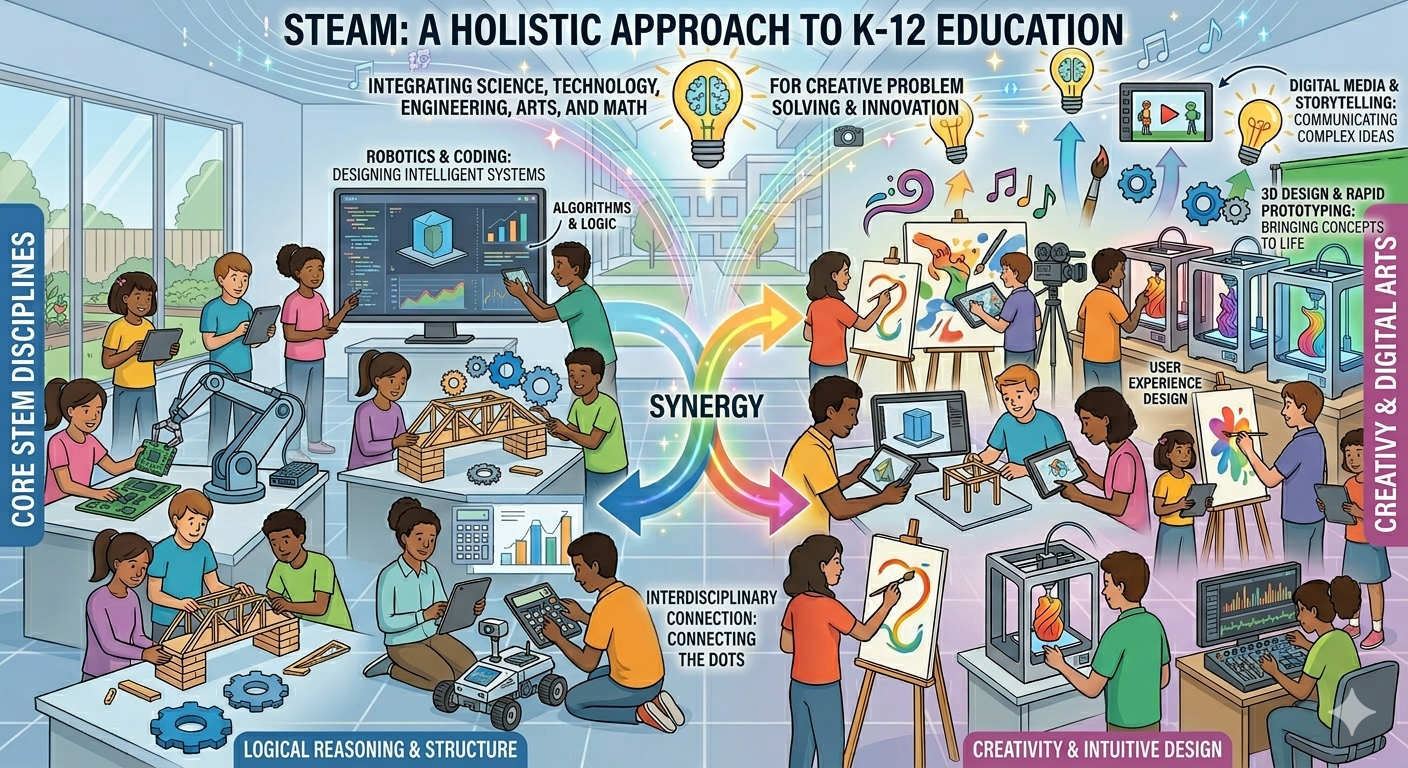
STEAM is all about including all aspects of STEM, but it also adds an important component, i.e., the Arts. This adds creativity, design, and expression to the learning experience. The students are encouraged to look beyond what is known and explore new, innovative ideas.
Adding Creativity to Learning
- The main advantage of STEAM is that it adds more flexibility to learning. The students are not required to follow a single approach. They can explore different approaches. It also encourages creativity and helps students express their ideas differently.
- STEAM learning involves activities such as designing, drawing, and presenting ideas. This is more engaging and interactive. It helps students learn both technically and creatively.
Differences Between STEM & STEAM
Understanding how these approaches differ becomes easier when comparing their core aspects. The table below highlights their key distinctions clearly.
| STEM | STEAM | |
| Core Focus | Science, Technology, Engineering, Mathematics, with a focus on logic | Adds Arts to encourage creativity and design thinking |
| Learning Style | Structured and guided | Flexible and exploratory |
| Creativity | Limited focus | Strong emphasis on imagination |
| Problem Solving | One correct or optimal solution | Multiple possible solutions |
| Teaching Method | Instructor-led and structured | Project-based and student-driven |
| Engagement | Analytical and logic-focused | Interactive and expressive |
| Skill Development | Technical and analytical skills | Creative, artistic, and technical skills |
| Application | Engineering, coding, science-based fields | Design, media, innovation-based fields |
| Learning Outcome | Accuracy and precision | Innovation and creativity |
| Evaluation | Based on correctness | Based on process and creativity |
This comparison shows how the two approaches differ in teaching style and outcomes. One focuses on precision, while the other encourages creativity and exploration.
Both approaches are valuable in helping students develop essential skills. While one builds strong analytical abilities, the other nurtures innovation and imagination.
Benefits of STEM
STEM education builds a strong foundation for logical thinking, structured problem-solving, and technical understanding, helping students approach challenges with clarity and confidence. It equips learners with practical skills that are essential for academic growth and future careers.
- Sharpens logical thinking by teaching students to break down complex problems into clear, step-by-step solutions, such as solving a math equation by simplifying it into smaller parts.
- Strengthens problem-solving skills by encouraging structured thinking, for example, designing and testing a bridge model to improve its stability.
- Builds strong subject understanding by connecting science and mathematics to real-life situations, such as observing plant growth under different conditions.
- Enhances technical skills by introducing coding, engineering, and data-based tasks, like programming a simple robot to follow commands.
- Improves attention to detail by focusing on accuracy, for example, measuring materials precisely during experiments.
- Encourages analytical thinking by guiding students to evaluate data and draw logical conclusions from experiments.
- Develops a structured approach by following clear, step-by-step processes in experiments and projects.
- Builds confidence by helping students solve complex problems independently with a clear method.
- Promotes curiosity by encouraging hands-on exploration and inquiry-based learning.
- Prepares for future careers by building skills relevant to fields like engineering, technology, and science.
Benefits of STEAM
STEAM learning enhances education by combining creativity with technical knowledge, allowing students to think innovatively, express ideas freely, and develop a balanced skill set for real-world challenges. It makes learning more interactive, engaging, and meaningful.
- Encourages creative thinking by allowing students to explore multiple ideas and solutions, such as designing projects in unique and artistic ways.
- Enhances imagination and innovation by inspiring students to think beyond traditional answers and create original concepts.
- Improves communication skills by encouraging expression through presentations, visuals, and storytelling.
- Develops design thinking by guiding students to create, test, and refine their ideas through iterative processes.
- Supports collaboration by enabling students to work in teams and learn from shared perspectives.
- Makes learning engaging by integrating art into science and technology through hands-on, project-based activities.
- Builds a balanced skill set by combining logical reasoning with creative and artistic expression.
- Encourages flexible thinking by allowing students to approach problems from different angles.
- Boosts confidence by helping students present and showcase their creative work.
- Prepares for real-world challenges by blending creativity with problem-solving, essential for modern careers.
Why This Distinction Matters
The understanding of this difference is of great significance for schools and educators. This helps in creating learning spaces that are both organised and fluid. This ensures a well-rounded education for students.
The significance of STEM & STEAM is that they are helpful in creating future-ready learning. One of these approaches helps in developing technical learning, and the other helps in developing creativity. This is important for students because in today’s fast-changing world, they need both analytical and creative learning skills across different fields of study.
STEM & STEAM with Makers’ Muse SES Programs
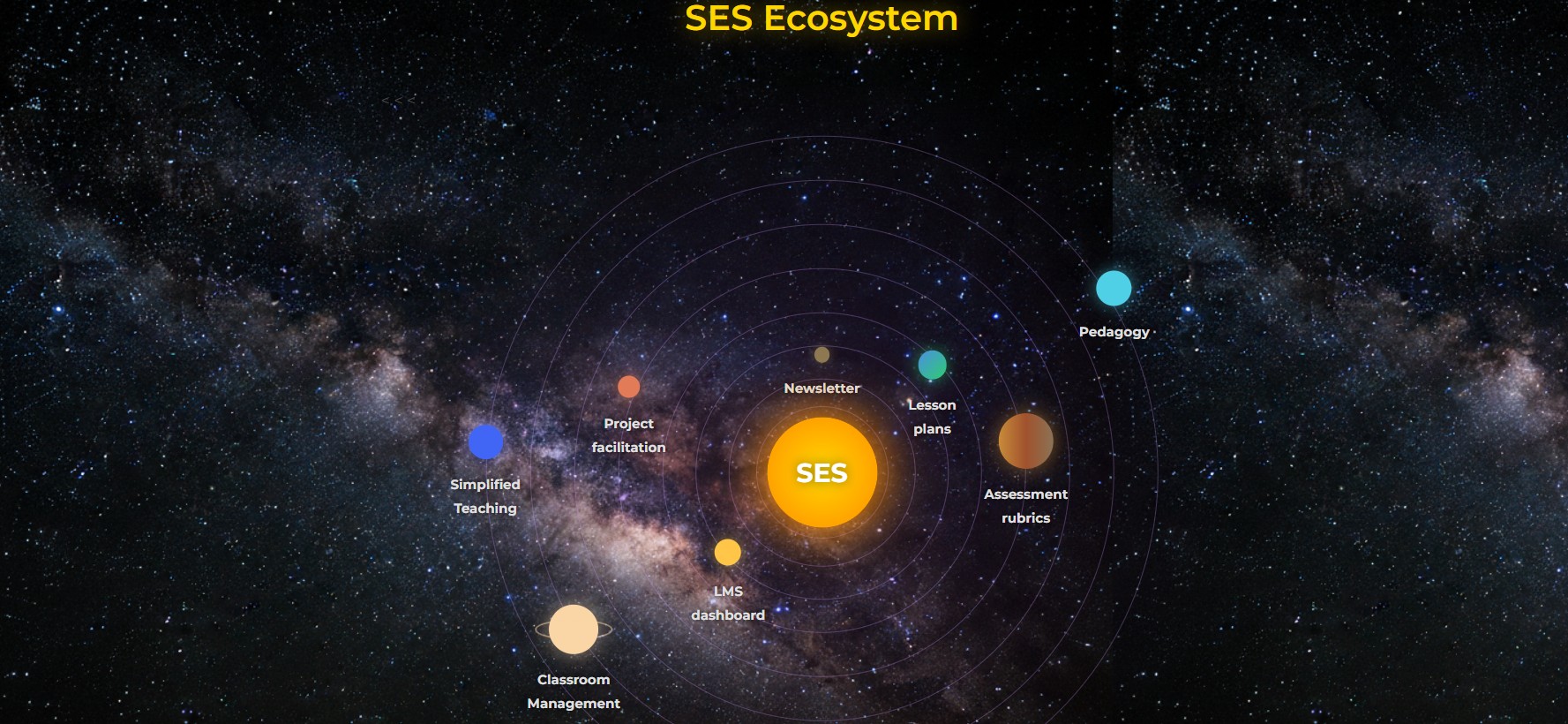
STEM & STEAM are at the base of future-ready learning. This is because these approaches combine logical learning with creativity and innovation. Makers’ Muse brings these learning approaches into play through their SES programs, which are aimed at making theoretical learning more engaging and experiential for students.
Through the structured learning support, facilitators, and learning spaces, Makers’ Muse ensures that students not only learn but also learn in a meaningful manner. This aligns with the philosophy of STEM & STEAM, which emphasises learning through exploration, experimentation, and creativity.
The four SES programs offered by Makers’ Muse are:
SES Pro
A comprehensive, fully supported model that includes Makers’ Muse certified trainers, a grade-wise customised curriculum, LMS-based student tracking, and structured assessments (quarterly/semester). It also includes profile building for education abroad and competition training, with STEM lab support provided and maintained by the school.
SES Pro+
A premium, all-inclusive program featuring a fully set up and maintained STEM lab by Makers’ Muse, certified trainers, customised curriculum, LMS tracking, assessments, profile building, and competition training with annual STEM events. It offers the most extensive hands-on and guided learning experience.
SES Virtual
A flexible model where STEM & STEAM learning is delivered by trained school teachers (trained by Makers’ Muse). It includes a customised curriculum, LMS tracking, and assessments, enabling schools to implement the program without requiring external trainers. STEM labs are maintained by the school.
SES Basic
A foundational entry-level program providing Makers’ Muse certified trainers with limited training hours. It includes a basic structure to help schools begin their STEM & STEAM journey, while the STEM lab, curriculum, LMS, assessments, and additional features are managed by the school.
Conclusion
Both STEM & STEAM have a lot of benefits to offer to the K-12 education sector. The first one involves logic and structured thinking, while the second one involves creativity and innovation. By using these approaches, a balanced learning experience is being offered.
Rather than choosing one over the other, it seems like both approaches are being combined to make learning more effective. The ultimate aim here is to produce a learner who is capable of critical and creative thinking. This is what makes modern learning so effective and meaningful.
By integrating these programs, Makers’ Muse ensures that STEM & STEAM go beyond textbooks, empowering students to think critically, create confidently, and innovate for the future.
Explore SES programs today!