The first thing we noticed was silence. 
25 students walked into the Makers Muse workshop carrying school bags, curiosity, and a quiet fear they didn’t always say out loud: “What if I’m not good at this?” 
Some had never touched a robotics kit before. 
Some thought coding was “only for genius students.” 
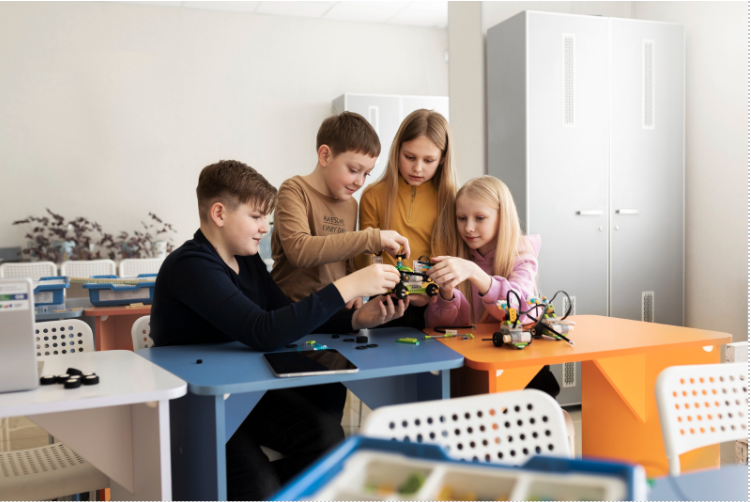
Others believed technology was too advanced for them to understand. And yet, by the end of the workshop, those same students were building robots, experimenting with sensors, testing circuits, discussing automation, and proudly showcasing projects they had created with their own hands. 
What happened inside that room in a STEM enabled school (SES) was not simply a workshop. It was a transformation

STEM Enabled School

The Makers’ Muse Philosophy - Learning by Making 

At Makers’ Muse, workshops in STEM enabled schools (SES) are not designed like traditional classrooms. 
Students are not expected to sit quietly and memorise concepts from slides. Instead, they learn through hands-on exploration, experimentation, collaboration, and creation. 

The workshop environment is built around one powerful idea: Students learn best when they actively create something meaningful. 

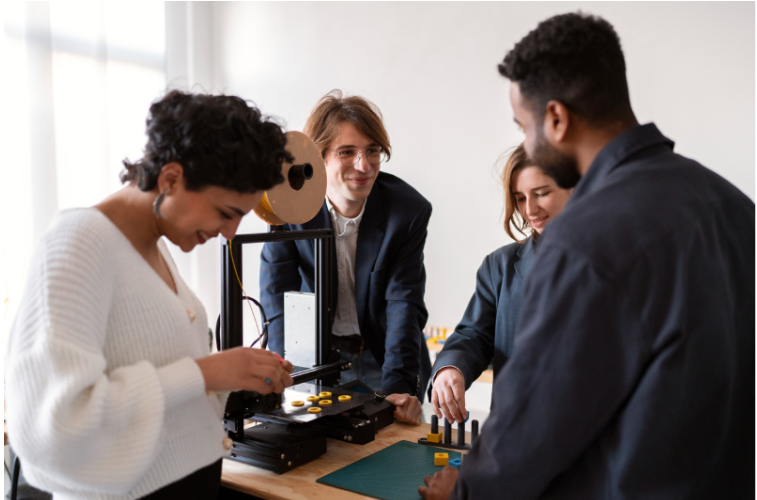
That philosophy shaped every part of the experience. From the moment students entered the room, they were encouraged to explore, test, build, question, and experiment with real tools and real technologies. Instead of treating robotics and STEM as difficult academic subjects, the workshop treated them as creative playgrounds.  

The First Challenge was Psychological, Not Technical 

The biggest obstacle wasn’t robotics. 

  • It wasn’t coding. 
  • It wasn’t electronics. 
  • It was intimidation. 

Students looked at motors, sensors, robotics kits, and fabrication tools as if they belonged to experts. Many were afraid to make mistakes. 

Some whispered: 

  • “What if we connect it incorrectly?” 
  • “Will this break?” 
  • “I’ve never coded before.” 
  • “Others probably know more than me.” 

The Makers’ Muse workshop framework intentionally breaks this fear early. 

Instead of beginning with theory-heavy lectures, mentors immediately involved students in activities where they could build simple mechanisms and see instant results. 

That early exposure reduced anxiety quickly. The workshop space stopped feeling like a classroom. It started feeling like a creative lab. 

Every Age Group was Given a Different Creative Journey 

One of the most distinctive aspects of the Makers Muse workshop framework is that projects are carefully designed for age groups and learning stages. 

Younger students were introduced to robotics through playful engineering experiences that focused on curiosity and imagination. 

For primary students in Grades 4 to 5, projects included: 

  • Basic four-wheel robots 
  • Jumping bot mechanisms 
  • Tank robots 
  • Sliding bot experiments 

These projects helped students understand movement, balance, motion, and simple mechanical systems through direct interaction. Instead of memorising scientific concepts, students physically experienced them. 

The workshop also introduced younger learners to creative electronics projects such as: 

  • Mini fans 
  • Brush bots 
  • Simple vibration-powered models 

For many students, this was the first time they realised technology could feel creative and fun rather than difficult and academic. 

Workshops Designed for Every Age Group 

The Makers Muse framework carefully adapts complexity according to student readiness. 

For lower primary students in Grades 1 to 3, workshops focused heavily on creativity, exploration, and confidence-building. Students worked on beginner-friendly projects that encouraged tactile learning and experimentation in a safe, exciting environment. 

As students progressed into upper primary levels in Grades 6 to 8, the complexity increased significantly. 

Students began working on: 

  • Line-following robots 
  • Light-following robots 
  • Bluetooth-controlled bots 
  • Fire-fighting robots 

At this stage, students were no longer simply assembling components. They were solving problems. They learned how sensors interact with environments, how automation functions, and how robots respond to programmed instructions. 

The shift from playful experimentation to functional engineering happened naturally through hands-on learning. 

The Moment Everything Changed 

The breakthrough came during one of the robot testing activities. A group had spent several minutes wiring motors incorrectly. Their robot refused to move. 

At first, frustration appeared. Then curiosity took over. Students began troubleshooting together. 

  1. They adjusted the wiring. 
  1. They checked battery polarity. 
  1. They reattached connectors. 

Finally, the robot moved. Not perfectly. But enough to send the entire table into celebration. 

That single moment changed the atmosphere of the room. Suddenly, students stopped worrying about failure. Now they wanted to experiment. 

The workshop no longer felt intimidating because students realised something important: “Technology is not magic. It is something they can build themselves.” 

Failure Became the Most Powerful Teacher in a STEM Enabled School (SES)

One of the most important aspects of the Makers Muse workshop is how it reframes mistakes. Traditional education often teaches students to avoid failure. STEM education treats failure as part of the process. 

Robots malfunctioned.  

Motors disconnected. 

Circuits failed. 

Designs collapsed. 

And every failure became a lesson. 

Students learned: 

  • Why structures need support 

  • How balance affects movement 

  • Why sensor placement matters 

  • How debugging works 

  • Why testing improves design 

Instead of becoming discouraged, students became more curious. 

By the middle of the workshop, many students were intentionally modifying their robots just to see what would happen. That mindset shift, from fear to experimentation, is one of the most valuable outcomes of the Makers Muse framework. 


Coding Became Creative Instead of Scary 

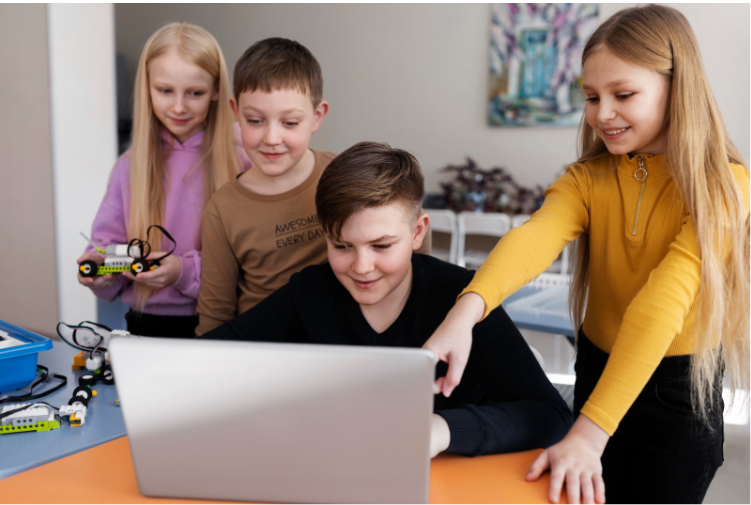
For many beginners in a STEM enabled school (SES), coding initially feels abstract and intimidating. The workshop changed that perception completely. Students discovered that coding was not just typing random text onto a screen. It was a way to control physical objects. 

Through guided activities, students programmed robots to: 

  • Follow lines 
  • Detect light 
  • Respond to obstacles 
  • Change direction 
  • Navigate tracks 

Suddenly, coding became interactive. Students could instantly see the results of their logic in their robots’ movements. This made programming feel exciting instead of overwhelming. 


The Social Environment Accelerated Learning

Something fascinating happened once students became comfortable. They started teaching each other. 
One student discovered a faster way to wire a motor. 
Another figured out how to improve wheel alignment. 
Someone else explained sensor behaviour to nearby teams. 
The workshop naturally evolved into a collaborative learning ecosystem. Mentors were no longer the only source of knowledge.
Learning spread across the room through observation, teamwork, and experimentation. Students who were shy at the beginning became active contributors by the end. Some even started helping troubleshoot projects for other groups. 

Creativity Was Treated as Seriously as Technology 

One of the defining features of the Makers’ Muse workshop experience is the integration of creativity with engineering. 
Students were not told to simply “follow instructions.” They were encouraged to personalise projects, test ideas, and modify designs. This allowed completely different personalities to engage with STEM in their own way. 
Some students focused on robot performance.
Others focused on aesthetics.
Some experimented with movement patterns.
Others became deeply interested in sensors and automation. 
The workshop proved that a STEM enabled school is not only about technical skills. It is also about imagination. 
The Workshop Introduced Students to Innovation Thinking 

Beyond robotics and coding, the workshop introduced students to the foundations of innovation and design thinking. 

Students learned how to: 

  • Observe problems 
  • Prototype ideas 
  • Test solutions 
  • Improve designs 
  • Think from the user’s perspective 

The emphasis was not on perfection. It was on iteration. Students quickly realised that the best ideas often come after multiple failed attempts. That lesson is incredibly important because it teaches resilience alongside technical literacy. 

Key Benefits Students Experienced 

By the end of the workshop, students had gained much more than technical exposure. 

They developed: 

  • STEM confidence through practical projects 
  • Creative problem-solving abilities 
  • Collaboration and teamwork skills
  • Early exposure to robotics and innovation 
  • Independent thinking habits 
  • Greater curiosity about technology 

The workshop also gave students something deeper: A belief that they were capable of learning difficult things. And that belief matters far beyond STEM. 

The Real Transformation was Identity in a STEM Enabled School (SES) 

At the beginning of the workshop, many students saw technology as something created by “other people.” 

  • Engineers.  
  • Experts. 
  • Professionals. 

By the end, students began seeing themselves differently. 

They no longer said: 

“I don’t know robotics.” 

Instead, they asked: 

  • “Can we make it faster?” 
  • “Can we add more sensors?” 
  • “Can we build another version?” 

That transformation is the true success of the Makers’ Muse experience. The goal was never simply to teach students how to build robots. The goal was to help them realise they could become creators, innovators, and problem-solvers themselves. 

Conclusion 

25 students entered the room, unsure of themselves in a STEM enabled school (SES). They were nervous around technology. Afraid of failure. Unsure if they belonged in an SES environment. 

But through hands-on exploration, collaborative learning, creative experimentation, and guided mentorship, something remarkable happened. The Makers’ Muse workshop experience is not just about teaching robotics. It helps students discover they can create the future with their own hands. 

Lorem ipsum dolor sit amet, consectetur adipiscing elit. Ut elit tellus, luctus nec ullamcorper mattis, pulvinar dapibus leo.

Leave a Reply

Recent Posts

Gallery

Related Posts