 Written by
Laiba Arif
·
Written by
Laiba Arif
·
STEM Education: Makers vs. Memorisers - The Two Types of Students and Why It Matters More Than Marks
When you step into a modern classroom today, you will see a noticeable change in ways that students learn. Some of these students will learn through memorising definitions, formulas, and model answers. Others will learn by questioning theories, designing new experiments on concepts, and trying to create new things from them. These two types of learning can be referred to as “makers” and “memorisers.”
The shift in emphasis toward STEM in education is driving the need for learners to apply knowledge to solve problems, rather than just recall information. This is prompting many educators, parents, and students to rethink their understanding of how true learning occurs.
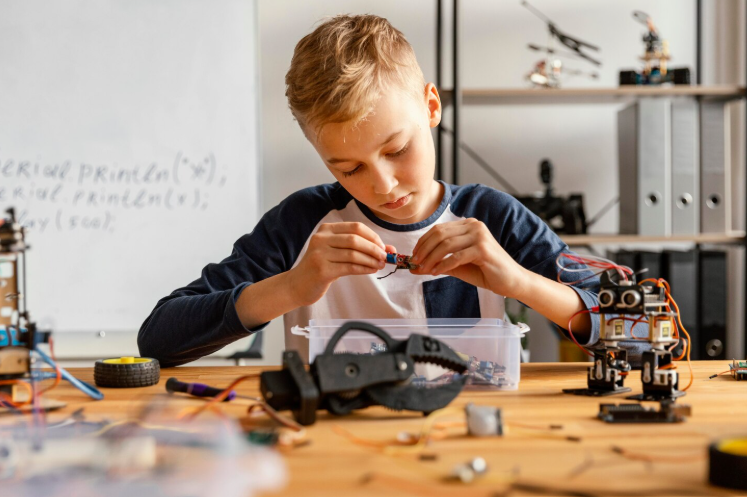
Who Are Memorisers?
Memorisers are students who excel in traditional academic systems. They are disciplined, structured, and focused on achieving high scores.
They typically:
- Learn by repetition and recall
- Follow instructions carefully
- Focus on accuracy and correctness
- Perform well in standardised exams
This approach is effective in systems where success is measured through written tests. However, memorisation often leads to short-term retention. Students may understand what to write but not fully grasp why a concept works.
Who Are Makers?
Makers, on the other hand, learn through exploration and application. They are driven by curiosity and often go beyond what is required in textbooks.
They tend to:
- Ask deeper questions
- Experiment and test ideas
- Learn from mistakes
- Connect concepts across subjects
Makers may not always achieve perfect marks, but they develop a stronger conceptual foundation. This is especially relevant in STEM in Education, where practical understanding and innovation are key.
Why This Difference Matters with STEM Education
Access to information is no longer a limitation. Students can look up formulas, theories, and solutions within seconds. What matters now is how they use that information.
In the context of STEM in Education, students are expected to:
- Solve unfamiliar problems
- Think critically
- Apply concepts in real situations
A memoriser may know the formula. A maker understands when and how to use it effectively.
Real Problems Require Flexible Thinking
Exams are designed with predictable patterns. Real-life problems are not. Challenges in areas such as sustainability, healthcare, and technology require:
- Multiple approaches
- Continuous experimentation
- Creative thinking
Makers are better equipped to navigate uncertainty because they are used to working without fixed answers.
Innovation Demands Curiosity
Innovation does not come from memorising existing knowledge. It comes from questioning it. Students engaged in STEM in Education need opportunities to:
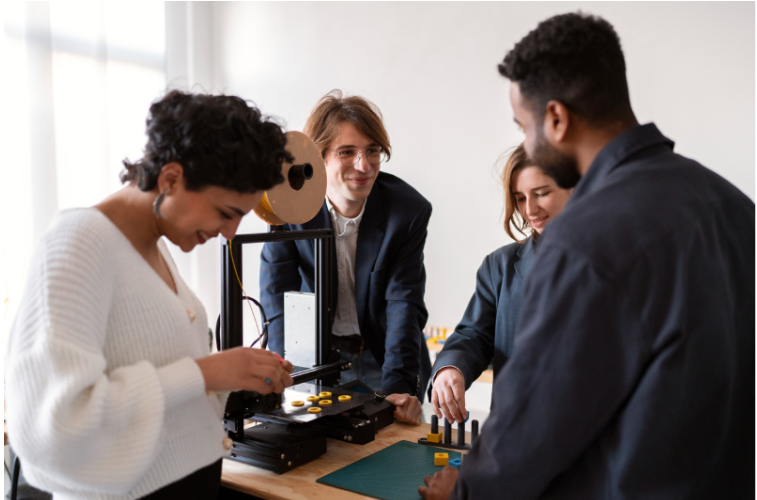
- Build prototypes
- Conduct experiments
- Work on open-ended projects
These experiences cultivate curiosity, which is the foundation of innovation.
Limitations of a Marks-Driven System
Marks are an important part of academic evaluation, but they do not always reflect true understanding.
Shallow Learning
When students focus only on marks, they tend to prioritise what will appear in exams. This leads to selective learning and weak conceptual clarity.
Fear of Making Mistakes
A marks focused environment discourages risk taking. Students avoid trying new approaches because they fear losing marks.
In STEM in Education, failure is not a setback. It is a learning tool. Experiments fail, designs need revision, and ideas evolve through trial and error.
Reduced Creativity
Strict adherence to textbook answers limits creativity. Students may stop asking questions if those questions are not directly linked to exams. Over time, this reduces independent thinking and problem-solving ability.
Why STEM in Education Favors Makers?
STEM in Education is designed to prepare students for real-world challenges. It naturally aligns with a maker mindset.
Emphasis on Hands-On Learning
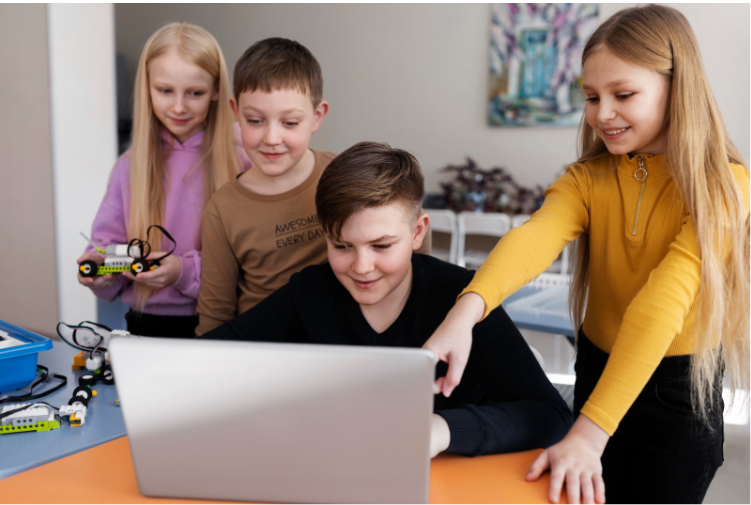
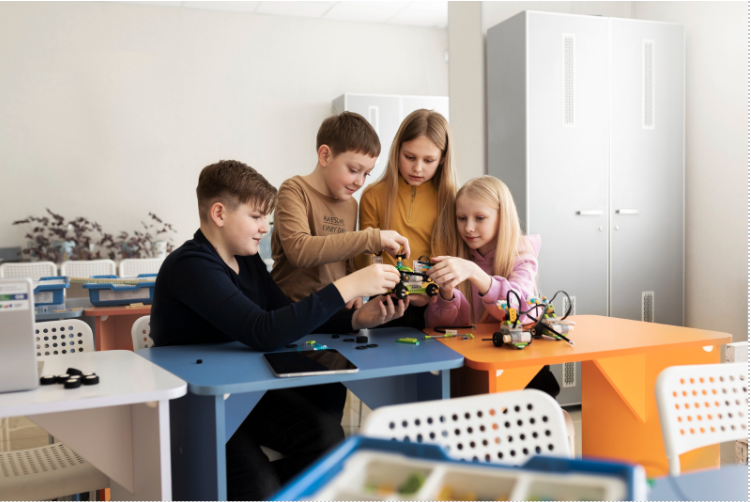
STEM encourages students to learn by doing. Activities such as building models, coding programs, and conducting experiments help students understand concepts more deeply.
Interdisciplinary Approach
Real-world problems are not confined to a single subject. STEM integrates multiple disciplines.
For example:
- Robotics combines physics, engineering, and programming
- Environmental studies involve biology, chemistry, and data analysis
Makers thrive in such environments because they can connect ideas across domains.
Focus on Problem Solving
STEM learning often begins with a problem rather than a theory. Students are encouraged to explore solutions, test them, and improve them. This process builds analytical thinking and adaptability.
Transforming Memorisers into Makers
The good news is that these are not fixed categories. Students can shift from memorisation to making with the right approach.
Encourage Questioning
Instead of focusing only on answers, students should be encouraged to ask why and how. This builds deeper understanding.
Introduce Practical Learning
Simple activities can make a significant difference:
- Science experiments at home
- DIY projects
- Basic coding exercises
These experiences are central to STEM in Education.
Redefine Failure
Students should be taught that mistakes are part of learning. When failure is accepted, students become more willing to explore and experiment.
Focus on Learning Processes
Evaluation should go beyond final answers. Understanding how a student approaches a problem is equally important.
The Role of Educators and Schools
Educational institutions play a critical role in shaping learning mindsets.
Rethinking Assessments
Assessments should include:
- Project-based evaluations
- Practical applications
- Analytical questions
Strengthening STEM in Education
Schools should integrate:
- Lab-based sessions
- Collaborative learning
- Real-world problem-solving
Creating a Culture of Curiosity
Teachers should encourage open discussions, welcome questions, and allow students to explore beyond the syllabus.
What Parents Need to Understand
Parents often associate success with marks. While academic performance is important, it should not be the only measure of learning.
A balanced approach includes:
- Encouraging curiosity
- Supporting creative activities
- Valuing effort and exploration
Exposure to STEM in Education through workshops, kits, and online tools can help children develop a maker mindset at home.
Striking the Right Balance
Memorisation is not useless. It provides the foundation for learning. Students need to remember basic concepts, formulas, and principles. However, without application, this knowledge remains incomplete.
The goal is to combine both approaches:
- Use memorisation for foundational knowledge
- Use making for application and innovation
Conclusion
Individuals who possess the ability to think critically, adapt effectively, and be innovative will determine what the future looks like for everyone. Marks may give students an opportunity, but they don’t guarantee any future success outside the classroom.
As STEM in Education continues to change the way students learn, the focus of classrooms must shift from memorising answers to developing solutions. Students who are taught to ask questions, use trial and error, and develop new ideas will not only do well on assessments but also be ready to tackle the world’s real problems.