

A parent asks whether their kid should start with a LEGO robotics kit or just dive straight into building something from scratch. Nine times out of ten, they get a shrug back. Both get called “robotics,” so does it even matter which one comes first?
LEGO robotics vs real-world prototyping isn’t really a “which one wins” kind of question. It’s more about fit, where a specific kid happens to be right now, and getting that wrong is usually what sends the whole decision sideways for a family.
LEGO teaches fast. Real prototyping tests how far a student can actually push an idea on their own, with nobody holding their hand through it. Most kids end up needing both at some point, which is really the whole point of laying LEGO robotics vs real-world prototyping out side by side instead of picking a winner. Just not on the same day.
What LEGO Robotics Means
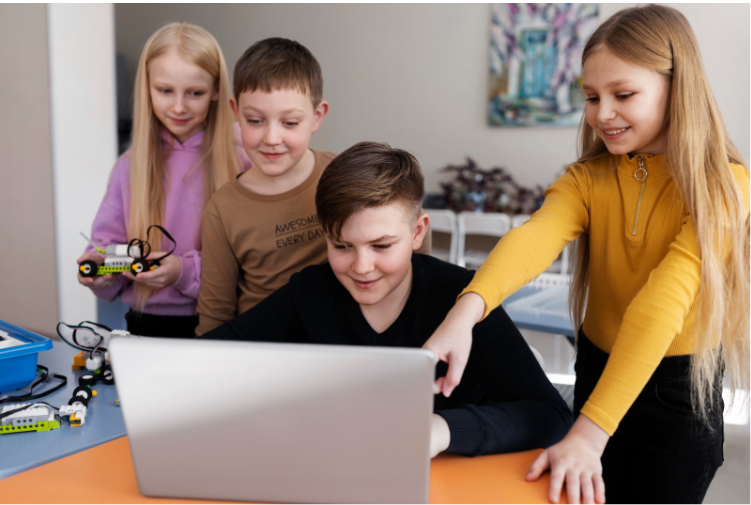
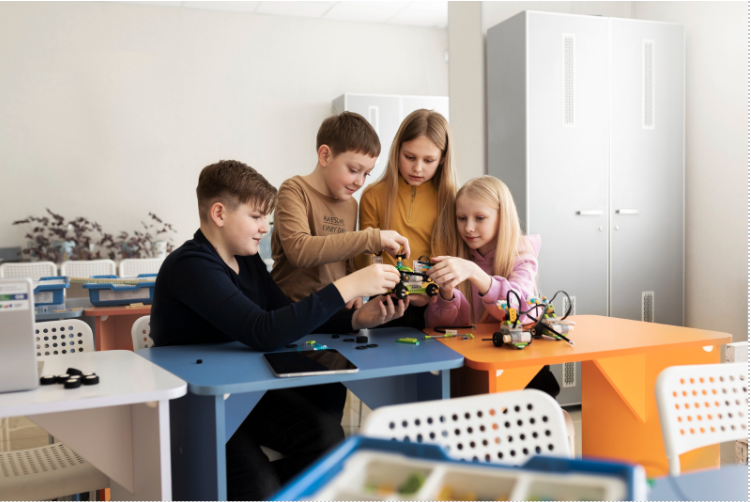
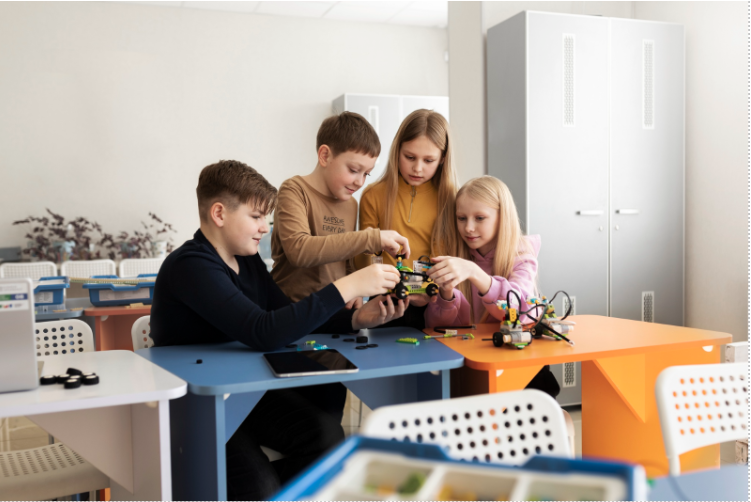
Picture a Mindstorms or Spike Prime kit. Pre-engineered parts, motors, sensors, a coding environment you drag and drop blocks into. No soldering iron in sight, no need to know what a resistor even does. Everything’s designed to click together. This is usually the first thing families run into when they go looking into robotics for students, mostly because it’s what most programs start with.
And honestly? Watch a ten-year-old assemble a working robot in one sitting, and you get why it’s popular. Robotics projects for students built around LEGO skip past the stuff that makes beginners quit early: stripped wires, a fried motor, code looping forever for some invisible reason nobody can find. You go straight to the good part. The thing moves. It does what you told it to.
What Real-World Prototyping Means
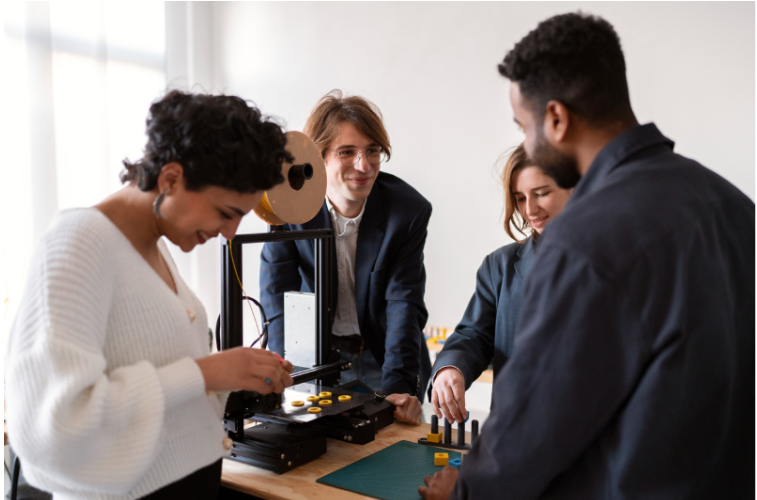
Now flip it completely. Real-world prototyping means no pre-built anything. Prototyping for students at this level looks nothing like a kit-based hobby, honestly. A student picks their own components, wires up circuits with their own two hands, writes actual code in an actual language, and when something breaks, there’s no friendly error message pointing them toward the fix. They just have to figure it out.
This is closer to what STEM prototyping actually feels like in the real world. A breadboard that’s basically a tangle of wire. A 3D-printed bracket that doesn’t fit right and needs a redo. A sensor pulling garbage readings for forty-five minutes until somebody notices it’s wired in backward. Slower than a kit. Messier than a kit. But it’s the real thing, or about as close as a student gets before college.
Learning Curve and Beginner Suitability
If you’re brand new, LEGO wins this round of LEGO robotics vs real-world prototyping, no contest. Nothing’s designed to snap or short out, the coding stays visual and forgiving, and there’s usually something working by the end of one session. That first win matters a lot for whether a younger kid sticks around past week one.
Real-world prototyping is a different animal entirely. Circuits, an actual language like Python or C++, working out why a sensor keeps reading wrong- none of it clicks fast. This path fits better once a student’s already got some coding or robotics behind them and is itching to go past what a kit can offer.
Creativity, Coding, Electronics, and Mechanical Design
Here’s the real split, and it’s not just about difficulty.
- LEGO’s genuinely good at teaching sequencing and logic. Sensor fires, do this next. That’s real computational thinking, no knock against it. But the mechanical side comes pre-made, so there’s a ceiling on how much actual design a kid ever practices, and the electronics stay buried inside sealed plastic the whole time. You never see the guts of it.
- Real prototyping cracks all three doors open at once. Mechanical design, because parts get built or printed or bolted together from nothing. Electronics, wired and debugged with your own hands instead of hidden away. Coding, in a language that actually carries over to college engineering or CS classes later, not a block-based interface that only exists inside one company’s ecosystem. This is usually the clearest gap in the whole LEGO robotics vs real-world prototyping comparison.
Cost, Flexibility, and Reusability
- LEGO kits cost real money upfront, often several hundred dollars, but that buys durability. The same kit gets reused across dozens of projects over years without replacement parts, which drags the cost-per-project down fast the longer it sticks around.
- Real-world prototyping tends to run cheaper per individual project since microcontrollers, sensors, and basic materials don’t cost much on their own. It’s messier though. A fried component or a failed print just means buying another one, and nothing’s packaged as neatly as a kit meant to be reused whole.
Flexibility clearly goes to prototyping. A LEGO robot is capped by whatever LEGO parts can physically build. A student working with raw components and general-purpose code can build almost anything their skills allow: an actual product, a working device, something that doesn’t look or act like a toy at all. That gap alone tends to settle LEGO robotics vs real-world prototyping for a lot of families once they see it laid out.
LEGO Robotics vs Real-World Prototyping
Factor | LEGO Robotics | Real-World Prototyping |
Learning curve | Low, beginner-friendly | Steep, needs prior exposure |
Coding | Block-based, visual | Real languages (Python, C++, etc.) |
Mechanical design | Limited to kit parts | Fully open-ended |
Electronics exposure | Minimal, mostly hidden | Hands-on, direct |
Cost structure | High upfront, reusable | Lower per-project, less contained |
Flexibility | Bounded by the kit | Essentially unlimited |
Best for | First-time robotics exposure | Advanced, original projects |
Laid out this way, the LEGO robotics vs real-world prototyping comparison stops feeling abstract and turns into something closer to a checklist, useful for anyone weighing prototyping for students against a more structured kit-based option.
When LEGO Is the Right Choice
For a younger or first-time student, LEGO robotics vs real-world prototyping almost always tips toward LEGO, and there’s nothing lesser about starting there. It suits a student’s first year or two in robotics for students generally, younger kids still building basic sequencing skills, and classrooms where a teacher’s got twenty students who all need to be working reliably at once, not twenty separate circuit failures to chase down simultaneously.
It’s also right when the goal is confidence over raw technical depth. A student who finishes something working in one afternoon sticks with robotics a lot longer than one stuck three weeks into a circuit that still won’t respond.
When Real Prototyping Is the Better Next Step
Real-world prototyping becomes the right move once a student’s outgrown what a kit can teach, usually a year or two into hands-on STEM projects built around pre-made systems. This is roughly where LEGO robotics vs real-world prototyping stops being a real question for most families, since the kit’s already done its job. Watch for a student asking why something works instead of settling for that it works, wanting to build something a kit genuinely can’t produce, or starting to find block-based coding limiting rather than helpful. STEM prototyping at this stage rewards curiosity over convenience.
It also fits better for students aiming at competitions, original research, or portfolio work, where “built from a kit” carries a lot less weight than “designed and built this myself.”
How Students Progress From Kits to Original Projects
Moving from kits to genuinely original engineering projects for students doesn’t need to happen all at once. A progression that actually works: start with LEGO or something similar to build core sequencing skills, move into basic electronics through simple breadboard robotics projects for students using pre-written code, start writing original code for those same circuits next, then finally design something from scratch, picking parts, writing code, solving whatever comes up without a kit’s safety net underneath.
Each stage leans on the one before it, and it’s roughly the same path across most engineering projects for students that eventually get built for real. Jumping straight from a kit to an unstructured original project usually just means relearning basics the hard way, under time pressure, at the worst possible moment.
Explore Hands-On STEM at Makers’ Muse
Whether a student’s just starting with their first robotics kit or ready to move into original prototyping work, Makers’ Muse runs hands-on STEM projects and live, real-world project opportunities that meet students wherever they actually are. For families still deciding where to start with robotics for students, that starting conversation usually settles LEGO robotics vs real-world prototyping pretty quickly on its own.
Frequently Asked Questions
Most kids do fine starting somewhere between 8 and 12, depending on reading level and comfort following instructions. No strict cutoff exists though. Some start earlier with simpler kits, some start later if robotics is entirely new to them as teenagers.
It can, but it’s harder. Students with zero prior robotics or coding exposure tend to hit more early frustration jumping straight to circuits and real code. Not impossible, just a rougher first few weeks than starting with a kit would’ve been.
For entry-level and a lot of mid-tier competitions, yes, LEGO-based kits are common and often expected. Higher-level or open categories increasingly reward original engineering and custom builds, which is where real-world prototyping starts mattering more.
Individual parts, microcontrollers, sensors, basic materials, are usually cheap on their own, often less than a kit’s upfront price per project. The trade-off is less predictability, since replacing a burned-out part or a failed print is an ongoing cost instead of a one-time purchase.
Plenty end up running both, since they cover different stages of the same overall pipeline. LEGO tends to fit earlier grades or first-time learners, while real-world prototyping suits older students or those already through a kit-based program.