 Written by
Laiba Arif
·
Written by
Laiba Arif
·
STEM Education: I’m Not Smart Enough to Invent Things And Other 99 Myths Students Need to Unlearn
“I’m not smart enough” is rarely a fact. It is usually a conclusion drawn too early.

What Research Actually Says About “Being Smart”
Intelligence is not a single measure. Psychologists distinguish between different types of cognitive abilities:
- Fluid intelligence: the ability to solve new problems
- Crystallised intelligence: knowledge gained through learning
- Executive function: planning, focus, and self-control
Most traditional exam assessments rely upon measurements of a student’s crystallised intelligence. However, when assessing creativity via innovation, fluid intelligence and executive function play an extremely important role.
As shown by studies, fluid intelligence develops through experience over time (e.g., practice using problem-solving tasks and exercises based on patterns). In other words, inventing can be learned through doing.
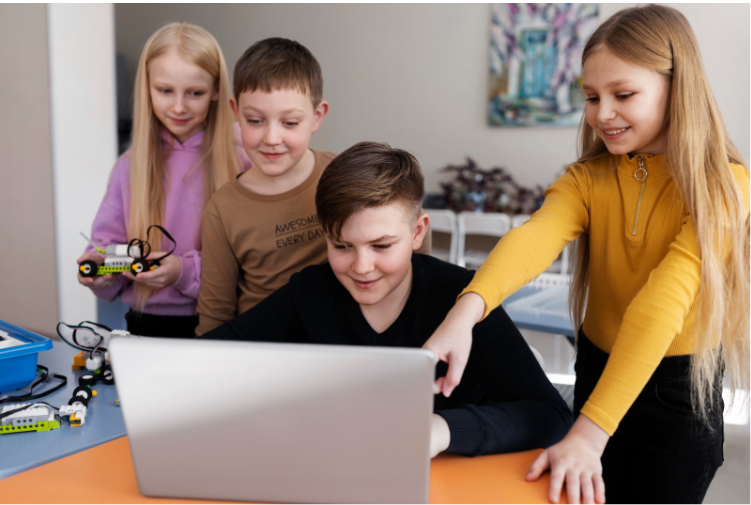
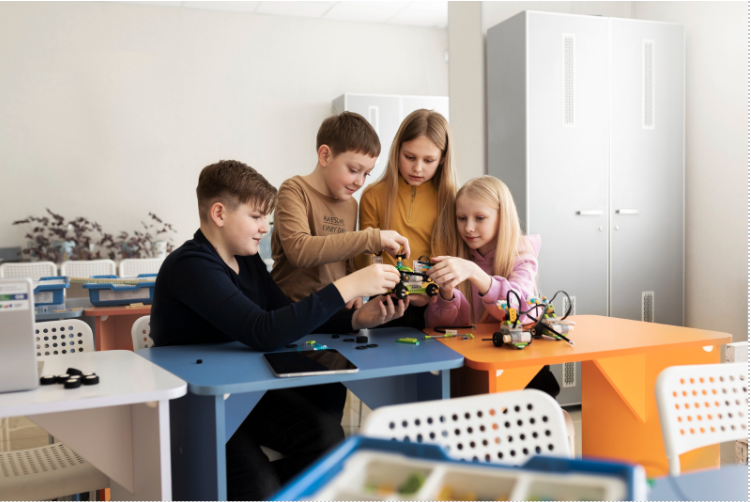
In a solid STEM education experience, students participate regularly in such activities that build these same cognitive skills (via designing experiments, debugging computer programs & building prototypes).
How Real Innovation Works (Step-by-Step Process)
Innovation is not random. It follows a repeatable process used in science and engineering:
- Problem Identification
Most inventions begin with a clearly defined problem. For example, noticing water wastage in households or inefficiencies in school systems.
- Hypothesis Formation
Students predict a possible solution. This is not about being right. It is about forming a testable idea.
- Prototyping
A basic model is created using available materials. It does not need to be perfect.
- Testing and Data Collection
The prototype is tested. Observations are recorded. What worked and what failed.
- Iteration
The design is improved based on the results. This cycle repeats multiple times.
This structured approach is embedded in STEM education, helping students understand that invention is a process, not a one-time achievement.
Why Hands-On Learning Changes Confidence
There is a measurable difference between passive and active learning.
Research shows that students retain:
- Around 10 per cent of what they read
- Around 20 per cent of what they hear
- Over 70 per cent of what they actively do
Students who build their own educational experiences accomplish this through engaging various areas of their brains. As motor skills, visual processing and logical reasoning combine, these experiences result in increased self-confidence.
STEM education takes advantage of this relationship by utilising labs, projects and real-world problems within the students’ education daily. Therefore, students have less fear of forgetting content because they have experienced it directly in multiple ways.
The Hidden Skill - Problem Framing
One of the most overlooked aspects of innovation is defining the problem correctly.
For example:
A student might say, “I want to invent a faster fan.”
A better framing would be, “How can we improve air circulation in small rooms with low electricity usage?”
The second version opens up more possibilities. It may lead to completely different solutions, not just modifying a fan.
STEM education trains students to ask better questions. This skill alone significantly improves the quality of ideas they generate.
Why Failure Accelerates Learning
Failure activates a part of the brain responsible for error detection and correction. When students analyse mistakes, they strengthen neural pathways associated with learning.
In controlled experiments, students who were allowed to make mistakes and correct them performed better in long-term problem-solving tasks than those who only studied correct solutions.
This is why iterative testing is central to STEM education. Students are encouraged to:
- Test multiple versions
- Compare results
- Document what changed
This builds analytical thinking, not just theoretical understanding.
Resourcefulness Beats Resources
A common barrier students face is the belief that innovation requires expensive tools.
In reality, constraints often improve creativity. When resources are limited, students are forced to think differently.
Examples of low-cost innovation approaches used in STEM education include:
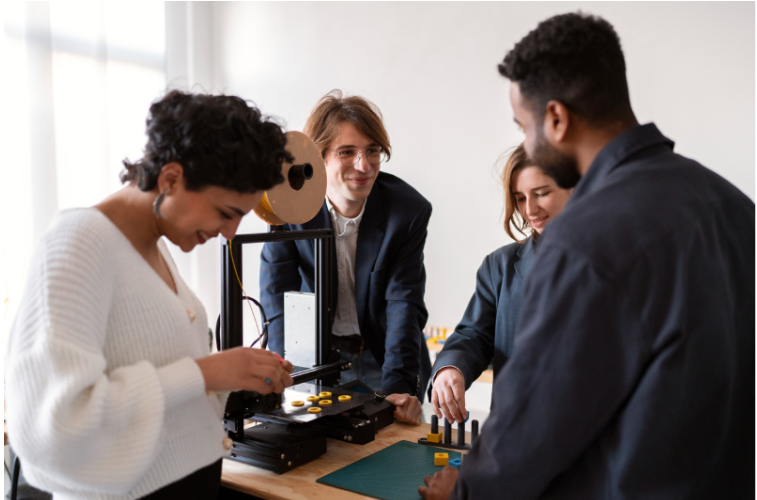
- Building circuits using basic components and batteries
- Creating models using cardboard and recycled materials
- Using open-source software for coding and simulations
These methods teach students how to maximise available resources, a critical real-world skill.
Data-Driven Thinking - What Sets Innovators Apart
Children who spend years in research-oriented environments in a STEM Enabled School (SES) often become much more comfortable:
- asking difficult questions,
- presenting ideas publicly,
- defending their reasoning,
- and exploring unfamiliar topics independently.
That confidence becomes valuable later during:
- university admissions,
- scholarship interviews,
- innovation competitions,
- internships,
- and future careers.
Over time, students begin developing a mindset focused on exploration rather than memorization. And that difference compounds significantly over five years.
Building Innovation Skills Early
Students do not suddenly become innovators in college or careers. These skills develop gradually.
Key abilities that can be built early include:
- Observational skills: noticing patterns and problems
- Systems thinking: understanding how different parts interact
- Collaboration: working with others to refine ideas
- Technical literacy: basic understanding of tools and technology
A well-designed STEM education programme integrates all of these into everyday learning rather than treating them as separate subjects.
Practical Starting Point for Students
To move from doubt to action, students can follow a simple framework:
- Identify one problem in daily life
- Break it into smaller parts
- Research existing solutions
- Build a simple version of your idea
- Test and improve it
For example, a student noticing a phone overheating can explore heat dissipation methods using basic materials. This small project builds a real understanding of thermal concepts.
This approach aligns directly with STEM education, making innovation accessible rather than intimidating.
Conclusion
Having exceptional intelligence is not necessary for one to become an inventor. The way that students handle problems, the number of times that they try something new, and how they react after a failure are all more significant than their level of intelligence. There is a shift in the student’s mindset as they transition from just remembering to applying.
This is the significant benefit of STEM learning. Innovation can be developed through practice (and improved with structured thinking). Students do not need to wait until they feel “smart” before they can become innovators.
The way to become an innovator is to create an idea, test it out, and continue trying to improve upon it even in the absence of certainty around the results’ success or completion.