Adaptive Learning Platforms: Tailoring Education to Individual Student Needs
The Future of Education: Top AI Tools Transforming Learning
Education is undergoing a massive transformation driven by Artificial Intelligence (AI). Traditional classrooms are no longer the only way students learn. Today, AI-powered platforms are reshaping education by making it personalized, interactive, and efficient.
Some of the most impactful AI tools transforming learning include:
- Duolingo – Uses adaptive learning to adjust difficulty based on student performance.
- DreamBox Learning – Provides personalized math lessons tailored to each student.
- Pearson MyLab & Mastering – Identifies knowledge gaps and creates customized study plans.
- SATHEE (India) – An AI-driven platform offering personalized exam preparation and guidance.
These tools are not just digital platforms—they are intelligent systems that analyze student behavior, track progress, and continuously adapt learning paths. This shift marks the beginning of a future where education is no longer “one-size-fits-all,” but uniquely designed for every learner.
What are Adaptive Learning Methods?
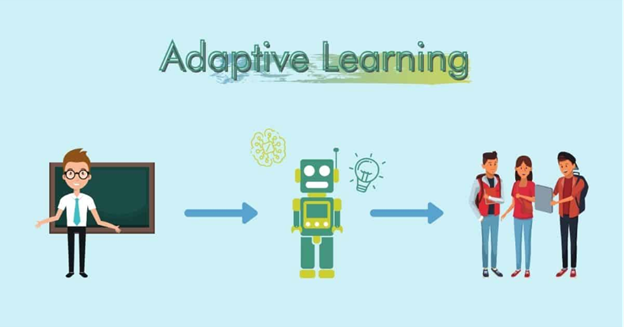
Adaptive learning methods are technology-driven approaches that customize educational content based on individual student needs, performance, and learning pace.
Unlike static learning systems, adaptive learning uses AI, machine learning, and data analytics to continuously adjust:
- Difficulty level
- Learning sequence
- Type of content
- Feedback and assessments
These systems collect data from students’ interactions—such as quiz results, time spent on topics, and mistakes—and use it to personalize learning experiences.
Key Components of Adaptive Learning
- Learner Model – Tracks student behavior, strengths, and weaknesses.
- Content Model – Organizes educational material.
- Adaptation Engine – Decides what content the learner sees next.
How It Works
- Student answers questions
- System analyzes performance
- AI adjusts content in real-time
- Personalized feedback is provided
This creates a continuous feedback loop, ensuring students learn at their own pace while improving weak areas.
How It Differs From Traditional Learning Methods
Traditional learning methods have been used for decades, but they often follow a fixed structure. Adaptive learning, on the other hand, introduces flexibility and personalization.
1. One-Size-Fits-All vs Personalized Learning
- Traditional: Same content for all students
- Adaptive: Content tailored to individual needs
Traditional systems assume all students learn at the same pace, which is rarely true. Adaptive learning solves this by customizing the experience.
2. Fixed Pace vs Self-Paced Learning
- Traditional: Teacher controls pace
- Adaptive: Student controls pace
Students can spend more time on difficult topics and skip what they already know.
3. Passive vs Interactive Learning
- Traditional: Lectures and textbooks
- Adaptive: Interactive quizzes, simulations, and feedback
AI-based systems engage students actively, improving understanding.
4. Delayed Feedback vs Real-Time Feedback
- Traditional: Feedback after exams
- Adaptive: Instant feedback during learning
Immediate feedback helps students correct mistakes quickly and learn effectively.
5. Limited Data vs Data-Driven Insights
- Traditional: Minimal tracking
- Adaptive: Detailed analytics and performance tracking
Teachers can use these insights to improve teaching strategies.
How Is It Beneficial?
1. Personalized Learning Experience
Adaptive learning platforms create a unique learning path for every student based on their strengths, weaknesses, and pace. Instead of following a fixed syllabus, students receive content that matches their current level of understanding. This helps avoid boredom for advanced learners and frustration for struggling students. As a result, students feel more confident and motivated to learn.
2. Improved Engagement
Interactive elements such as quizzes, simulations, and instant feedback make learning more engaging compared to traditional lectures. Since the content is tailored to the learner’s needs, students are more likely to stay focused and interested. Adaptive systems also introduce challenges at the right time, keeping curiosity alive. This leads to higher participation and a better overall learning experience.
3. Better Learning Outcomes
Adaptive learning ensures that students fully understand a concept before moving to the next one. By continuously identifying and addressing weak areas, it strengthens the foundation of knowledge. Students get repeated practice where needed, which improves retention and accuracy. Over time, this leads to better academic performance and deeper understanding.
4. Self-Paced Learning
Students can learn at their own speed without feeling pressured to keep up with others. Those who need more time can revisit topics, while faster learners can progress quickly without waiting. This flexibility reduces stress and allows students to focus better on difficult concepts. It creates a comfortable learning environment where students can perform at their best.
5. Real-Time Feedback
Adaptive platforms provide immediate feedback after each activity or question. This helps students quickly understand their mistakes and correct them on the spot. Unlike traditional systems where feedback comes after exams, this instant response improves learning efficiency. Continuous feedback also helps students track their progress and stay motivated.
6. Accessibility and Inclusivity
Adaptive learning makes education accessible to students from different backgrounds, abilities, and learning styles. It supports multiple formats such as text, audio, and visuals, making it easier for diverse learners to understand concepts. Students in remote areas can access quality education through digital platforms. This helps reduce educational inequality and promotes inclusive learning.
7. Data-Driven Decision Making
These platforms collect detailed data on student performance, including strengths, weaknesses, and learning patterns. Teachers can use this data to identify gaps and adjust their teaching methods accordingly. It helps in making informed decisions rather than relying on assumptions. This leads to more effective teaching and improved student outcomes.
8. Cost-Effective Learning
Adaptive learning reduces the need for physical textbooks, printed materials, and additional coaching. Digital platforms provide a wide range of resources at a lower cost, making education more affordable. Institutions can also scale learning to a larger number of students without increasing expenses significantly. This makes high-quality education more accessible to a wider audience.
Challenges of Adaptive Learning
While adaptive learning is powerful, it comes with some challenges:
- Data privacy concerns
- High initial implementation cost
- Dependence on technology
- Possible bias in AI algorithms
Despite these challenges, continuous improvements in AI are making adaptive learning more reliable and effective.
Conclusion
Adaptive learning platforms represent the future of education. By combining AI, data analytics, and personalized content delivery, they are transforming how students learn.
Instead of forcing students to adapt to the system, the system adapts to the student. This shift not only improves academic performance but also creates a more engaging, inclusive, and efficient learning environment.
As AI continues to evolve, adaptive learning will become even more advanced—bringing us closer to a world where education is truly personalized for every individual.