5 Core Domains in STEM and Robotics You Must Explore
STEM and Robotics learning is based on practical knowledge, not just theory. STEM and Robotics help students learn by “doing” and “experimenting” with real-world concepts and ideas, rather than just learning about them in theory. This is a great learning technique.
STEM and Robotics learning environments help students get a head start on their future careers in technology and engineering by exposing them to “real-world” learning tools and processes.
5 Essential Domains in STEM and Robotics
Here are 5 key areas that can serve as a good start for exploring STEM and Robotics.
1. 3D Printing for Functional Prototyping
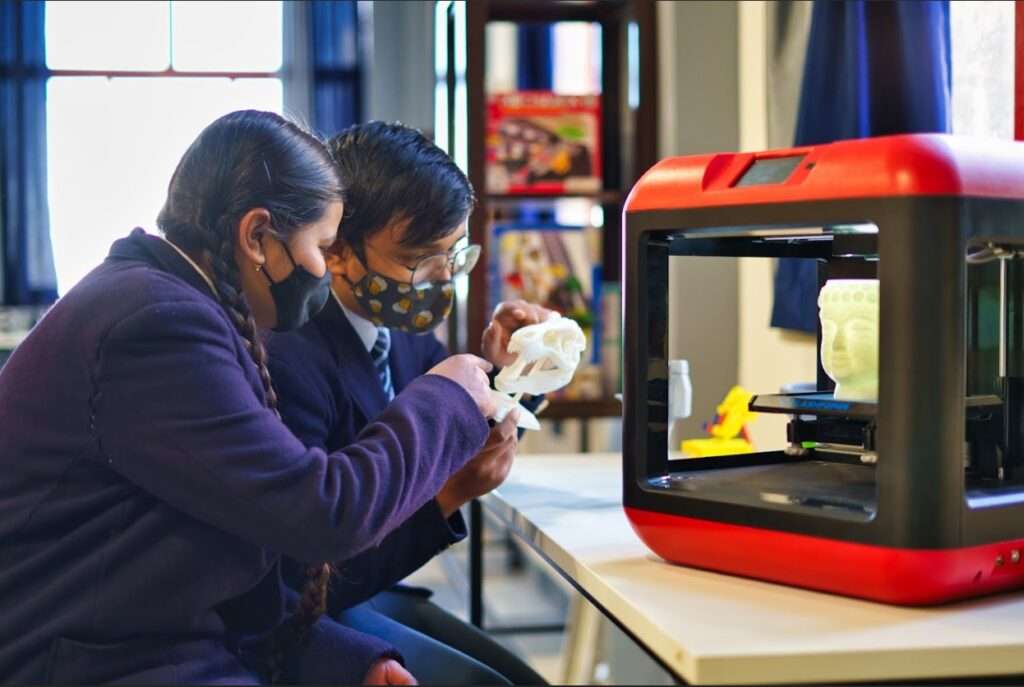
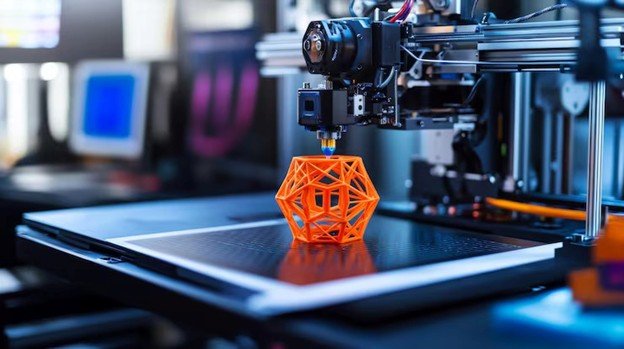
3D printing is an additive manufacturing process where objects are created layer by layer from a digital design. It plays a vital role in STEM and Robotics, as it enables students to translate ideas from a virtual environment into the real world.
In STEM and Robotics, 3D printing technology helps students learn about design, structure, and materials through practical applications. This technology also helps students improve their ideas, utilise technologies like FDM, SLA, and MJF, enabling STEM and Robotics projects to be iterated quickly and efficiently.
It is recommended that students in STEM and Robotics start with simple 3D printing technologies and progress to more complex components. This helps students learn about tolerances, orientation, and strength when working with real-world prototypes.
Key ways to approach 3D printing in STEM and Robotics:
- Begin with basic models to understand printing behaviour
- Study design files to learn structure and support systems
- Modify existing designs to improve functionality
- Experiment with materials to understand strength and flexibility
- Learn calibration through hands-on practice
2. Rocket Building and Launch Systems
Rockets are vehicles that move by expelling gas at high speed, demonstrating Newton’s laws of motion and propulsion principles. In STEM and Robotics, rocket building is used to teach core concepts like thrust, aerodynamics, stability, and control systems through practical experimentation.

Working with rockets allows learners to understand how forces interact to create motion. It also helps them explore design optimisation, where small changes can significantly impact performance and flight stability. Rocket-based learning enhances STEM and Robotics by combining hands-on experimentation with scientific principles, helping students think like engineers and innovators.
Key ways to approach rockets in STEM and Robotics:
- Build simple rocket models to understand propulsion basics
- Study aerodynamics and improve design stability
- Test different shapes, weights, and materials
- Analyse flight path, thrust, and performance
- Apply physics principles like force, motion, and energy
3. CAD Design and Engineering Thinking
CAD (Computer-Aided Design) is the process of creating precise digital models using specialised software. CAD design is one of the integral parts of the STEM and Robotics curriculum. It enables students to create precise digital models before creating actual physical systems.
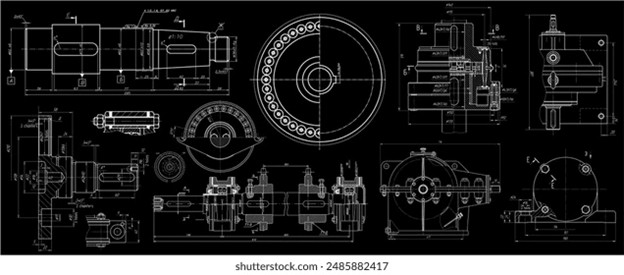
In the curriculum, CAD helps students envision how the various parts will work together as a whole. The use of CAD in the STEM and Robotics curriculum helps students develop their spatial skills and engineering logic. Students learn to work with measurements, tolerances, and constraints, which are important in real-world systems.
Key ways to approach CAD in STEM and Robotics:
- Practise simple sketches and gradually build complex models
- Focus on accuracy and measurement precision
- Study real-world designs used in STEM and Robotics
- Modify existing models to improve performance
- Combine CAD with physical prototyping
4. Electronics and Sensor-Based Learning
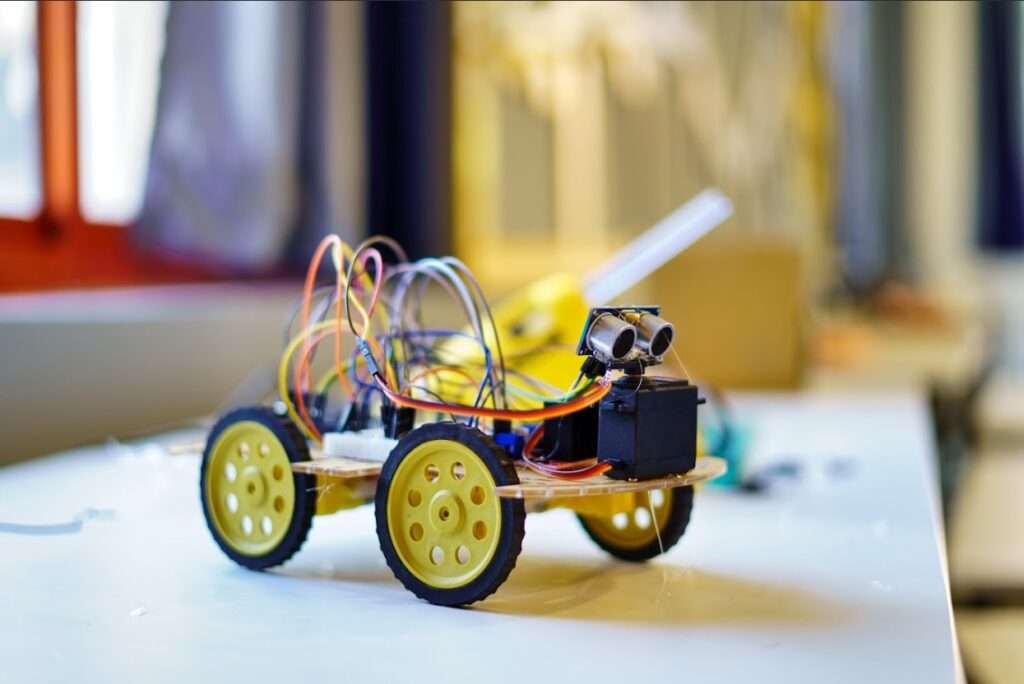
Electronics involves circuits, sensors, and components that allow robots to interact with their environment. Electronics is at the core of STEM and Robotics, enabling machines to interact with their surroundings. Students learn how circuits, sensors, and actuators work together to create intelligent systems.
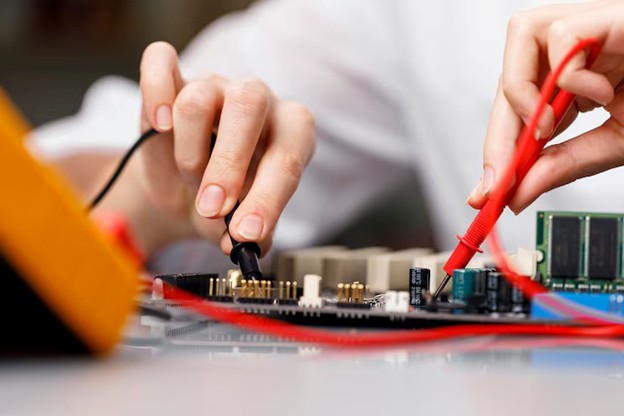
Understanding electronics helps learners see how inputs and outputs are processed. Sensors detect environmental changes, while actuators respond accordingly, forming the basis of automated systems.
Key ways to approach electronics in STEM and Robotics:
- Start with simple circuits and basic experiments
- Understand how sensors function within systems
- Build projects that combine multiple components
- Learn wiring and circuit safety
- Troubleshoot and refine systems through testing
5. Coding and Robotics Programming
Coding is the process of writing instructions that control the behaviour of robots and machines. It is the intelligence behind STEM and Robotics, enabling machines to perform tasks and respond to inputs. Programming helps students understand how logic translates into action.
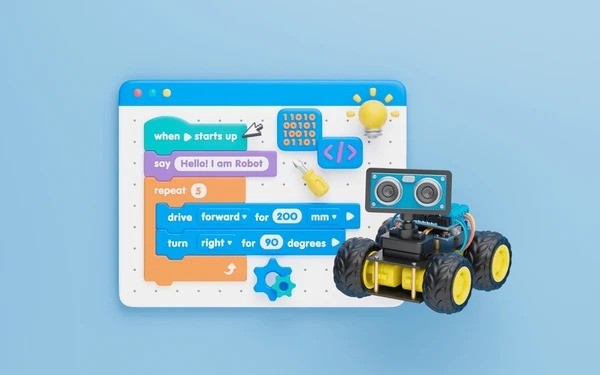
By learning coding, students develop computational thinking and problem-solving skills. They also learn how to control hardware systems using software. It is a key aspect of modern robotics.
Key ways to approach coding in STEM and Robotics:
- Learn basic programming concepts such as loops and conditions
- Write simple programs to control hardware
- Integrate sensors for responsive behaviour
- Debug and improve code through testing
- Combine coding with real-world robotics systems
Conclusion
For STEM and Robotics to be fully effective, there needs to be an involvement and engagement with technologies such as 3D printing, computer-aided design, electronics, and programming. These are the main aspects of STEM and Robotics and are important in helping learners develop adequate technical and cognitive skills.
Using STEM Hardware Resources, learners can effectively and meaningfully explore STEM and Robotics. This not only enables them to improve their learning experience but also to become confident innovators in a technology-driven world.
Explore STEM and Robotics with Makers Muse. Access structured resources, hands-on guides, and tools to start building and learning with confidence. Visit Maker’s Muse and begin creating today.