Introduction
Artificial intelligence and computational thinking are becoming important parts of school education as students encounter technologies that influence everyday life. However, introducing these subjects does not always require sophisticated equipment or advanced laboratories. The latest season of 3030 Eklavya, launched by the Central Board of Secondary Education (CBSE) in collaboration with IIT Gandhinagar’s Centre for Creative Learning, demonstrates how simple materials can be used to introduce complex technological ideas.
The programme focuses on computational thinking, artificial intelligence and STEM through activities involving familiar objects, games, puzzles and experiments. Its approach supports accessible AI education by allowing learners to explore technological concepts through observation, participation and experimentation.
Making Artificial Intelligence Easier to Understand
AI can appear complicated when introduced only through technical terminology. 3030 Eklavya takes a different approach by using familiar materials to explain fundamental ideas.
One activity uses matchboxes to introduce concepts related to computing and artificial intelligence. Students can explore algorithms, pattern recognition, searching, reinforcement learning, image recognition and AI ethics through games and practical activities.
This approach can make accessible AI education more approachable for students who are encountering artificial intelligence for the first time. Instead of beginning with programming syntax or complex technical systems, learners can first understand the underlying ideas.
The approach also demonstrates that AI learning in schools can involve observation, discussion and problem-solving rather than depending entirely on computers.
Computational Thinking Becomes a Practical Skill
Computational thinking for students involves breaking problems into manageable parts, recognising patterns, creating logical processes and developing solutions. These skills can be useful beyond computer science.
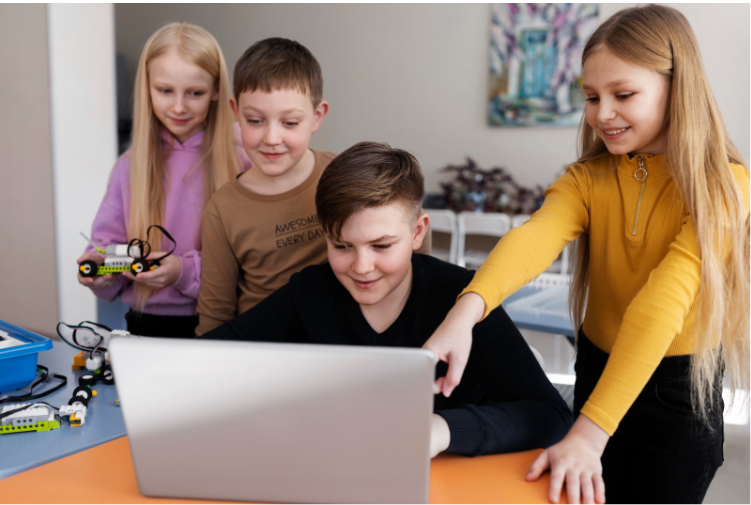
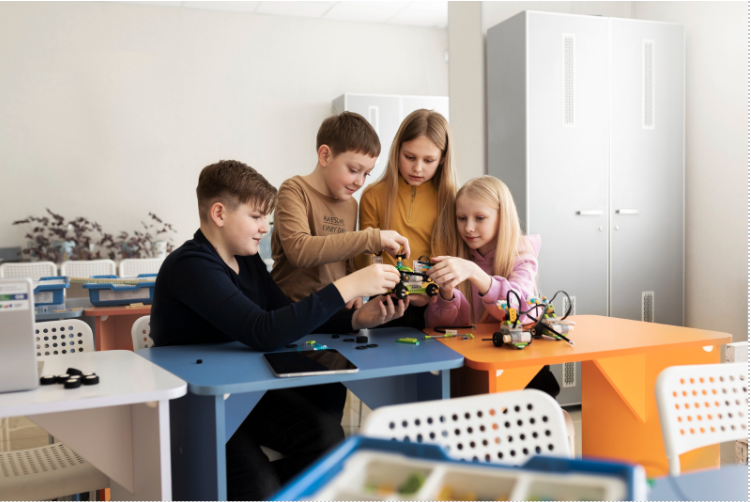
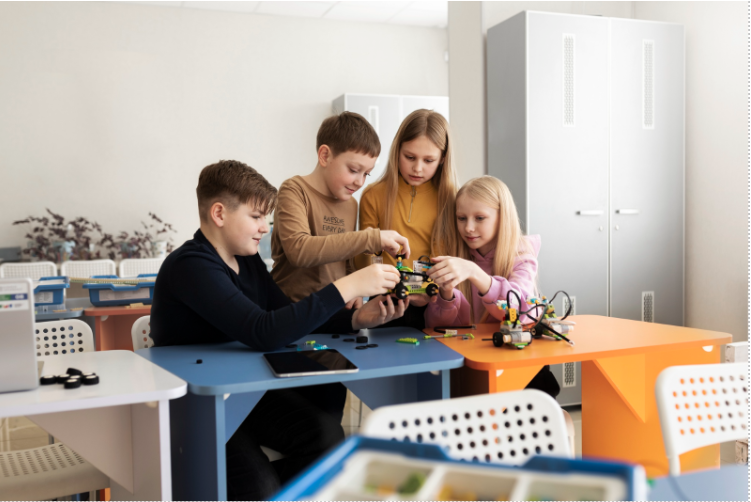
3030 Eklavya incorporates computational thinking into practical activities where learners are encouraged to make, play, test and reflect. This allows students to understand how logical processes work while engaging with physical objects.
The programme’s hands-on format can also help teachers introduce computational thinking without requiring extensive technical infrastructure. Students can investigate concepts through puzzles, cards and simple classroom materials before moving towards more advanced applications.
Everyday Objects Can Support STEM Learning
A major feature of the programme is its use of everyday materials. The initiative explains complex ideas through objects that students may already encounter at home or school.
This supports experiential STEM education by shifting the focus from expensive equipment to active participation. Students can build models, investigate scientific phenomena, solve puzzles and test their ideas using readily available materials.
The approach can also help teachers demonstrate that science and technology are present in ordinary objects. A simple material can become the starting point for understanding a wider scientific or technological principle.
Such activities can make classroom discussions more interactive while encouraging students to ask questions about how things work.
Connecting AI With Wider STEM Subjects
The programme does not treat artificial intelligence as an isolated topic. Its sessions connect computational thinking and AI with different areas of STEM.
The activities include themes related to climate action, mathematical patterns, electrochemistry, hydrogen, biodiversity, optics, logic gates and DIY computers.
This interdisciplinary approach is important because many modern technologies combine knowledge from several fields. A student learning about AI can also encounter mathematics, environmental science, electronics and engineering.
By presenting these subjects together, the programme can help learners understand that STEM disciplines often overlap when scientists and engineers work on real-world problems.
Developing Critical Thinking and Creativity
Technology education should involve more than learning how to use digital tools. Students also need to understand how technologies work, assess their effects and think critically about their applications.
The 3030 Eklavya programme includes AI bias and ethics among the concepts introduced through its activities.
This provides an important dimension to accessible AI education. Students can begin considering not only what artificial intelligence can do but also how AI systems can influence decisions and why responsible use matters.
The programme also encourages creativity, critical thinking and problem-solving through model building, puzzles and investigations. These skills can support students across different academic subjects.
Supporting Teachers Alongside Students
AI learning in schools requires teachers who are comfortable introducing new technological concepts. The programme is therefore designed for teachers as well as students.
CBSE-affiliated teachers who complete the required certification can receive Continuing Professional Development recognition for participating in the programme.
Teacher participation can strengthen the classroom application of the activities. Educators can adapt ideas from the sessions for their own lessons and use simple materials to demonstrate scientific and computational concepts.
This also helps make technology education less dependent on specialised resources. Teachers can focus on the underlying concept and then select materials that are suitable for their students.
Learning Through Making and Experimentation
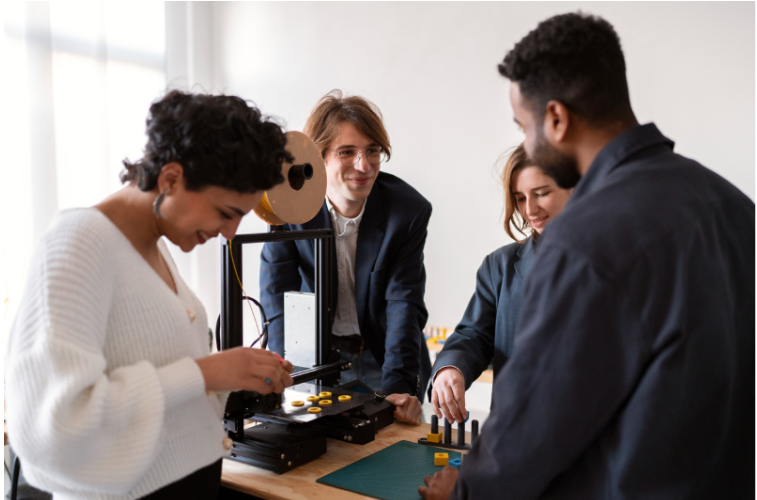
The programme follows a learning model based on making, testing and reflection. Students are not simply expected to watch explanations. They are encouraged to participate in activities and investigate scientific ideas themselves.
This form of experiential STEM education can help learners understand why an idea works rather than simply memorising a definition.
When students build something and encounter a problem, they have to reconsider their approach. This creates opportunities for trial and error, reasoning and improvement.
Such experiences can also build confidence. Students may become more willing to attempt unfamiliar problems when they learn that mistakes can be part of the learning process.
Making Technology Education More Inclusive
One challenge in technology education is ensuring that students can participate even when schools do not have extensive technological infrastructure. Activities based on simple objects can provide an alternative starting point.
The 3030 Eklavya model shows how accessible AI education can begin with low-tech activities before students move towards more sophisticated digital tools.
This does not replace access to computers, laboratories or other resources. Instead, it provides another pathway into technological learning and allows students to develop conceptual foundations first.
For schools, this can make introductory technology education easier to integrate into regular teaching.
Building Interest in Future Technologies
Early exposure to AI and computational thinking can encourage students to investigate technology-related fields further. A student who learns about algorithms through a puzzle may later become interested in programming, robotics or machine learning.
The programme’s interdisciplinary structure can also help students identify connections between their interests. Mathematics, science, design and computing can come together in technology-based projects.
The aim is not simply to teach students about current technologies but to develop the reasoning and curiosity needed to understand future technologies.
Conclusion
CBSE and IIT Gandhinagar’s 3030 Eklavya programme demonstrates how accessible AI education can be introduced through familiar objects, hands-on activities and interdisciplinary STEM learning. Its use of games, puzzles, models and everyday materials gives students an opportunity to understand computational thinking and artificial intelligence without relying entirely on specialised equipment.
The programme also highlights the value of experiential learning in technology education. By encouraging students to make, test, discuss and reflect, it connects complex technological ideas with practical learning experiences.
For schools, this approach can provide a useful pathway for introducing AI, computational thinking and STEM while developing creativity, critical thinking and problem-solving skills.
FAQs
3030 Eklavya is a CBSE programme developed in collaboration with IIT Gandhinagar’s Centre for Creative Learning. Its latest season focuses on computational thinking, artificial intelligence and STEM through hands-on activities.
Students explore concepts such as algorithms, pattern recognition, searching, reinforcement learning, image recognition, AI bias and ethics through games, puzzles and everyday materials.
Computational thinking helps students break down problems, identify patterns, develop logical processes and find solutions. These skills can be useful across academic subjects and everyday problem-solving.
Not necessarily. 3030 Eklavya demonstrates how concepts related to AI and computing can be introduced using simple materials such as matchboxes, cards and puzzles.
Hands-on activities allow students to experiment, test ideas and learn from mistakes. This can strengthen conceptual understanding while developing creativity, critical thinking and problem-solving skills.