 Written by
Laiba Arif
·
Written by
Laiba Arif
·
Robotics Program for Schools: Why Hands-On Learning Beats Textbooks
A robotics program for schools works best when students can build, test, and improve real projects instead of only reading about them. Textbooks can explain ideas, but hands-on learning helps children understand how those ideas actually work in the real world.
That difference matters because robotics is not just a subject to study. It is something students need to experience. When schools move beyond static diagrams and into active making, students learn faster, stay more engaged, and develop stronger problem-solving skills.
Learning by Doing Changes Everything
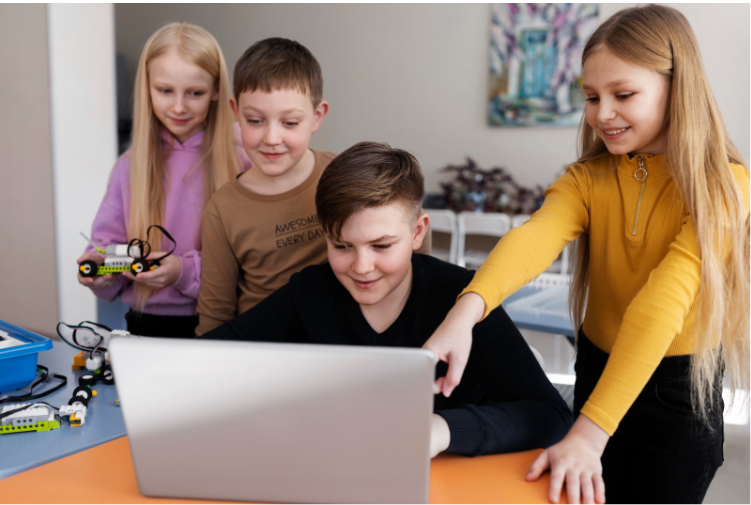
Robotics becomes meaningful when students interact with it. A robotics program for schools gives learners the chance to see motion, sensors, motors, coding, and automation in action. That makes abstract concepts easier to understand because students are not imagining the outcome – they are creating it.
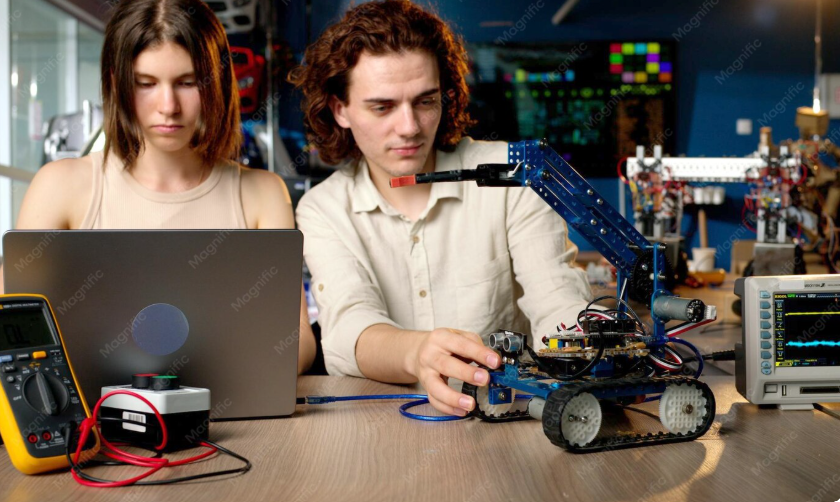
A textbook can show a robot diagram. A hands-on class lets a child build one, wire it, code it, and watch it respond. That experience creates stronger memory, deeper understanding, and more confidence. Students remember what they have made far longer than what they have only read.
Textbooks Explain, But Projects Teach
Textbooks have value. They provide structure, definitions, and background knowledge. But a robotics program for schools does something textbooks cannot do on their own: it turns theory into practice.
When students work on a robot project, they must think through multiple steps at once. They need to understand logic, connect components correctly, solve errors, and refine their approach when something does not work. This process teaches persistence and reasoning in a way passive reading cannot.
A good robotics program for schools gives students both knowledge and experience, which is why it is more effective than textbooks alone.
| Textbook Learning | Hands-On Robotics |
| Reads about concepts | Applies concepts directly |
| Memorises information | Solves problems in real time |
| Passive engagement | Active participation |
| Limited feedback | Immediate testing and correction |
| Short-term recall | Deeper long-term understanding |
Confidence Grows Through Building
One of the biggest benefits of a robotics program for schools is confidence. Many children feel unsure when they first encounter coding, electronics, or mechanical systems. But once they begin building, those subjects stop feeling distant or intimidating.
A student who successfully makes a robot move, follow a path, or respond to a sensor begins to believe, “I can do this.” That shift is powerful. It changes the way they approach future learning and helps them take on harder challenges with less fear.
Confidence also grows because robotics gives students visible results. They can point to something they made. That sense of ownership makes learning feel personal and rewarding.
Problem-Solving with Robotics for Schools
Robotics is full of small challenges. Wires are connected the wrong way. A motor does not respond. A code block produces an unexpected result. These moments are not failures in a robotics program for schools – they are part of the learning process.
Students quickly discover that mistakes are opportunities to think again. They learn to debug, adjust, and test. That habit is useful far beyond robotics. It builds a mindset that works in science, math, technology, and everyday life.
A robotics program for schools builds these skills naturally because the learning is active and practical.
| Skill Developed | How Robotics Helps |
| Logical thinking | Students follow steps and understand cause and effect. |
| Patience | Projects take time and require revision. |
| Debugging | Students learn to find and fix errors. |
| Creativity | They experiment with different solutions. |
| Resilience | They keep going when the first attempt fails. |
Collaboration Feels Real
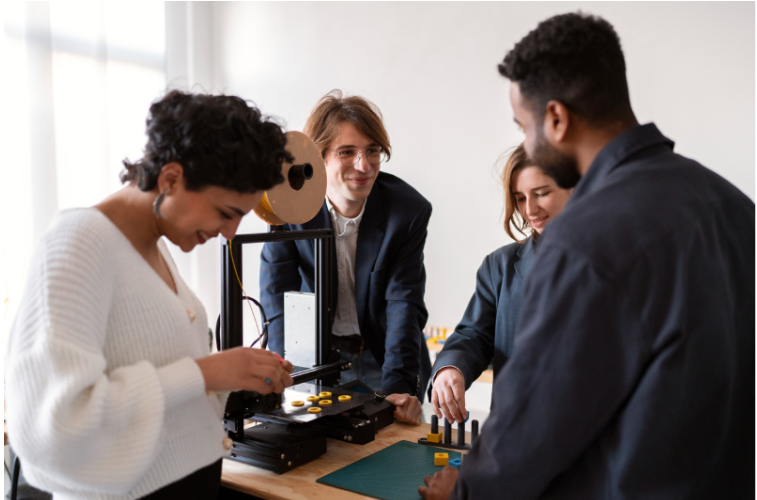
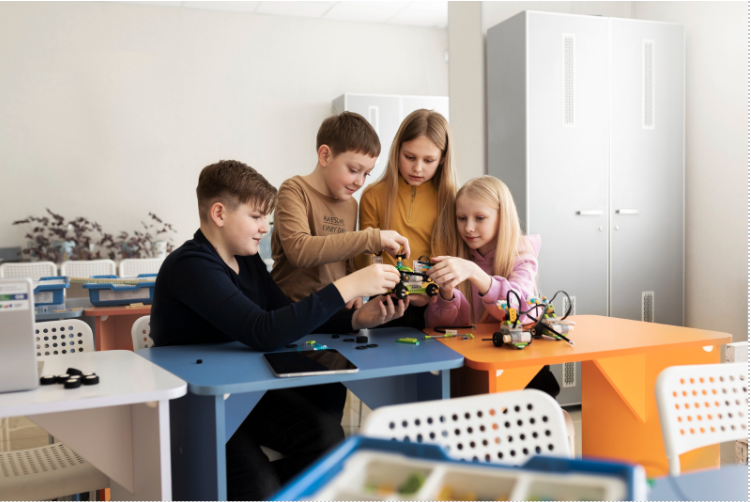
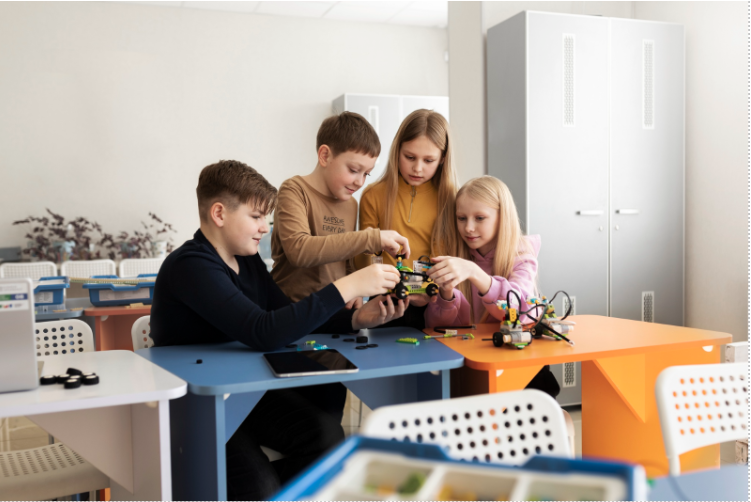
Robotics is also one of the best ways to encourage teamwork. In a robotics program for schools, students often work in pairs or small groups. One child may handle the assembly while another tests the code. Another may notice an error and suggest a fix.
This kind of collaboration feels authentic because everyone has a role in the process. Students learn to listen, share ideas, divide tasks, and work toward a common goal. These are important life skills, and they are much easier to develop in a project-based setting than through lecture alone.
Textbooks can support teamwork through discussion questions. Robotics makes teamwork necessary.
Schools Get More Than a Class
A strong robotics program for schools does more than teach robotics. It supports a school’s larger goal of preparing students for a future shaped by technology, automation, and innovation.
Schools that introduce robotics often see stronger student engagement, more curiosity in STEM subjects, and better participation in hands-on learning activities. Parents also notice when children come home excited about something they built. That excitement helps schools show that learning is active, modern, and meaningful.
A robotics programme can also support science days, innovation weeks, labs, clubs, and extracurricular enrichment. In that sense, it becomes a school-wide asset, not just one class.
Robotics in Schools Connects to Real Life
Students are more motivated when they understand why they are learning something. A robotics program for schools connects classroom ideas to real-world systems students already see around them.
They begin to understand:
- How machines move.
- How sensors detect change.
- How automation works.
- How code controls actions.
- How technology solves problems.
These lessons give students a clearer picture of the world. Instead of seeing science and technology as separate subjects, they start to see how everything connects. That broader understanding is one of the greatest strengths of robotics education.
Why Hands-On Learning Wins
Hands-on learning wins because it creates active understanding. Students do not just hear about cause and effect – they experience it. They do not just read about automation – they build a simple version themselves. They do not just study problem-solving – they practice it.
That is why a robotics program for schools is far more powerful than textbooks alone. It makes learning visible, memorable, and meaningful. It also gives students the chance to discover that they can build things that work.
When children learn this way, they are not only learning robotics. They are learning how to think, how to persist, and how to create.
The Bigger Outcome
The real value of a robotics program for schools is not just that students learn how robots work. It is that they learn how they themselves can work through challenges, explore ideas, and create solutions.
That mindset is what schools want to develop. It prepares students for higher education, future careers, and everyday problem-solving. It also makes learning more enjoyable in the present.
Textbooks will always have a place in education. But when it comes to robotics, hands-on learning does what textbooks cannot. It turns knowledge into action.
Conclusion
If a school wants students who are curious, confident, and ready to solve problems, a robotics program for schools is one of the best places to start. It makes learning active, builds real skills, and helps children understand technology by using it.
That is why hands-on learning beats textbooks in robotics every time.