
Top-rated 3D Pens for Kids Who Love Adventure Crafts
Introduction to 3D Pen
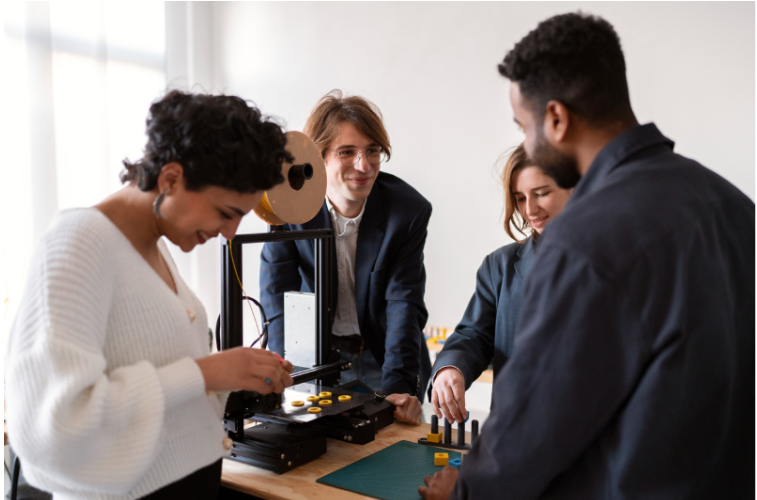
A 3D Pen is an exciting creative tool that allows students to draw in three dimensions. Unlike regular pens that use ink on paper, this pen uses heated plastic filament. The plastic melts inside the pen and comes out through the nozzle. Within seconds, it cools down and hardens, turning into a solid structure. This process allows students to create shapes, models, and artistic designs that can be touched and displayed.

For school students, a 3D Pen is not just a craft item. It is a learning tool that builds imagination and practical skills at the same time. It improves hand control, focus, and patience. It also introduces basic engineering and design concepts in a very simple and engaging way. When students see their drawings stand upright instead of lying flat on paper, it changes the way they think about art and construction.

Using a 3D Pen regularly also improves problem-solving skills. If a structure bends or breaks, students learn how to strengthen it by adding support or layering more plastic. This trial-and-error process teaches resilience and creativity. That is why 3D Pens are becoming popular in schools and home learning environments.
Harry Potter Glasses
One of the most enjoyable beginner projects is making Harry Potter Glasses. This project is simple but teaches important techniques. Students usually start by placing a printed template of two circles under a sheet of paper. They trace the circular outlines slowly using the pen. The key is to move steadily and allow the plastic to cool before lifting it.

After completing the two round frames, students connect them using a small bridge in the center. The side arms are then added carefully. Since these parts are thin, they must be built in layers to make them strong enough to hold shape.
This project helps students understand how to create smooth curves and connect different pieces. They learn that thin structures require extra reinforcement. It also teaches neatness and patience. Even though the final product looks simple, it requires careful control and attention to detail.
By completing this project, students gain confidence. They realise that they can turn a popular fictional object into a real handmade model. This encourages them to try more challenging creations in the future.
Rocking Chair
Making a Rocking Chair with a 3D Pen introduces students to structural balance. Unlike flat designs, this project requires understanding how weight and curves work together. Students begin by creating two identical curved bases. These curves are important because they allow the chair to rock.

Once the base is complete, the seat is built across the two supports. The backrest is then added, followed by small side supports to strengthen the frame. Each part must cool completely before attaching the next section. Rushing may cause the structure to collapse or bend.
This project teaches that every structure needs a strong foundation. Students understand that symmetry is important. If one side is uneven, the chair will not rock properly. Through this activity, they learn about balance, alignment, and support.
Designing a rocking chair also improves planning skills. Students must think ahead about how each piece will connect. It shows them that complex objects are built step by step, not all at once.
Making Bicycle
Making Bicycle models is a more advanced and exciting challenge. This project requires careful attention to detail and strong connections between parts. Students begin by designing two circular wheels. The wheels need inner spokes for support; otherwise, they may bend.

After completing the wheels, the frame is built using straight lines connecting both wheels. The handlebar and seat are then added. Each connection point must be reinforced with extra layers of plastic to ensure stability.
This project teaches students about mechanical structure and alignment. They learn that if the wheels are not evenly shaped, the bicycle will not stand properly. It also introduces the idea of joints and connections, which are important in real-world machines.
Making Bicycle models encourages patience and problem-solving. If one part does not align correctly, students must adjust and rebuild. Through this process, they develop resilience and attention to detail. It is a perfect example of how creativity and engineering can work together.
Retro Candle Holder
Designing a Retro Candle Holder allows students to explore both creativity and structural strength. The project usually starts with a thick circular base. This base must be strong enough to support the upper structure.

Next, students build upward walls around the base. These walls can be decorated with patterns such as lines, waves, or small shapes. However, decoration should not reduce stability. Students must maintain even thickness throughout the design.
This project teaches vertical construction. Unlike flat shapes, building upward requires steady hands and careful layering. If the walls are too thin, they may collapse. If they are uneven, the structure may tilt.
By creating a Retro Candle Holder, students understand how artistic design must also consider strength and balance. They begin to think like designers who combine beauty with functionality. This project improves creativity while reinforcing structural awareness.
Bridge Making
Bridge Making is one of the most educational projects that can be created using a 3D Pen. It introduces students to basic engineering principles in a practical way. Students start by building two strong supports on either side. These supports act as pillars.

The bridge deck is then created to connect the two supports. To make the bridge stronger, students can add triangular trusses underneath. Triangles are widely used in real bridges because they distribute weight evenly and provide stability.
This project clearly demonstrates how structure affects strength. If the bridge has no support underneath, it may sag. Adding cross beams and triangular patterns improves durability. Students learn about load distribution without needing complex formulas.
Bridge Making connects classroom lessons in physics and mathematics to hands-on creativity. It helps students see how theoretical concepts are applied in real-world construction. This activity encourages logical thinking and teamwork if done in groups.
Why 3D Pen Projects Support Learning

Working with a 3D Pen offers more than artistic enjoyment. It builds essential life skills. Students improve fine motor skills through controlled hand movements. They learn patience because each layer needs time to cool. They also develop spatial awareness by understanding how shapes connect in three dimensions.
These projects also promote independent thinking. Students experiment with new ideas and find solutions when something does not work. This process builds confidence and resilience. Instead of fearing mistakes, they learn from them.
Additionally, 3D Pen activities encourage imagination. Students can move beyond templates and create original designs such as animals, buildings, or fantasy objects. The possibilities are endless.
Conclusion
A 3D Pen is a powerful educational tool that blends creativity with learning. Through projects such as Harry Potter Glasses, Rocking Chair, Bicycle Making, Retro Candle Holder, and Bridge Making, students explore art, design, and engineering in a hands-on way.
These activities teach balance, structure, planning, and patience. More importantly, they inspire curiosity and confidence. When students hold a model they created themselves, they experience a sense of achievement that motivates them to learn more.
For kids who love adventure crafts, a 3D Pen opens the door to endless imagination and practical skill development. It transforms simple ideas into real three-dimensional creations, making learning both meaningful and exciting.