
Robots Are AI Immigrants? NVIDIA CEO’s Bold Vision – What Schools Must Teach Now
New Delhi, 19 January 2026 – At CES 2026, NVIDIA CEO Jensen Huang didn’t just showcase futuristic robots. He dropped a powerful metaphor that’s now going viral in tech and education circles worldwide: “Robots are AI immigrants.” Huang used this phrase to describe how AI-powered robots will step into roles that humans either cannot fill or no longer wish to do, from factory floors to healthcare and logistics.
His message is clear: the robotics revolution is no longer science fiction; it’s the next wave of the economy, where robots with human-like skills and AI brains become a new kind of “workforce” – the “AI immigrants” that help sustain modern economies in the face of labour shortages. He even predicted that robots with human-level locomotion, fine motor skills, and physical AI will arrive “this year,” powered by platforms like NVIDIA’s Isaac, Omniverse, and Jetson.
Why This Matters for Schools
For schools, this is not just a headline – it’s a wake-up call: the future workforce will not just work with AI tools like ChatGPT; it must also design, build, manage, and coexist with AI-controlled robots in factories, hospitals, farms, and smart cities. Whether students become engineers, farmers, doctors, or entrepreneurs, they will need a new “AI + robotics” fluency that’s deeper than anything before.
5 Things Schools Must Teach Now
- Physical AI & Robotics, Not Just Software AI
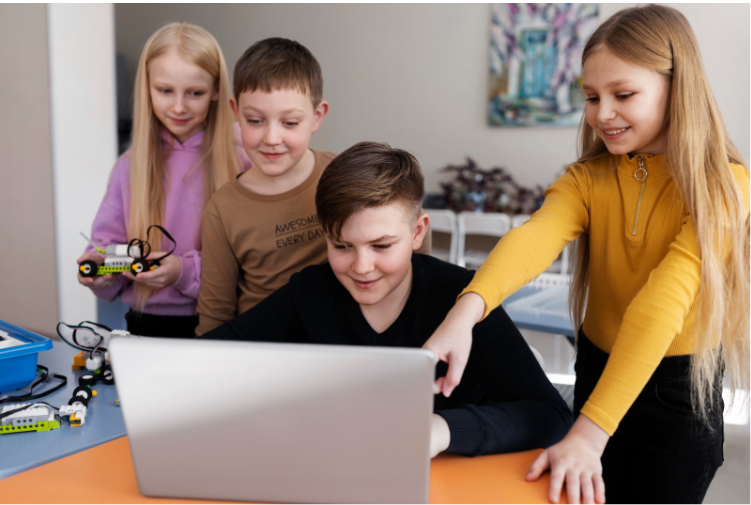
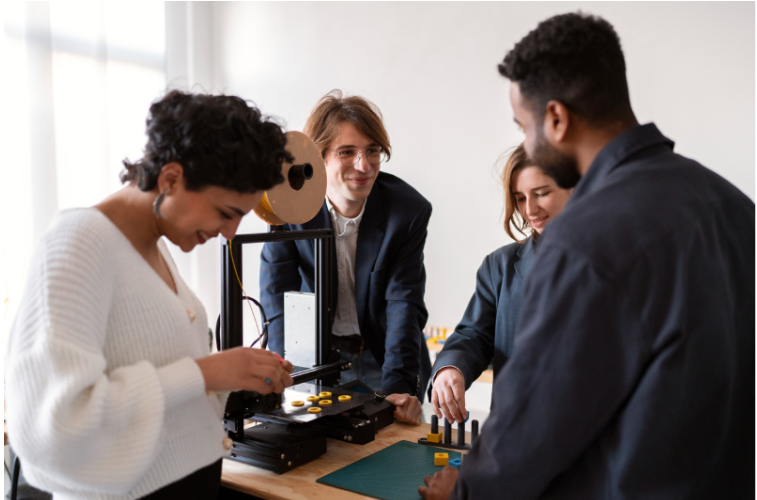
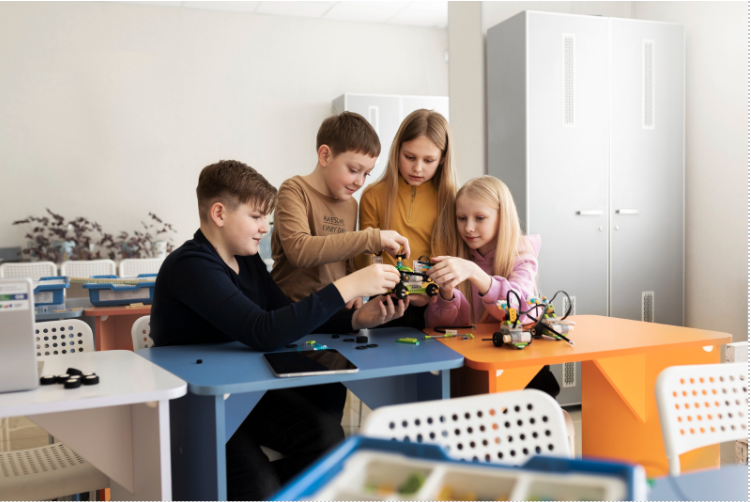
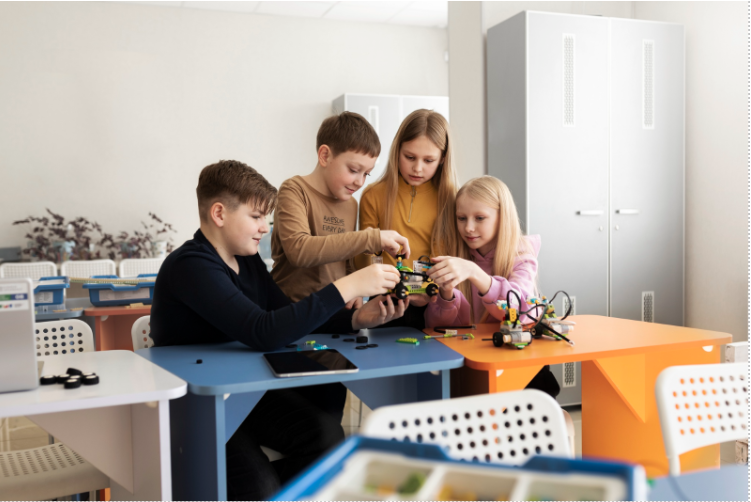
Students must move beyond “How to use AI apps” to “How AI moves in the real world.” This means hands‑on robotics labs where kids build and code robots that sense, think, and act – line‑followers, pick‑and‑place arms, and even simple humanoids – using platforms like AI‑enabled microcontrollers and IoT kits. - The Ethics of AI & Robots in Society
“AI immigrants” is a smooth metaphor, but it brings hard questions: Who is responsible when a robot makes a wrong decision? Who benefits from robot labour? Schools must integrate ethics, privacy, and equity discussions into AI/robotics curricula, preparing students to think critically about technology’s impact on jobs, culture, and justice. - “Robot–Human” Collaboration Models
The future is not “robots vs humans,” but “robots with humans.” Students need to understand collaborative roles: humans as designers, trainers, and moral supervisors, and robots as tireless, precise workers in manufacturing, warehousing, and healthcare. - Problem-Based, Industry-Connected Robotics Projects
School robotics projects must feel real, not just school-level demos. Examples:
- A farming robot that moves between crop rows and checks for pests.
- A logistics bot that sorts and delivers parcels in a school supply chain.
- A healthcare-assist robot that reminds patients or staff about tasks.
These projects make learning relevant and show students how AI robots can solve real-world problems in India.
- AI + Robotics as a Career Path, Not Just a Hobby
Schools must stop treating robotics as an “extra activity” and frame it as a serious career stream. Career talks, university tie‑ups, and industry visits can show students that they can build a future in AI hardware, robotics engineering, and physical AI research, not just software and coding.
The Bottom Line for Schools in 2026
NVIDIA’s vision is simple: AI is moving from the world of bits into the world of atoms. For CBSE and Indian schools, this means:
- Robotics labs must be treated as seriously as computer labs.
- Teachers must be trained not just in coding, but in AI, sensors, and real-world problem solving.
- Curricula must evolve from “using AI” to “building and managing AI-powered machines.”
Because in the next decade, every student won’t just use AI. They’ll need to know how to live, work, and build with “AI immigrants” – the robots that are already on their way to every factory, home, and school.