Goa CM Extends School Robotics Scheme 3 Years: Coding Warriors Rise for CBSE STEM 2026!
Goa’s school corridors are quietly transforming—from chalk dust and copied notes to glowing screens, buzzing bots, and kids who introduce themselves not just as students, but as “coders” and “robot designers.” When Chief Minister Dr. Pramod Sawant announced that Goa’s Coding and Robotics Education in Schools (CARES) scheme would be extended by three more years, it was more than a budget line; it was a clear signal that small coastal classrooms are being groomed for a big-league STEM future under the CBSE 2026 skill‑education vision.library+1
The CARES scheme, first launched to introduce structured coding and robotics into government and aided schools, had already shown strong early impact—higher engagement in math and science periods, more participation from girls, and enthusiastic support from teachers who once feared “all this tech stuff”. With the new extension, the government is doubling down on its goal: turn every classroom into a mini-lab where students experiment with logic, sensors, and problem‑solving instead of simply memorising textbook answers.
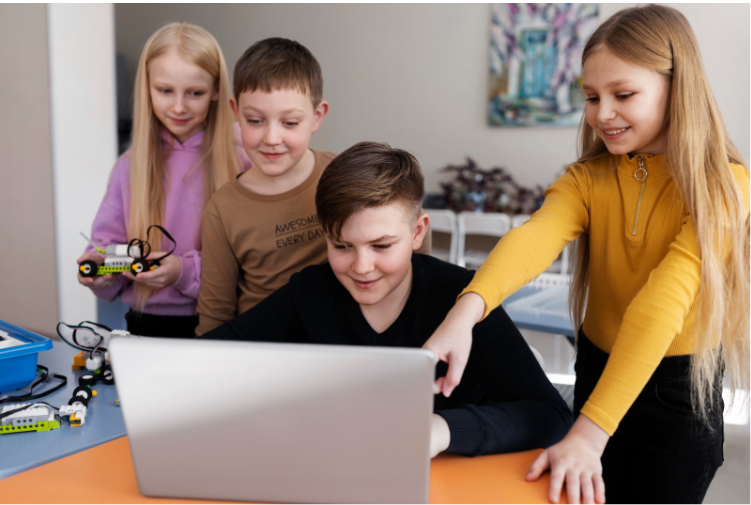
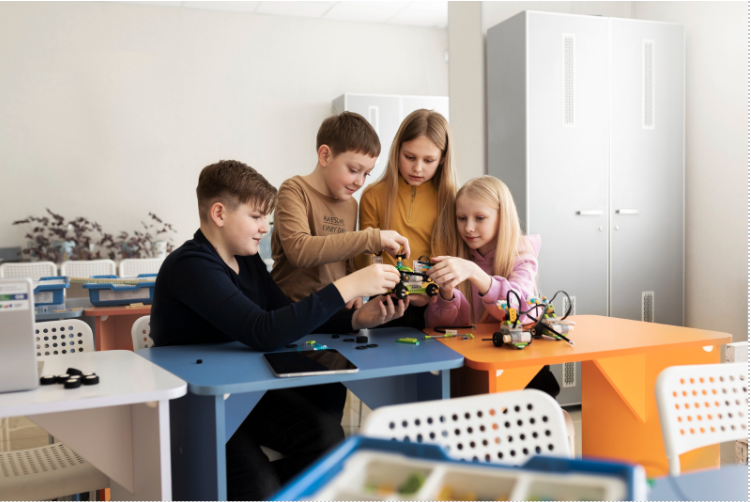
Walk into one of these classrooms on a typical weekday and the difference is obvious. Desks are pushed together to make space for wheels, wires, and laptops; chalkboards now share wall space with posters about loops, variables, and AI ethics. In one corner, a group of Class 7 students huddle around a line‑following robot, tweaking code to help it take smoother turns. In another, a quiet girl who once sat at the back is confidently explaining how her bot can detect obstacles and stop before hitting them. Teachers report that even students who struggled in traditional tests are suddenly alert, asking “what if” questions and staying back after class to fix bugs in their programs.
The extension of the robotics scheme is also carefully aligned with the broader national shift towards skill‑based education. CBSE has already made it clear that skill subjects, including coding, AI, and other technology domains, are a central theme leading up to 2026, with dedicated training hours and an emphasis on hands‑on projects over rote assessments. Goa’s move ensures that when CBSE’s new skill framework is fully operational, its schools will not be starting from zero—they will already have three extra years of practice in robotics, structured problem‑solving, and computational thinking under their belt.
For parents, the most visible change is in their children’s aspirations and language. Instead of saying “I hate maths,” students talk about “fixing my robot’s logic” or “teaching my bot to sense light and sound.” Robotics projects quietly smuggle in core concepts from algebra, physics, and electronics without triggering the fear or boredom often associated with those subjects. A simple task—like designing a robot to sort waste—opens up lessons on sustainability, sensors, geometry, and basic programming all at once. This kind of integrated learning is exactly what policy makers mean when they talk about preparing students for “21st‑century careers.”
Teachers, too, are being brought along on this journey. Under the extended scheme, training modules and workshops help them move from being passive invigilators to active facilitators in STEM projects. Many of them admit that at first, they were intimidated by coding and robotics, believing it was “only for engineers.” After hands‑on sessions, they now design their own classroom activities, pairing coding tasks with existing science and maths chapters so that students see real‑world applications rather than isolated theory. This support will be crucial as CBSE rolls out mandatory training and skill‑education focus across the country.
The ripple effects go beyond marksheets and exams. School leaders are reporting increased participation in science fairs, hackathons, and robotics competitions, with Goa’s students beginning to hold their own against peers from larger metros. Local industry and higher‑education institutes are watching with interest, seeing the CARES cohort as a potential pipeline for future engineers, designers, and AI specialists. In a state where tourism often dominates the narrative, the vision of classrooms full of “coding warriors” offers a powerful parallel story—one of knowledge, innovation, and home‑grown talent.
As the three‑year extension kicks in, the big question is no longer “Should schools teach robotics?” but “How far can this momentum take Goa’s children by 2026?” With CBSE’s STEM, AI, and skill‑education agenda gathering pace, Goa’s decision positions its students at the front of the wave rather than chasing from behind. If the early years of the scheme turned hesitant children into curious tinkerers, the next phase could transform entire school ecosystems into hubs of experimentation and creativity. For many young learners holding a screwdriver in one hand and a laptop in the other, the CARES extension is more than a policy announcement—it is a promise that their curiosity will be backed, funded, and taken seriously as India’s STEM future takes shape.