
AMD Powers 150K+ Students: New STEM Labs Transform 500 Indian Govt Schools!
AMD’s latest education push is quietly rewriting the future of government school classrooms in India. In a landscape where many students still share a single computer or learn science only from blackboard diagrams, new STEM labs and mobile science units funded by AMD are turning curiosity into real innovation. More than 150,000 students are now getting hands-on access to robotics kits, electronics, coding tools, and interactive experiments that once seemed reserved for elite private schools.
A New Chapter for 150K+ Young Innovators
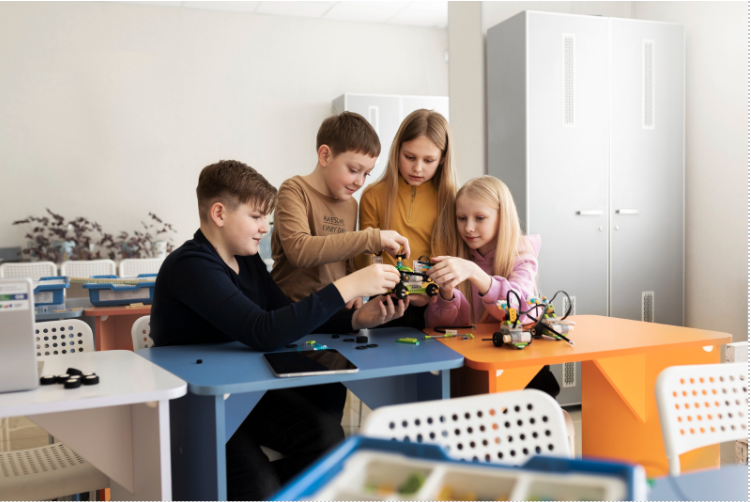
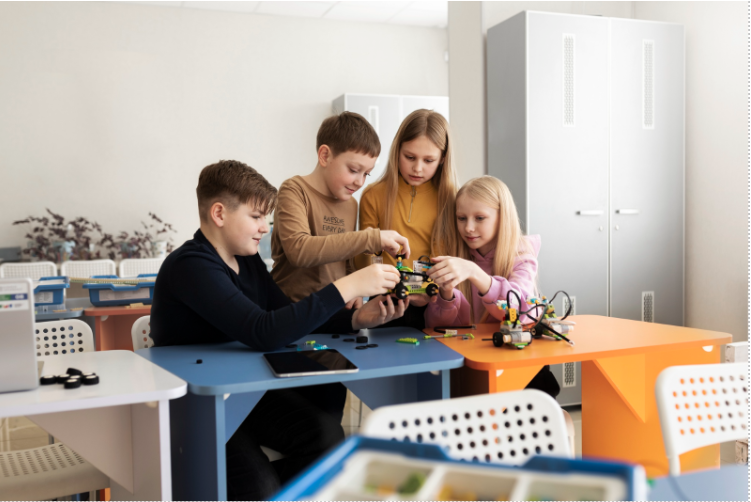
The initiative, part of AMD’s expanded STEM and workforce development program in India, has already reached over 150,000 students across multiple states through a mix of school-based labs, mobile vans, and community science centres. Instead of memorising definitions, children now wire circuits, build simple robots, and code basic applications—experiences that can spark lifelong interest in science and technology careers.
For many government schools, this is the first time students are seeing microcontrollers, sensors, and laptops as everyday learning tools, not distant dreams. Teachers report that even traditionally “quiet” students are now the first to volunteer during STEM activities, eager to test, tinker, and troubleshoot.
500 Schools, Labs and Mobile STEM Vans
A key highlight of the programme is the transformation of hundreds of government schools with dedicated STEM labs and outreach infrastructure. Dozens of schools have received fully equipped science and technology spaces, complete with experimentation tables, robotics kits, computers, and guided activity modules aligned with school curricula.
To ensure rural and remote students are not left behind, AMD has also supported mobile STEM vans and community science centres that travel between clusters of schools. These mobile units bring hands-on experiments, digital learning content, and trained facilitators directly to village classrooms, bridging the gap where infrastructure is still emerging.
How These Labs Change Classroom Learning
Inside these new labs, a typical day looks very different from a traditional lecture-based science class. Students might spend one session assembling a basic robot, another learning how sensors work, and a third writing simple code to control motors or LED lights. Concepts like electricity, logic, and problem-solving are no longer abstract—they are visible, tangible, and testable.
Teachers are trained to shift from “chalk and talk” to a facilitator role, guiding students through inquiry, experimentation, and reflection. This approach aligns closely with India’s National Education Policy 2020, which emphasises experiential learning, coding, and 21st-century skills from an early age.
Why This Matters for India’s STEM Future
India’s digital economy is growing rapidly, yet many students from government schools struggle to access basic technology skills. By investing directly in STEM infrastructure where it is needed most, AMD’s programme helps build a more inclusive talent pipeline for future engineers, coders, AI experts, and hardware designers.
Exposure to real-world tools at the school level can influence subject choices, higher education decisions, and career aspirations, especially for first-generation learners. When students see themselves successfully building robots or writing code, it challenges long-held beliefs that advanced technology careers are “not for them.”