
Makers' Muse YSRP
Student Research Program in Kolkata
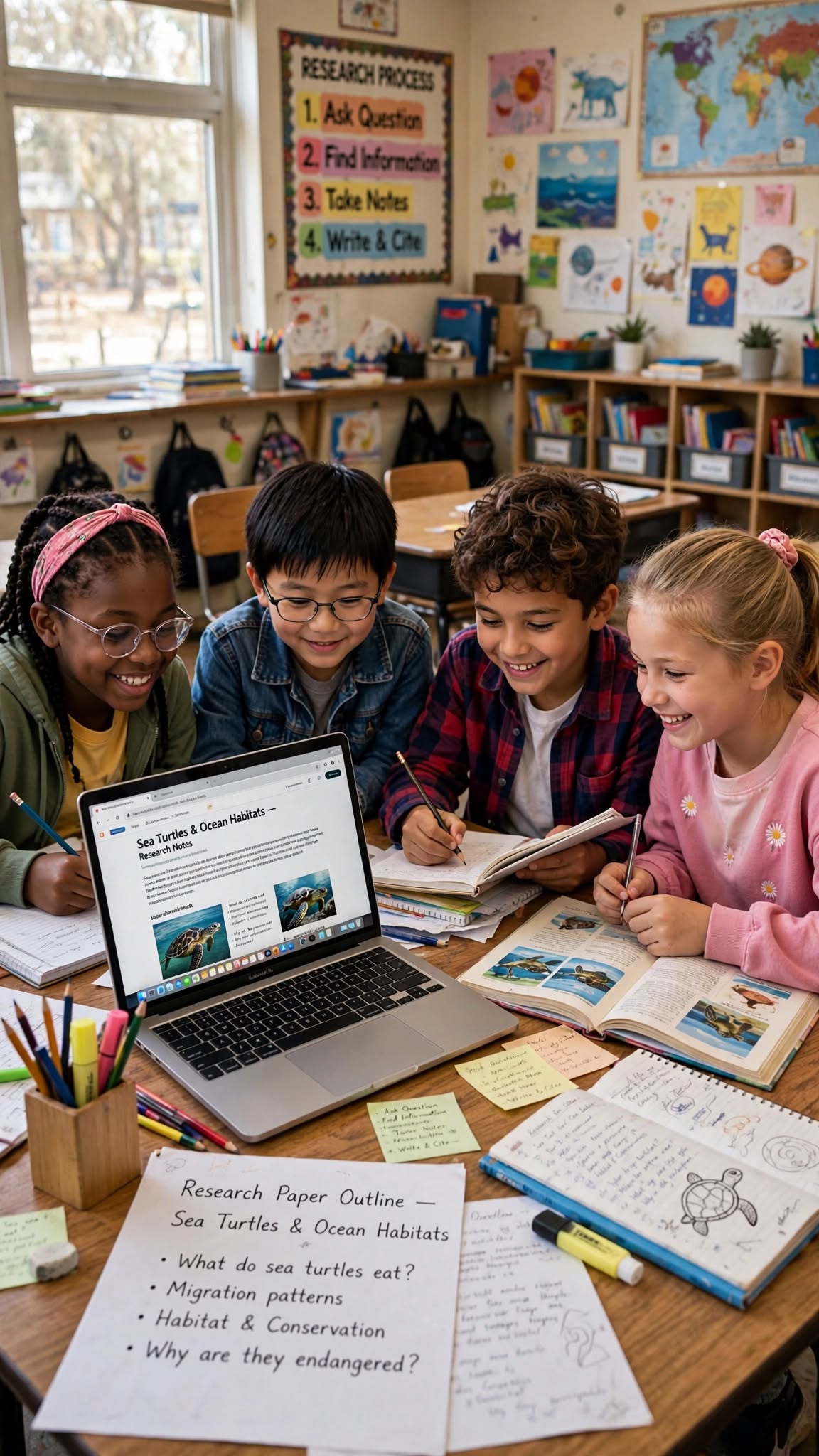
Some children can’t let a question go, yet their schoolwork wraps up with a chart and a grade. YSRP by Makers’ Muse is a student research program in Kolkata that gives that persistence a proper path. Students travel from a rough first idea to a written high school research paper, with an expert mentor at their side the whole way.
- Grade 6 to Grade 12: for school students aged roughly 11 to 18.
- Fully online: the same mentorship is available in Kolkata and in every other city.
- 8 stages: one clear route from selecting an idea to the closing review.
- Domain-expert mentor: chosen to fit the student’s research interest and grade.
1:1 Mentorship
IIT researchers & PhD scholars
Why it matters
Why Is a Research Paper Worth Writing?
For Ivy League and university admissions abroad, grades and test scores are only the entry ticket. Highly selective universities say no to most applicants, including plenty with excellent results. When many profiles look the same, the one that is remembered shows depth: a particular piece of work with a genuine reason behind it. A research project that produces something tangible, such as a paper, is one of the strongest ways to show that depth.
Putting “research” on an activities list is easy. Showing a real paper with your name on it is not, and it gives an admissions reader something they can look at and verify. For students aiming at the Ivy League and universities abroad, YSRP is designed for exactly this gap. Over roughly 8 to 16 weeks, students work with mentors who have real research experience on a project that is truly their own, not a template with a different name dropped in.
If the US, UK or another overseas university is your goal, this student research program in Kolkata begins at Grade 6, so research can get going years before application season. YSRP covers AI and computer science, environment, biology, social science and engineering, so the paper can fit the course you plan to apply for.
The difference
The YSRP Advantage: Real Research With Expert Guidance
Few school students are ever shown how genuine academic research is done. YSRP changes that. It is structured academic mentorship that guides a student through the whole lifecycle of research, so the skills are learned by doing the work, not by reading about it.
Along the way, students learn to frame a focused question, read what others have already found, plan a sound method, analyse data and write up a full manuscript. Because the student leads and a mentor supports, the research stays genuinely theirs. Students who can research independently, interpret data and communicate ideas academically also stand out in competitive applications.
| Advantage | What it means for the student |
|---|---|
| Student-led, mentor-supported | The ideas, analysis and writing are the student's own, with expert guidance at every stage |
| Original data | Findings come from the student's own work, analysed and interpreted |
| Complete research experience | Every step is covered, from the first question to the final paper |
| Careful review | The work goes through a full academic review before the final send-off |
The roadmap
Student Research Program in Kolkata: 8 Stages Toward One Final Paper
A mentor directs each stage, so students never have to sort out the complexity alone. Every student writing a high school research paper in Kolkata through YSRP moves through the same eight stages.
Stage 1
Onboarding and interest mapping
Mentors discover what the student is excited about and settle on a suitable research domain.
Stage 2
Research question framing
A broad interest is sharpened into a focused question that works at school level. Mentors help cut down questions that cover too much.
Stage 3
Literature review
Students go through academic journals and earlier studies to spot the knowledge gap. For many, it is their first academic reading beyond textbooks, and it builds critical analysis and citation awareness.
Stage 4
Methodology design
Students decide how to explore the question, whether through surveys, experiments, data collection systems, coding projects, or sensor builds. Mentors keep the methods strong yet doable.
Stage 5
Research execution
The experiment is carried out, the survey is distributed, and data is collected, with technical validation that the method holds up.
Stage 6
Data analysis
Students make sense of the results using tools such as Python, Excel or statistical software, along with comparisons and clear charts.
Stage 7
Paper writing
The findings are turned into a formal paper with an introduction, literature review, methodology and results. Mentors give feedback on structure, clarity, academic tone, logical flow and citation accuracy.
Stage 8
Review and final wrap-up
Following academic review, the paper is prepared for a journal, conference or platform that suits student research.
Research domains
Research Domains for a Research Paper in Kolkata
YSRP spans many academic fields, so each student can connect their research to a long-term interest. Examples from Makers’ Muse:
| Subject Name | What It Is About |
|---|---|
| AI and machine learning | Developing intelligent systems that learn from patterns in data to automate tasks and support decisions. |
| Data science and statistics | Gathering, studying and interpreting numbers to find trends and guide decisions. |
| Computer science and cybersecurity | Designing software and keeping systems, networks and data safe from digital threats. |
| Robotics and automation | Designing, building and programming machines that perform tasks independently or with limited human help. |
| Electronics, IoT and sensor systems | Connecting physical devices with sensors and microcontrollers to collect and send data in real time. |
| Environmental science and climate | Studying ecosystems, pollution and climate patterns to understand human impact and lessen it. |
| Renewable energy and sustainable cities | Creating clean energy sources and urban planning ideas that help communities use resources efficiently and live greener. |
| Health and biomedical sciences | Researching the human body, disease and medical treatment to improve public health and care. |
| Neuroscience and cognitive science | Examining the nervous system, brain function and mental processes such as memory, learning and perception. |
| Biology, genetics and life sciences | Exploring living organisms, cell structures, gene expression and the working of biological systems. |
| Physics and space science | Studying matter, motion, energy and the celestial bodies of the universe. |
| Psychology and behavioural science | Looking at how people behave, feel and interact to understand what individuals and groups do. |
| Economics, business and finance | Analysing markets, financial systems, trade, consumer behaviour and business operations. |
| Public policy, education and sociology | Studying how societies are organised, how governance rules work and how community programmes address social issues and public wellbeing. |
| Linguistics, literature and humanities | Exploring the structure of language, cultural expression, communication styles and human history through writing and speech. |
A good topic is narrow. For example: can a simple sensor-based system reduce water waste in a school’s rooftop garden, compared with manual watering over a month?
Your mentors
Learn from IIT, MIT and Oxford Researchers, PhD Scholars and Industry Experts
Every YSRP student is paired with researchers, PhD scholars and industry experts from institutions including the IITs, MIT and Oxford, who personally coach them through each step of the research journey. Makers’ Muse mentors bring varied backgrounds, from research to engineering to industry practice, so a student exploring AI, the environment or engineering is guided by someone fluent in that field.
How mentoring works
Mentoring starts with interest mapping, a feasibility check on the topic and domain matching. At each stage, mentors help students:
- Shape specific questions that can be researched
- Choose methods that are rigorous yet achievable
- Interpret their data
- Write the paper section by section
The mentor guides, questions and gives feedback; the student does the research and writing.
Proof from Kolkata
Add a School’s Feedback
Real, permissioned feedback from a Kolkata school or student, with date and context.
School feedback, student quote or project photo (with permission, date and school name)
Get started
How to Join the Student Research Program in Kolkata
If your child is curious about research, this student research program in Kolkata fits CBSE, ICSE, IB and Cambridge, and sits within the flexible Makers’ Muse approach, which blends research, hands-on projects and mentorship into a pathway shaped around each student.
Begin with a conversation about the student’s interests and timeline. Makers’ Muse offers two, so you know early on whether an idea can become a workable research paper.
Research readiness conversation
A first talk about the student’s interests and timeline.
CBSEICSEIBCambridge
Topic feasibility conversation
Know early on whether an idea can become into a workable research paper.
No finished topic needed
Student Research Program in Kolkata: Frequently Asked Questions
Yes. YSRP is a research mentorship programme for school students from Grade 6 to Grade 12. It follows an 8-stage research journey, and each student works with a mentor who is an expert in their domain.
YSRP is a structured program. You follow an eight-stage roadmap from interest mapping to the final review, with a dedicated one-on-one mentor throughout. Mentors are doctoral researchers, postdocs and faculty from institutions including the IITs, IIMs, NITs, MIT and Oxford. The program covers research domains, supports CBSE, ICSE, IB and Cambridge students, and offers an individual plan as well as a school cohort plan. Mentors guide and give feedback, but the work stays yours.
It can. Many applicants have strong grades and similar activities, so real research work helps you stand out. With YSRP, you finish with a research paper, a digital completion certificate and a personalised recommendation letter from your mentor, who has worked with you one-on-one for weeks. You can also write about your methods, data and findings in your essays and statement of purpose instead of stating a general interest.
Pick a topic you are curious about and narrow it to one question you can test. Then read existing studies, choose a method, collect data and write up your findings. YSRP guides you through these eight stages, and you do not need a finished topic to begin.
Yes. YSRP is accessible for Grades 6 to 12, so students in Kolkata or any other Indian city get the same one-to-one mentorship. It runs for roughly 8 to 16 weeks and fits CBSE, ICSE, IB and Cambridge.
It is not required and does not replace strong grades or essays, but it shows the curiosity and independent thinking selective universities look for. Requirements vary by university, so check each one’s guidelines.
YSRP covers many domains, including AI, computer science, robotics, environment, health, social science, physics, biology and linguistics. Pick something you are curious about and narrow it down, such as AI-based waste segregation or air quality in your neighbourhood.
It adds depth and gives you real material for essays, recommendations and interviews, while showing skills like analysing data and communicating findings clearly. It cannot secure admission by itself, but it helps your profile stand out alongside your grades.
Join the Student Research Program in Kolkata
Turn your curiosity into a high school research paper in Kolkata, with mentors beside you until the final stage.