 Written by
Laiba Arif
·
Written by
Laiba Arif
·
STEM Learning & Neuroscience of Building Things: Why Student Inventors Learn Faster and Remember More
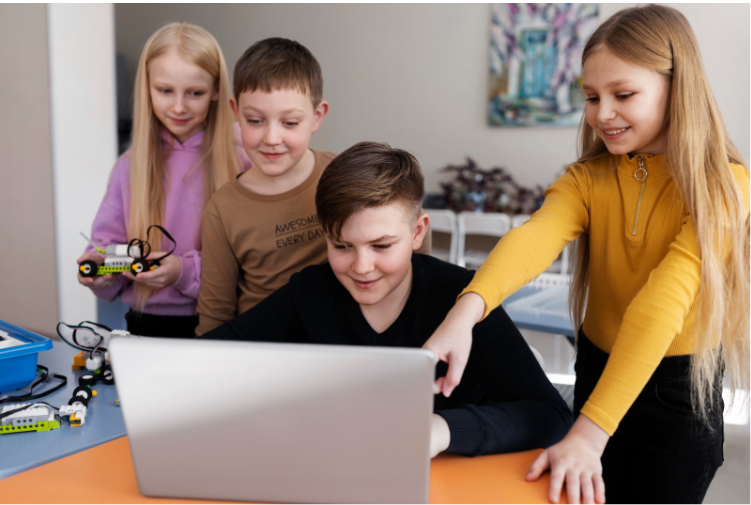
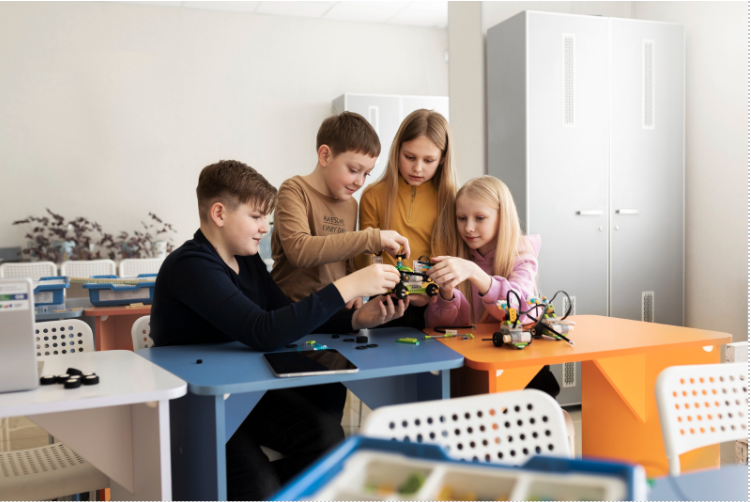
If you walk into a classroom where students are building something, you’ll see a completely different type of classroom than one where students are sitting and listening to the teacher. The amount of movement and discussion, trial and error, and the number of ideas being tested rather than just absorbed are all evident. This classroom is more like a workshop than a lecture hall. However, this distinction may seem small, but it is actually quite significant.
From a neuroscientific perspective, building is not a supplementary activity for learning. It is one of the most effective ways in which the brain encodes, stores, and retrieves information. Consequently, there are many students involved with STEM learning through invention who demonstrate higher levels of understanding and have better retention of learned material.
The Brain Does Not Learn in Isolation in STEM Education
The human brain was intended to learn via its interaction with the world around it. When the process of learning occurs in a passive manner (for example, reading or listening), only small numbers of neural networks are activated. This limits the degree to which neural networks create an association. Learning that occurs during passive forms have no deep level of integration occurs in the majority of cases.
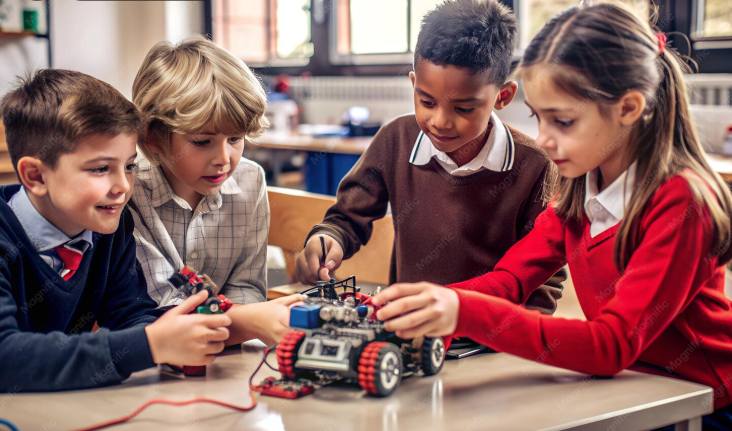
However, when a student builds an object, multiple processes occur in their experience. Thought, movement, perception, and the ability to make a decision all occur simultaneously while this student is building this object. Thus, a very dense interconnection of network pathways has been created rather than just one low-density network pathway.
For a student to understand parts of that simple gadget, he/she must not only understand the gadget’s function as a whole, but also make multiple decisions. They must correct numerous errors, observe the outcomes of building that gadget, and analyse their actions while doing so.
Memory Is Built Through Experience, Not Repetition Alone
One of the most persistent myths in education is that repetition leads to mastery. While repetition has value, it is far less effective without meaningful engagement.
The brain prioritises experiences that are rich in context. When students build something, they attach memory to action, environment, and outcome. This creates what can be described as layered memory.
In STEM learning, this layered memory allows students to retrieve knowledge not as isolated facts but as connected experiences. This is why they can apply what they learn rather than simply recall it.
| Learning Mode | Nature of Memory | Recall Strength |
| Reading repeatedly | Isolated information | Weak |
| Listening passively | Limited context | Moderate |
| Building actively | Multi-layered context | Strong |
How is Cognitive Load Managed?
Cognitive Load is defined as the ability to process information in a given timeframe. Abstract material requires the brain to develop and organise information to comprehend everything presented.
Construction reduces cognitive load by presenting and manipulating the idea. Students see and physically play with the object rather than conceptualising how it operates. This reduces cognitive overload, allowing the brain to concentrate on comprehension rather than interpretation.
For example, constructing a model transforms abstract theory into something concrete. The brain processes this more efficiently because it aligns with how humans naturally learn through interaction.
Error-Driven Learning Strengthens Neural Pathways
Mistakes are traditionally thought of as barriers to learning. However, brain science suggests otherwise. The brain processes more information when errors occur. Errors prompt further processing when there is a discrepancy between expected results and actual outcomes.
When a student builds an item, and it fails, a series of actions occur to the student:
- The brain recognises that there is a mismatch
- The brain searches for possible solutions to the original issue
- The student finds different solutions to the problem, thereby building stronger neurological pathways than if they had received the correct answer on the first attempt.
In STEM learning, this cycle of error-based learning continues until the student has repeatedly refined their understanding, thereby establishing a firmer foundation of understanding.
Decision-Making Accelerates Learning Speed
Every building activity requires choices. Students decide which materials to use, which approach to take, and how to respond when something fails. These decisions activate the prefrontal cortex, the region responsible for higher-order thinking.
- Frequent decision making accelerates learning because it forces the brain to evaluate options and predict outcomes. Over time, this builds mental models that allow students to respond more quickly and accurately to new challenges.
- This is one reason student inventors appear to learn faster. They are not just absorbing information but constantly processing and applying it.
Feedback Loops Make Learning Immediate and Actionable
In traditional learning, feedback is often delayed. A student completes an assignment and receives corrections later. This gap reduces the impact of the feedback.
- Building creates immediate feedback loops. The result of an action is visible right away. If something works, the student understands why. If it fails, they can adjust instantly.
- This immediacy is critical. The brain learns more effectively when feedback is closely linked to action. STEM learning leverages this by turning every step into a learning opportunity.
Attention and Focus Improve Through Active Engagement
Sustained attention is one of the biggest challenges in modern education. Passive learning often struggles to hold attention because it lacks interaction.
- Building naturally demands focus. Students must track multiple variables, monitor progress, and stay engaged with the task. This active involvement reduces distraction and increases concentration.
- From a neurological standpoint, attention strengthens memory. The more focused the brain is during an activity, the more effectively it encodes information.
Conceptual Understanding Becomes Transferable
A key goal of education is not just to understand a concept but to apply it in new contexts. This requires flexible knowledge rather than rigid memorisation.
- Students engaged in STEM learning develop transferable understanding because they work with concepts in dynamic situations. They see how ideas behave under different conditions and learn to adapt them accordingly.
- This flexibility allows them to approach unfamiliar problems with confidence. Instead of relying on memorised solutions, they rely on understanding.
The Role of Environment in Reinforcing STEM Learning
The physical and social environment also plays a significant role in how the brain learns. Spaces that encourage exploration, discussion, and experimentation enhance cognitive engagement.
When students build in collaborative settings, they are exposed to different perspectives and approaches. This diversity of input enriches their understanding and strengthens neural connections.
An environment that supports STEM learning is not defined by advanced tools but by opportunities to create, test, and refine ideas.
Long Term Retention is a Natural Outcome of Active Learning
Retention is often treated as a separate goal, something to be achieved through revision. In reality, retention is a byproduct of how learning occurs.
- When students build and invent, they encode information in multiple ways. They connect it to actions, decisions, and outcomes. This makes the memory more resilient over time.
- As a result, students do not need to rely heavily on repetition. The learning is already embedded in their experience.
Conclusion
There is compelling evidence from neuroscience suggesting that active brain activity, challenges, and immediate feedback all contribute to optimal learning in the brain. Building is one way to integrate all three components into a single activity.
When students participate in STEM Education through invention and hands-on building, their learning experience shifts from simple knowledge transfer to meaningful understanding. It happens through critical thinking, adapting to change, and remembering what they have learned for many years to come.
Students who build not only acquire knowledge more quickly but also learn in a way consistent with how their brains are designed to learn.