

Using artificial intelligence and digital technology well in education depends on more than devices and connectivity. It depends on teachers who know how to use these tools meaningfully, which is exactly the problem a recent China-Southeast Asia capacity development programme set out to address.
The programme brought education policymakers, school leaders, teachers and experts together in Beijing under the theme “STEM and AI: Empowering Rural Teachers for Digital Transformation,” focused on building AI and STEM education for rural schools. Participants traded experience on teacher development, AI literacy, digital equity and technology use in rural and underserved communities, a reminder that providing technology is only one part of building real learning opportunities.
Strengthening rural STEM education
Rural schools face different challenges than well-connected urban ones. Teachers often have fewer chances for specialised professional development, and schools run into limits around infrastructure, connectivity and access to digital resources. This programme focused specifically on how AI and STEM education for rural schools can support the teachers working inside those constraints.
Keeping the focus on teachers matters because they’re the ones who turn technology into actual classroom learning. A digital platform or AI tool doesn’t improve understanding on its own; teachers need to know when and how it supports a specific learning goal. That’s what makes rural STEM education dependent on professional development, not just equipment.
Teacher capacity comes before technology adoption
The programme paired investment in digital infrastructure and tools with real teacher capacity building, reflecting a principle that applies well beyond this one programme: schools can receive computers, software or AI-enabled tools and still lack teachers confident enough to integrate them into lessons.
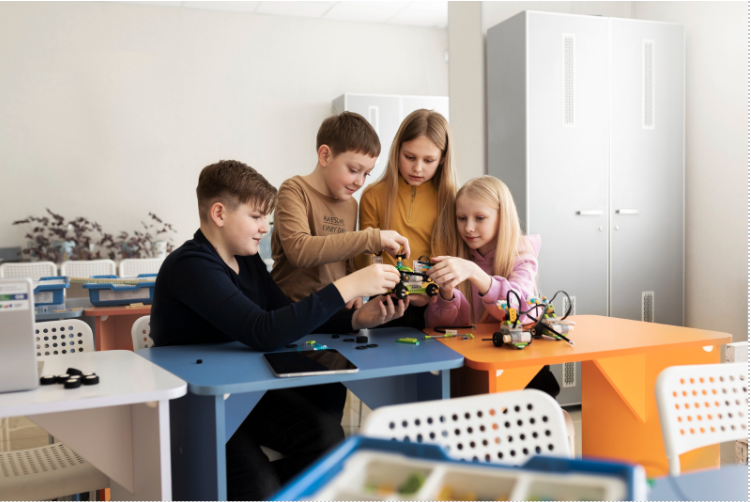
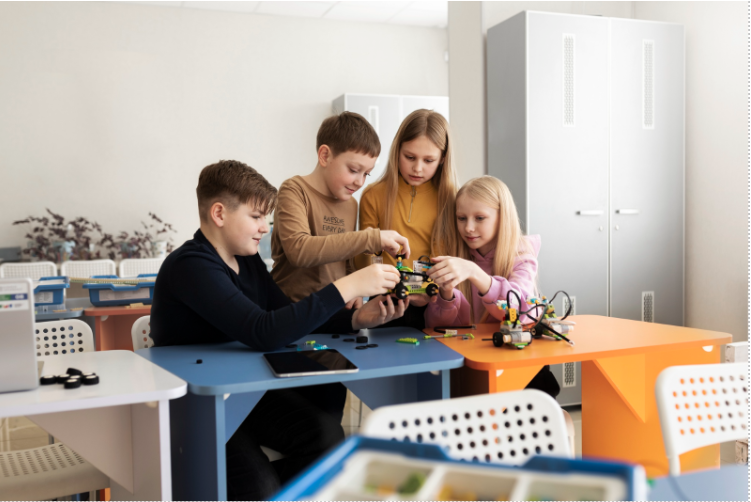
AI teacher training helps educators understand how digital tools work, identify appropriate uses and recognise their limits. In STEM education, that might mean using technology to support experimentation, visualisation, data analysis, coding or scientific investigation, but the teacher still designs the learning experience and helps students understand the concepts underneath the technology.
AI literacy becomes part of STEM teacher development
AI literacy was a major topic at the programme. Participants exchanged experience on AI and education while examining approaches to digital transformation in schools. For teachers, AI literacy means understanding what AI systems can do, where they fall short, and how to use them responsibly, knowledge that matters more as students run into AI tools in both school and everyday life.
STEM teachers can use AI-related activities to introduce students to data, algorithms, automation and computational thinking, but AI education also asks students to think critically about information technology generates. That means STEM teacher capacity building needs to cover both technical understanding and responsible use, not just the mechanics.
Digital equity matters in rural education
Digital transformation opens new opportunities, but uneven access limits who actually benefits from them. The programme examined digital equity alongside teacher capacity and AI literacy, since equity involves more than handing out devices. Students and teachers need real connectivity, learning resources, technical support and chances to build digital skills.
Rural communities benefit most when digital education strategies are designed around their actual circumstances, accounting for infrastructure limits and differences in access. That’s part of why regional exchange is useful: educators can share what worked in different contexts and think through how to adapt it elsewhere.
Sharing experiences across China and Southeast Asia
The programme brought together participants from China and Southeast Asia to trade policy approaches and school-level practices, giving educators a chance to learn from entirely different education systems. One country might have built a strong approach to teacher training; another might have real experience using digital tools in rural schools.
Sharing those experiences helps education leaders spot practices worth adapting to their own context, and it opens space to discuss shared challenges. Connectivity, teacher readiness, digital access and curriculum integration touch many education systems, even when the specifics differ.
AI-powered classrooms need human guidance
The programme included workshops on AI-powered classrooms and visits to schools and technology stakeholders in Beijing, giving participants a chance to examine practical approaches to digital learning and AI in education, while reinforcing that teachers stay central to educational transformation.
UNESCO’s regional leadership emphasised the need for human-centred, ethical and inclusive AI in education, meaning AI should support educational goals rather than become the goal itself. Teachers still decide how technology fits into a lesson, how students interact with it, and how learning gets assessed.
STEM education can benefit from digital tools
Digital technologies support STEM education in several ways. Students use simulations to visualise scientific processes, digital tools to analyse data, and programming environments to build computational thinking, with AI supporting certain activities when used well.
For rural schools, digital tools can open up resources that would otherwise be hard to reach, but how well they work depends on infrastructure, teacher preparation and whether the material is actually relevant. The China-Southeast Asia programme places digital technology inside this wider educational picture rather than treating it as a standalone fix.
Teacher collaboration can improve digital learning
Professional collaboration lets teachers share experience and learn from each other directly. During the programme, participants traded school-level practices and policy approaches tied to AI literacy, digital equity and technology in rural education.
This kind of collaboration solves practical problems. A teacher who’s successfully introduced a digital activity can walk colleagues through the process, and another teacher can adapt that approach for a setting with weaker connectivity or fewer devices, which keeps STEM teacher capacity building grounded in real classroom experience rather than theory.
Connecting schools with technology stakeholders
The programme also included interactions with schools, education institutions and technology stakeholders in Beijing, helping educators understand how digital technologies actually get developed and implemented. For STEM teachers, exposure to technology organisations offers insight into emerging tools and their potential classroom applications.
That exposure also helps bridge the gap between technology development and classroom needs. Schools can communicate what teachers and students actually require, while technology stakeholders explain what their tools can and can’t do.
Supporting inclusive technology education
Digital transformation is most useful when it expands learning opportunities rather than creating new barriers, which is why the programme focused on rural and underserved communities. Participants examined how AI, STEM education and digital tools could support communities facing real limits on access.
Inclusive technology education requires attention to infrastructure and teacher development together, along with educational content suited to different contexts and students. Teachers play a central role in making sure technology serves different learners rather than just adding more digital tools to a classroom.
Preparing teachers for changing learning environments
Teachers now work in increasingly digital learning environments, with students running into AI, online information, digital communication and automated systems both inside and outside school. Teacher education has to evolve alongside this.
The China-Southeast Asia programme focused on capacity development so educators could understand AI and STEM education in the context of ongoing digital transformation in schools. Continued professional development helps teachers keep pace with new technology without losing sight of core educational goals.
Responsible AI is part of STEM education
AI literacy also means understanding responsibility. Students need to learn that AI-generated information can require verification and that digital technologies carry real social consequences, and teachers need enough knowledge to guide those discussions well.
UNESCO’s emphasis on human-centred, ethical and inclusive AI reflects this broader approach. For STEM education, responsible technology use becomes part of scientific and digital literacy, teaching students not just how technologies work but how to evaluate their applications and limits.
From digital access to meaningful learning
Access to technology is an important starting point, but meaningful learning needs more than that. Students need relevant activities, teachers need training, schools need the right infrastructure, and education systems need policies that support sustainable implementation.
The programme brought these pieces together by discussing teacher capacity, AI literacy, digital equity and infrastructure side by side, which helps education systems avoid treating technology adoption as a one-off project rather than part of a wider effort to strengthen teaching and learning.
A regional approach to future STEM education
The China-Southeast Asia programme shows what regional collaboration can do when education systems are responding to fast-moving technological change. Participants from China and Southeast Asia traded experience and examined practical approaches to AI and digital learning together, lessons that can be adapted to very different educational contexts.
For rural schools especially, this kind of exchange helps policymakers and educators think through how to introduce technology while accounting for local infrastructure and teacher needs, which is really what AI and STEM education for rural schools comes down to.
Conclusion
The China-Southeast Asia capacity development programme shows why strengthening teachers has to go hand in hand with investment in AI, digital tools and STEM infrastructure. Its focus on rural communities draws attention to digital equity and the need to make sure technological progress actually reaches underserved learners.
The programme also reinforces the teacher’s role in meaningful digital transformation. AI and other technologies can support learning, but educators remain central to deciding how these tools get used and making sure learning stays inclusive, ethical and relevant. For STEM education broadly, this gives a useful framework for combining technology, teacher development and equitable access, with AI and STEM education for rural schools as a clear test case.
FAQs
Strengthening teacher and school-leader capacity in AI and STEM education, particularly in rural and underserved communities. Participants exchanged experience on AI literacy, digital equity and technology-supported education.
Teachers need to understand how AI tools work, where they support learning and what their limitations are. Training helps educators use technology in ways that align with learning objectives rather than using it just because it’s available.
AI and digital tools can add learning resources, support classroom activities and expose students to emerging technologies. How useful they are depends on infrastructure, teacher capacity and appropriate implementation.
Making sure learners and teachers have meaningful opportunities to access and use technology, covering infrastructure, connectivity, digital skills, learning resources and teacher support.
A human-centred approach keeps educational needs and people at the centre of technology adoption. UNESCO stressed ethical, inclusive and equitable AI while keeping teachers central to meaningful learning.