

STEM education becomes more relevant once students see scientific and technological knowledge applied to challenges beyond the classroom. A new outreach initiative in Madhya Pradesh is doing exactly that, pairing STEM disaster education with hands-on activity for school students.
The IEEE STEM Kit and Disaster Awareness Training Program 2026 was launched by the Acropolis Institute of Technology and Research, Indore, with the IEEE MP Section SIGHT Chapter. It introduces students to practical STEM learning while showing them how technology contributes to disaster response and community support. The programme began in late September and is planned as a wider outreach effort reaching schools across Madhya Pradesh.
Bringing STEM learning outside the classroom
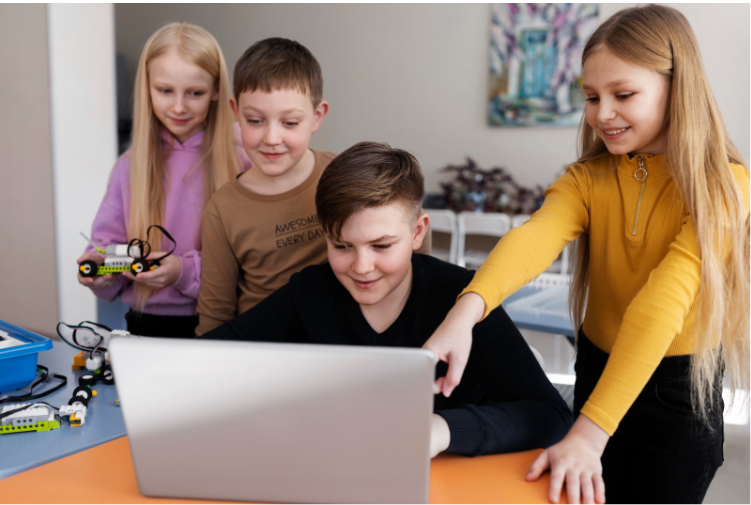
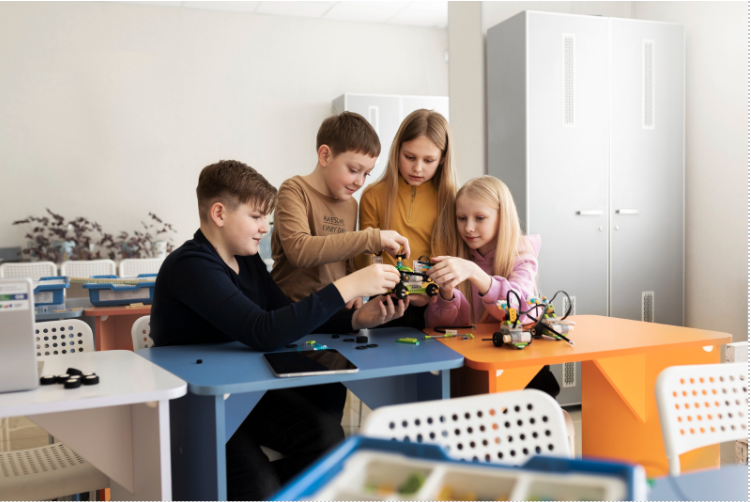
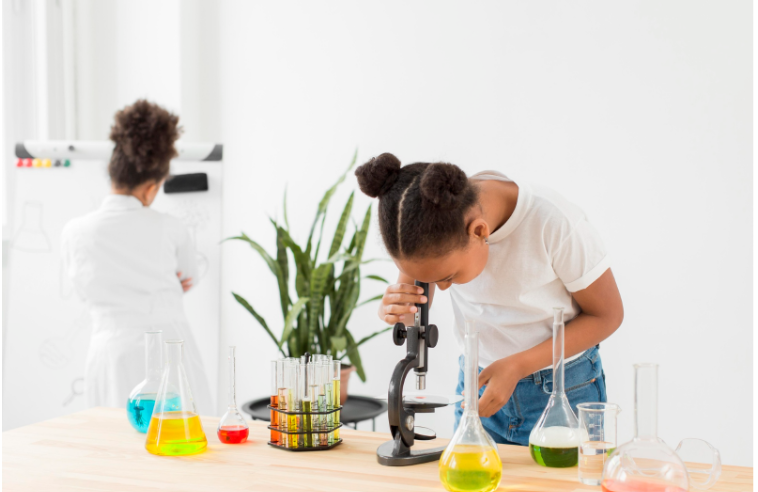
Classroom lessons introduce scientific concepts, but practical activity is where students see those concepts work in real situations. The IEEE programme uses STEM kits and hands-on experiments to give students direct contact with scientific and technological ideas, alongside discussions, quizzes and question-and-answer sessions.
That kind of learning moves students from receiving information to observing, testing and discussing it themselves. Hands-on STEM activities make abstract concepts easier to connect with everyday experience, since manipulating components and watching results unfold teaches a system more clearly than reading about it ever could. The programme pairs that practical work with discussion and reflection rather than relying on demonstration alone.
Connecting STEM with disaster awareness
One of the more distinctive parts of this STEM disaster education programme is its focus on disasters themselves. Disasters create complex challenges around communication, safety, infrastructure, environmental conditions and emergency response, and technology plays a real role in addressing several of them, which makes disaster preparedness a useful setting for STEM learning.
The IEEE programme introduces students to the use of technology in disaster response as part of its outreach, helping them see that STEM skills reach well beyond laboratories and classrooms. A lesson on sensors, communication systems or electronics connects naturally to situations where information needs to be collected or shared during an emergency, so students start to see technology as a tool for solving problems that actually affect communities.
Problem-solving is central to the programme
Problem-solving runs through the whole initiative. Activities are built to encourage critical thinking, teamwork and problem-solving alongside the practical STEM experiments, which matters because real-world STEM problems rarely have one predetermined answer.
Students examine a situation, identify what information is missing, propose possible solutions and work out how those solutions could be tested. Working in teams adds another layer: students have to explain their ideas, listen to others and figure out how different suggestions fit together. These are skills that carry across science, technology, engineering and mathematics, not just disaster-related work.
Humanitarian technology gives STEM a social purpose
IEEE SIGHT focuses on using technology to support sustainable development and work directly with communities on local challenges, and bringing that perspective into school STEM education helps students see the social purpose behind the technology they study. A solution isn’t useful just because it’s technically advanced; it needs to respond to a real need and work within the conditions of the community using it.
Disaster awareness is a practical example. Students think through how technology might support people during emergencies while weighing accessibility, reliability, communication and responsible use, connecting STEM learning with civic responsibility rather than treating it as a purely technical exercise.
Teamwork strengthens experiential learning
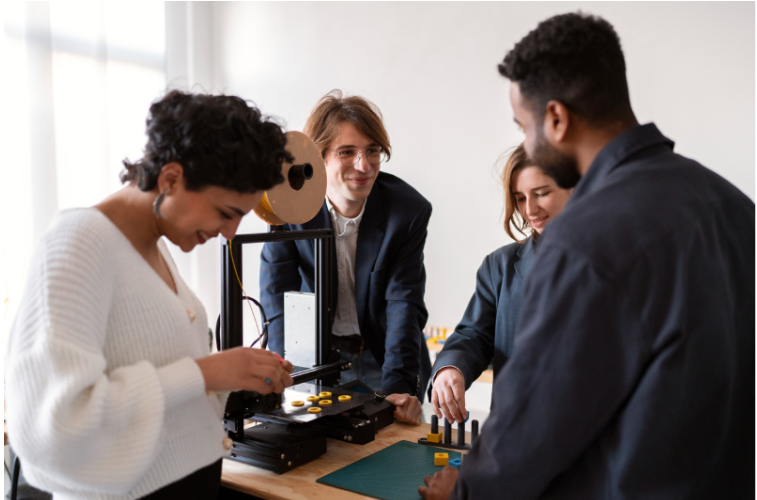
Teamwork is built into the programme’s learning activities. Team-based STEM projects show students how scientific and technological work is often collaborative: one student focuses on understanding the problem, another works on a design or experiment, a third records observations or helps communicate the group’s findings.
Working together also exposes students to different ways of approaching the same problem. They may initially disagree about the best solution, and talking it through helps them weigh the strengths and weaknesses of different approaches, which makes teamwork part of the actual learning rather than just a way to divide tasks.
Encouraging critical thinking through STEM activities
Critical thinking matters most when students face real-world challenges. A learner shouldn’t simply accept that a given technology solves a problem; they should ask how it works, what its limitations are, and how to evaluate whether it’s actually effective.
The IEEE programme pairs STEM activities with discussions and problem-solving exercises built around exactly these questions, helping students build a habit of examining evidence before drawing conclusions, and reinforcing scientific thinking in the process: considering observations, testing assumptions, revising ideas as new information comes in.
Technology can support disaster preparedness
Disaster preparedness is more than responding after something happens; it also involves planning, communication, monitoring and public awareness. STEM learning for school students in this programme introduces some of the technologies used across these areas, including sensors, electronics, data and communication systems, depending on the specific project.
The IEEE programme links STEM education directly to disaster response technology, giving students a context where technical learning connects to humanitarian need, and pushing them to think about how scientific knowledge builds community resilience.
Reaching students through school-based outreach
The initiative runs through school outreach rather than depending only on students already enrolled in specialised technology programmes. The first activity took place at the Acropolis Institute of Technology and Research in Indore, with the wider programme set to reach schools across Madhya Pradesh.
This kind of STEM outreach in India introduces hands-on STEM activities to students who might not otherwise have regular access to technology-focused projects, letting them experience STEM in a less formal setting. A single workshop or practical activity can spark questions students go on to investigate through their regular school subjects.
Connecting education with responsible citizenship
The programme also builds in awareness of responsible citizenship, tying the technical side of STEM to the responsibilities that come with using technology in society. Students learn that technological knowledge carries practical and social weight, not just technical interest.
During a disaster, communication technology can be genuinely valuable, but information also needs to be accurate and shared responsibly. That kind of learning helps students understand that STEM skills aren’t only about creating technologies; they’re about considering how those technologies affect people and communities.
STEM education and community needs
Community-based STEM learning gives students a clearer reason to build technical skills in the first place. Instead of starting with a technology and asking what it might be used for, students start with a challenge and think through what scientific or technological tools could help address it.
The IEEE programme’s disaster-response focus provides exactly this kind of context, encouraging students to think about technology from the perspective of users and communities, and introducing them to humanitarian technology for students, an area where engineering and digital tools address social and development challenges directly.
Building future STEM skills
The combination of experiments, problem-solving, teamwork and technology awareness in this programme covers several skills tied to future STEM learning. Hands-on activities let students experiment, team projects build collaboration, problem-solving tasks develop reasoning, and disaster-response scenarios supply a real-world context for all of it.
Together, these pieces create a more connected learning experience, and the programme shows how STEM outreach in India can introduce students to fields like humanitarian technology and disaster response early on.
A practical approach to STEM outreach
The IEEE initiative shows that STEM education can connect with community challenges without losing its focus on scientific and technical learning. Students work through practical experiments while also thinking about how technology contributes to disaster response, which gives their STEM learning a clear and tangible context.
It’s also a reminder that science and technology aren’t separate from society. They shape how communities prepare for challenges, respond to emergencies and develop solutions, and that’s the core idea behind this STEM disaster education programme.
Conclusion
The IEEE STEM Kit and Disaster Awareness Training Program in Madhya Pradesh combines practical STEM education with disaster awareness and humanitarian technology. Through hands-on experiments, quizzes, discussions, teamwork and problem-solving, students meet scientific and technological concepts in a real-world setting.
The programme also points to a wider role for STEM outreach in India: when students understand how technology serves community needs, they start to see scientific learning as a way of building useful solutions. By connecting experimentation with responsible citizenship and disaster preparedness, the initiative shows how STEM disaster education can extend learning well beyond conventional classroom work.
FAQs
A school outreach programme organised by the Acropolis Institute of Technology and Research, Indore, with IEEE MP Section SIGHT, combining hands-on STEM activities with disaster awareness and humanitarian technology.
Hands-on STEM kit experiments, interactive quizzes, discussions, question-and-answer sessions, problem-solving activities and teamwork, along with an introduction to the role of technology in disaster response.
Disaster response involves technologies related to communication, electronics, monitoring and data. Using disaster scenarios as learning contexts lets students explore how STEM knowledge applies to practical community challenges.
They let students interact directly with scientific and technological concepts, encouraging experimentation, observation, critical thinking and problem-solving while connecting theory with practical situations.
It’s technological knowledge applied to support communities and address social, environmental or development challenges. IEEE SIGHT’s mission includes using technology for sustainable development and working with local communities.