

Across Africa, science clubs and STEM learning are giving students a way into practical activity, teamwork and problem-solving that goes beyond what a regular classroom covers. Young learners are using these clubs to build projects that connect technology and scientific knowledge to real challenges in their own communities.
UNESCO recently spotlighted this work through the Science Club Challenge 2026, Africa Edition, recognising youth-led STEM activities and locally developed solutions tied to sustainable development. The initiative is part of UNESCO’s Global Engagement Network for Science, or GENS, which connects science clubs with expertise, mentorship and shared resources. It’s a clear example of science clubs and STEM learning working together to give students room to experiment, create and apply what they know to real problems.
Science clubs create practical STEM learning opportunities
Classroom teaching introduces students to scientific concepts, but science clubs give them extra room for experimentation and project work: investigating questions, building models, testing ideas, working together. That’s where students see science and technology applied outside a textbook.
UNESCO’s Science Club Challenge centres on activities young people build themselves. Participating clubs presented their STEM activities and solutions to sustainable development challenges, showing what STEM project-based learning looks like when students drive it rather than follow a script. Instead of running an activity purely to demonstrate a concept, students start with a problem and work toward a possible solution, which ties science learning to their own surroundings and gets them thinking about what scientific knowledge can do for their communities.
Robotics and coding introduce students to emerging technologies
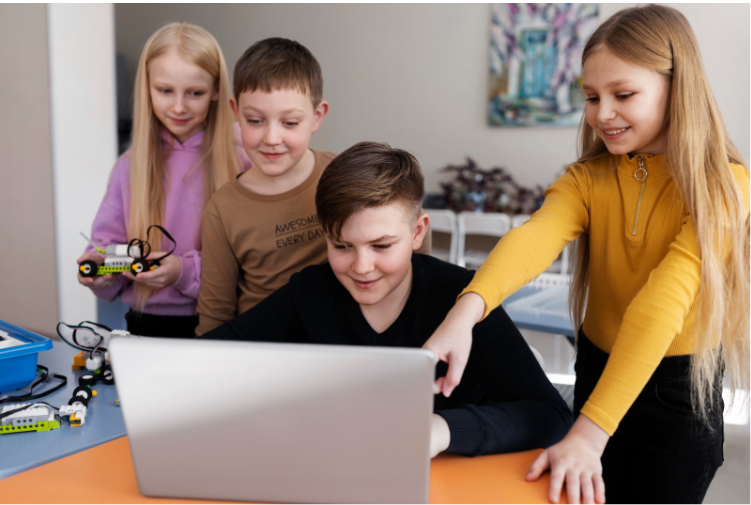
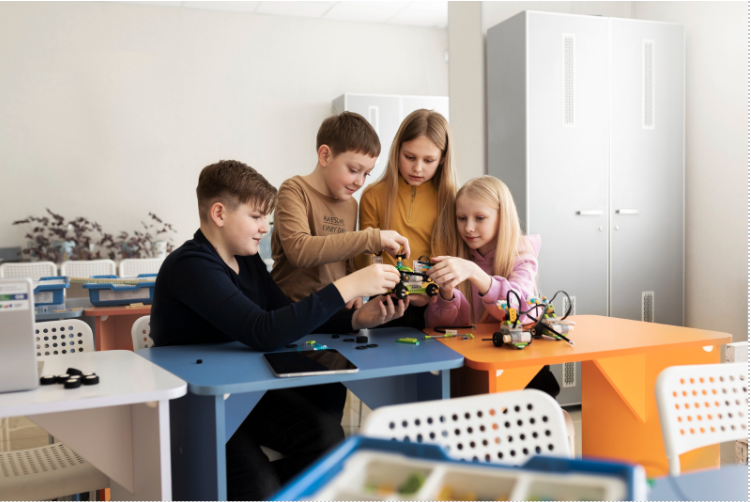
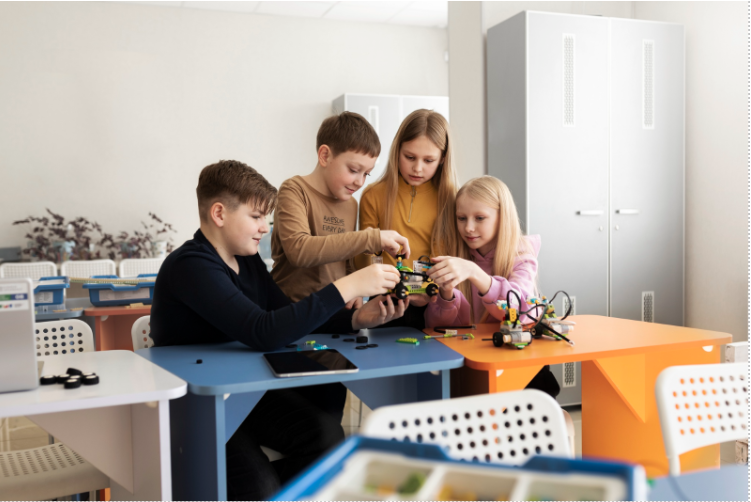
Robotics and coding education are becoming a bigger part of science-club work across several African communities. UNESCO highlighted STEM Club ESwatini, whose programme has built learning pathways through robotics, coding, artificial intelligence and engineering design, alongside leadership and character development.
Robotics pulls several strands of STEM together at once: mechanical systems, programming, sensors, movement and design, all needed to get a working project off the ground. Coding lets students translate an idea into instructions a computer or robotic system can follow, testing the code, finding problems and adjusting based on what happens. Together, robotics and coding education give students a practical way into computational thinking and engineering design.
Students develop solutions for sustainable development
The Science Club Challenge puts real weight on locally developed solutions to sustainable development challenges, pushing students to look at issues affecting their communities and think through how science and technology might help.
That widens what STEM means to a student. Science stops being just a set of academic subjects and becomes a tool for examining environmental, social and technological problems. A sustainability project might involve monitoring environmental conditions, building a technological prototype, studying resource use or improving a local process, and it pushes students to think past whether something works, toward whether it’s actually useful in a real setting.
Local problems can become STEM projects
Science clubs are good at connecting learning to local circumstances, because students already understand the challenges in their own communities, having lived through them directly. That gives project-based STEM learning a natural starting point.
A local environmental issue can become a science investigation. A transportation challenge can turn into an engineering project. A communication problem can push students toward coding or digital tools. UNESCO frames the participating clubs as developing solutions tied to sustainable development challenges rather than reproducing standard classroom experiments, which helps students see how STEM knowledge connects to everyday life.
Mentorship can strengthen science club learning
Good mentors change what a student project can become. Through the Global Engagement Network for Science, UNESCO connects science clubs with global expertise, mentorship and shared resources, helping clubs work around barriers tied to funding, infrastructure and expertise while encouraging collaboration across communities.
A mentor can help a student sharpen a research question, understand a technical concept, evaluate an experiment or improve a prototype, and can help students recognise when an idea genuinely needs to change. For teachers and science-club coordinators, a wider professional network is also a chance to trade teaching methods and project ideas with peers elsewhere.
Building connections between science clubs
GENS is built to connect science clubs to each other rather than let each one work in isolation, encouraging students, teachers, trainers and educators to trade ideas and experience across borders. A solution built in one community can spark something in another, and different communities can adapt similar STEM approaches to their own circumstances.
UNESCO’s wider science-club work includes regional networks meant to strengthen this kind of collaboration and provide steady support for hands-on science learning, which matters most for schools and clubs with limited access to specialised equipment or outside expertise.
Girls are also gaining space in STEM learning
Science-club programmes open up real space for girls to take an active part in STEM. UNESCO reported that girls made up a substantial share of the student membership across the African Science Club Challenge.
Hands-on participation gives students direct experience with technology, engineering and scientific investigation, and for girls, sustained involvement builds technical confidence and a sense that STEM is a place where they can create, lead and contribute, not just learn. The value goes beyond any one technical skill; students build teamwork, communication, creativity and problem-solving through the work itself, which is exactly what makes science clubs and STEM learning a meaningful path toward more inclusive STEM environments.
From school projects to long-term STEM interests
A science-club experience can be an early entry point into research and innovation. Students who enjoy building robots, writing code, running experiments or designing engineering solutions may carry that interest into related subjects later.
UNESCO pointed to a former STEM Club ESwatini student whose early work with the club later connected to university-level research on data-centre energy efficiency and sustainability, a good example of youth science innovation carrying forward past school. Every student’s path looks different, but examples like this show how extracurricular STEM activity can become part of a longer learning trajectory, where one project leads to another question, then a more advanced investigation, then a new interest entirely.
Making STEM education more accessible
Not every school has the same lab facilities, equipment or specialist support, and science clubs offer another route into practical STEM experience regardless. Networking makes that more sustainable, letting clubs share resources, ideas and expertise rather than build everything from scratch.
UNESCO’s GENS initiative specifically aims to strengthen these connections and open up knowledge sharing and mentorship, which matters most in communities with fewer chances to work with advanced scientific equipment or specialist educators. Accessible STEM learning doesn’t require every school to have identical facilities. It can mean adapting a project to available materials and encouraging students to investigate problems with whatever resources their environment actually has.
Science clubs can support future-ready learning
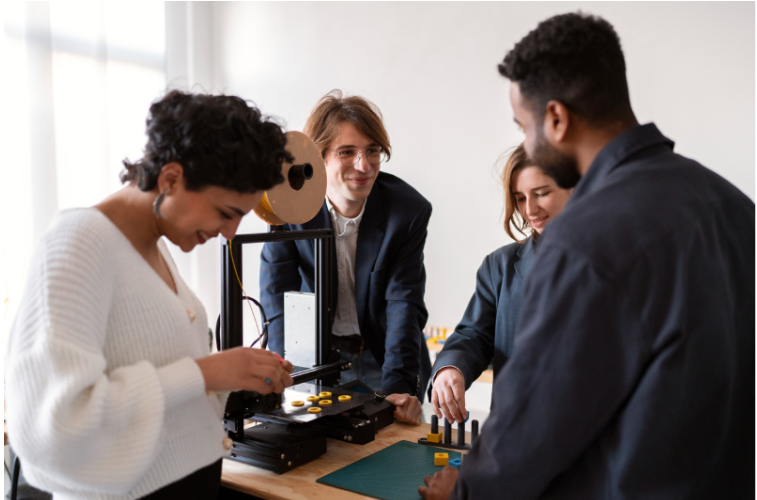
STEM increasingly crosses traditional subject lines. A student working on a robotics project might use math to calculate measurements, physics to understand movement, coding to control a system and engineering principles to improve the design, which mirrors how real-world problems get solved outside school too.
African science clubs highlighted by UNESCO work across robotics and coding education, AI and engineering design while tying projects to sustainable development, showing students how different areas of knowledge work together in practice. They also learn to approach problems through testing and revision: a first prototype might not work, and figuring out why becomes part of the learning itself.
A growing role for youth-led innovation
The African Science Club Challenge puts students at the centre of STEM activity by recognising projects young people build themselves. That shifts the student’s role: instead of only completing activities designed by adults, they contribute ideas, identify problems and build their own projects.
UNESCO’s initiative recognises science clubs already using STEM activities to tackle sustainable development challenges in their communities, a model that pushes students to see themselves as potential innovators and gives educators a chance to support curiosity instead of just delivering predetermined content.
Conclusion
The Science Club Challenge 2026, Africa Edition, shows what science clubs and STEM learning can do together: practical activity, technology and locally focused problem-solving, backed by UNESCO’s Global Engagement Network for Science and its framework for mentorship, expertise and shared resources.
Robotics, coding education, artificial intelligence and engineering give students real technical skills while they work on problems tied to their own communities, and the focus on locally developed solutions connects STEM learning to sustainability and everyday life. By giving students room to experiment, collaborate and build, science clubs and STEM learning together are becoming a meaningful part of a much wider STEM ecosystem, one built on African STEM education, sustainable STEM activities and youth science innovation.
FAQs
A UNESCO-supported initiative recognising STEM activities and locally developed solutions created by African science clubs, run as part of UNESCO’s Global Engagement Network for Science.
They give students chances to take part in practical activities across science, technology, engineering and mathematics, including robotics, coding, artificial intelligence, engineering design and projects that address local challenges.
It lets students apply concepts while investigating a problem or building a solution, supporting experimentation, collaboration, creativity, critical thinking and problem-solving, and making STEM concepts feel more relevant to everyday situations.
It connects science clubs with global expertise, mentorship and shared resources, strengthening collaboration and helping clubs work around barriers tied to infrastructure, funding and access to expertise.
Yes. Early, practical exposure to STEM subjects and emerging technologies, through robotics, coding, AI and engineering, helps students understand how these fields get applied in practice, which can build lasting interest in science and technology.