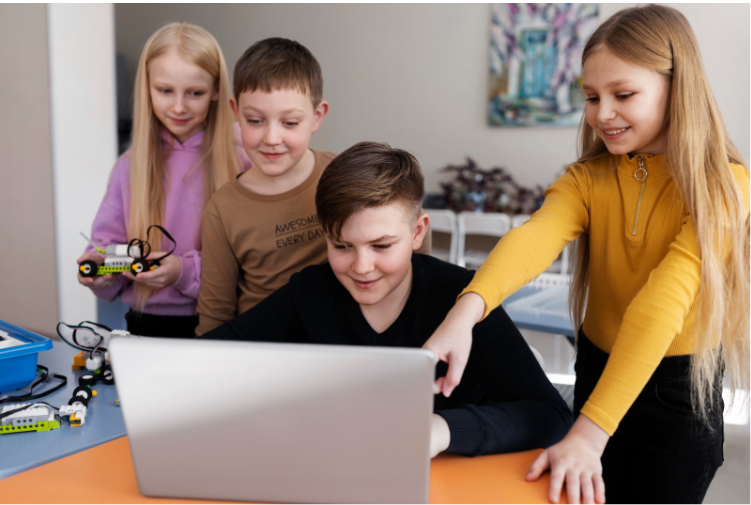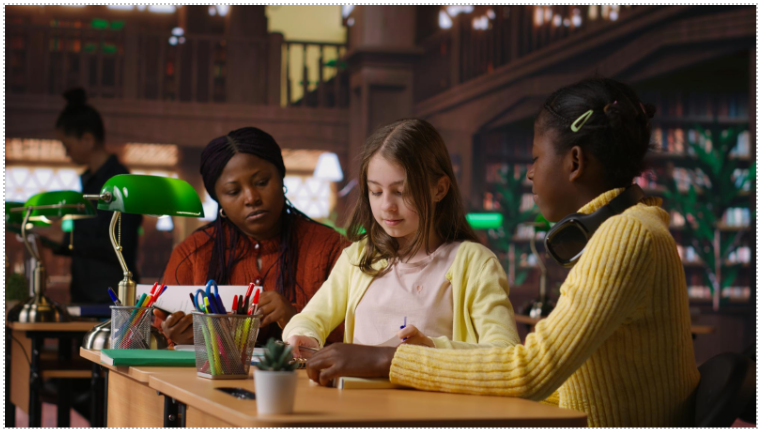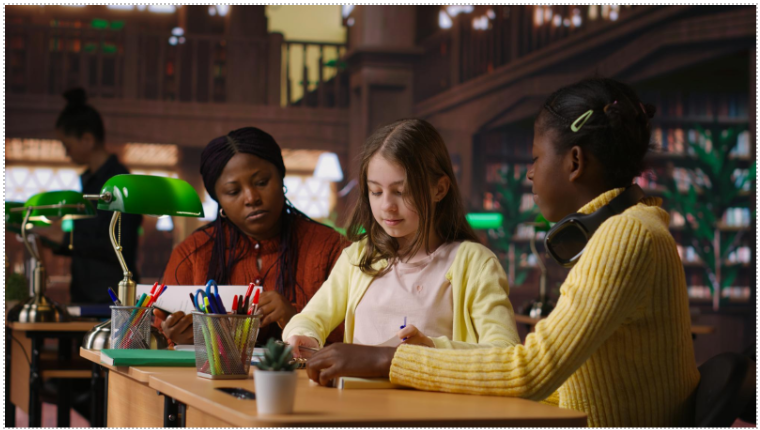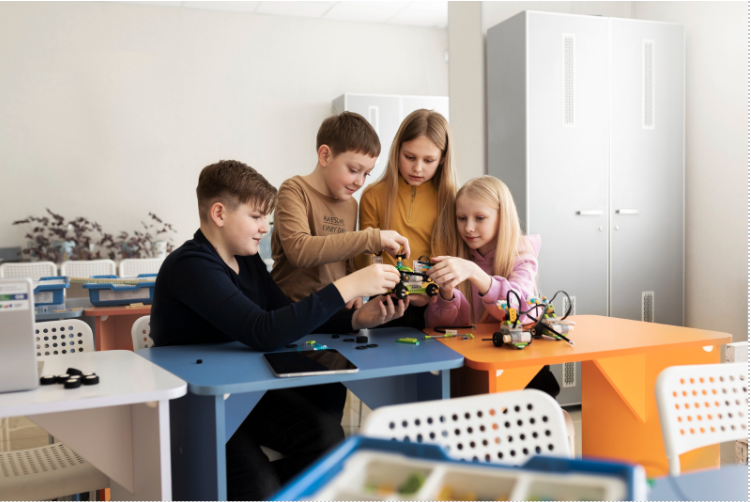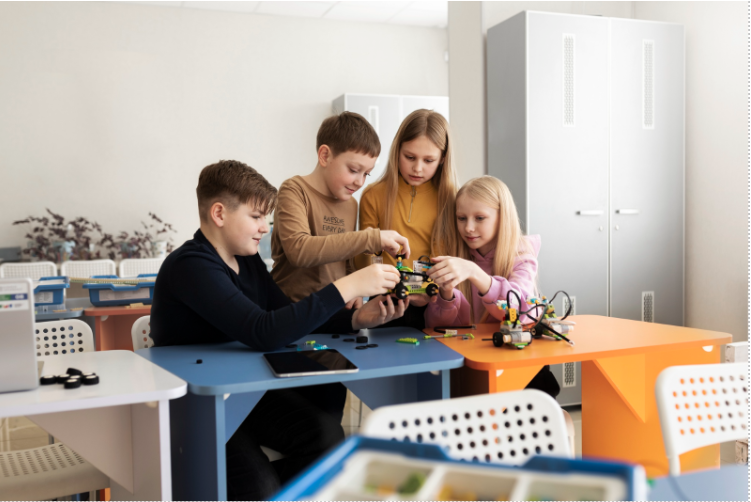


Science clubs give students room to explore ideas outside the regular classroom: experimenting, discussing questions, building projects around what actually interests them. UNESCO’s latest initiative is part of a wider push toward global science education, connecting young people internationally through shared STEM experience.
UNESCO has launched the Science Club Challenge 2026 to strengthen the long-term development and sustainability of science clubs. Participating clubs are expected to run structured science club activities and share their results with an emerging international network of young innovators and educators.
Creating spaces for student-led science
Classroom lessons follow a set curriculum; science clubs don’t have to. Science clubs for students work best when curiosity, not a fixed schedule, sets the agenda. A student into robotics might explore sensors, while one interested in environmental science might study a local ecosystem instead. The UNESCO Science Club Challenge is built around exactly this kind of work: participating clubs run STEM activities and prepare project material showing their work and their plans for the club’s future.
Strengthening international STEM learning
International STEM learning benefits when students and educators in different regions can compare notes. Two clubs working on similar problems may take very different approaches depending on their local environment, and comparing those approaches shows students that scientific problems rarely have one shape. This is what international STEM learning looks like in practice: comparing approaches instead of only reading about them, and explaining your own work to people outside your school.
Encouraging youth science innovation
Innovation doesn’t require a lab. It can start with a student noticing a problem and asking how to fix it. Youth science innovation programmes give that question structure, from researching what’s known to developing an idea and figuring out how to test it, and clubs connect students to peers and educators who can give feedback along the way. That’s close to how real youth science innovation tends to work in practice: refining an idea rather than assuming the first version will succeed.
Making science more accessible
Science clubs don’t need expensive equipment to be useful. Observation, simple experiments, coding, environmental investigation, model-building and data collection all work, and the goal stays the same: ask questions, build explanations.
Developing collaborative STEM education
Researchers rarely work alone, and group projects are where students start building the same habits: dividing responsibilities, comparing findings, arguing over different approaches. Collaborative STEM education means learning that disagreement, handled well, pushes people to look more closely at the evidence. This is what collaborative STEM education looks like day to day: explaining ideas, listening to others, and agreeing on a way forward.
Building scientific communication skills
Scientific knowledge only matters if someone can explain it. Presenting a project to classmates, writing a report, and demonstrating an experiment are the kind of science club activities that give students regular occasions for this kind of communication. The UNESCO Science Club Challenge requires a project report as part of participation, giving students a reason to document their work and reflect on what worked and what didn’t.
Connecting science with local problems
Projects that tackle real issues in a student’s own community, whether water use, agriculture, public health, energy or local environmental conditions, tend to land differently than abstract ones. They teach students that scientific solutions have to account for social and environmental context, not just the underlying science.
Supporting teachers and educators
Clubs aren’t just for students. The same flexibility that helps science clubs for students also gives teachers room to experiment with project-based and interdisciplinary approaches before bringing what works back into the classroom. An international network lets educators share resources and experience, cutting down the isolation that can come with building new science activities alone. UNESCO frames the Science Club Challenge as part of a larger effort to build a Network of Science Clubs and help them sustain themselves long-term.
Connecting formal and informal learning
Classroom lessons supply structured subject knowledge; clubs supply time to experiment and investigate. A concept from a science lesson can turn into a club project, and a club investigation can send a student back into class with new questions.
Creating a culture of curiosity
A strong science culture depends on students feeling free to ask questions that don’t fit neatly into a lesson plan: testing ideas, discussing results that didn’t go as expected, learning from attempts that failed.
Building a global science community
The development of international science club networks feeds directly into global science education, since students learn that scientific questions cross national and regional lines, whether in climate, biodiversity, health, technology or sustainable development. UNESCO’s Science Club Challenge supports that wider connection, bringing clubs and young innovators into a developing international network. That’s the promise of global science education: a global community built through local projects.
FAQs
Learning spaces where students explore scientific topics through experiments, projects, discussions and investigations, complementing classroom learning with more freedom to follow their own interests.
By giving students a place to apply scientific concepts through hands-on activities, while building problem-solving, collaboration, communication and research skills.
It gives students and educators a way to exchange ideas and approaches, and exposes learners to different perspectives while pushing them to communicate their work to wider audiences.
The UNESCO Science Club Challenge 2026 is an initiative developed with partners to support the development and sustainability of science clubs. Participating clubs run STEM activities and prepare project material for submission.
By giving students space to identify problems, develop ideas, test solutions and learn from the results, which builds curiosity and practical problem-solving.