

Career exploration does not always have to begin with a presentation about job descriptions or
a list of university courses.
At SXSW EDU 2026 in Austin, students, educators and conference attendees experienced a
very different approach.
Inside Learning Undefeated’s Breakout Box, participants entered an immersive, escape-room-style manufacturing challenge designed to introduce them to
real-world STEM skills and career pathways.
The experience forms part of Manufacture Your Path, a programme launched by Learning
Undefeated with support from the Caterpillar Foundation. The programme uses mobile labs,
game-based activities and classroom resources to bring manufacturing career exploration
directly to schools.
The initiative illustrates how game-based STEM education can make career exploration more active, social and memorable.
Turning Career Exploration Into a Challenge
The Breakout Box does not ask students to sit and listen to a description of manufacturing
careers.
Instead, participants enter a purpose-built environment and work through a simulated
manufacturing challenge.
Teams have to manage factors such as scheduling, inventory, disruptions, performance,
efficiency and quality control.
The activity requires participants to communicate, make decisions and solve problems while working towards a shared objective.
That structure changes the nature of career exploration. Students are not simply told that manufacturing requires problem-solving. They experience the problem-solving process themselves. This is one of the central strengths of game-based learning in STEM.
The Breakout Box Brings the Workplace Into School
Learning Undefeated operates a fleet of mobile STEM labs that can travel directly to schools.
The approach addresses a practical challenge faced by many educators: students may have limited opportunities to see what technical careers actually look like.
A career fair or classroom presentation can provide information, but an immersive simulation gives students something more tangible to remember. The Breakout Box uses immersive reality, light, sound, touchscreen walls, sensors and interactive gameplay to create a simulated
manufacturing environment.
For STEM career exploration, that distinction matters. Students can begin to connect technical skills with specific workplace activities rather than viewing STEM careers as distant or abstract occupations.
Manufacturing Careers Become More Visible
Manufacturing can carry outdated associations among young people.
Students may imagine repetitive factory work without seeing the technology, analytical thinking
and technical expertise involved in modern production. Manufacture Your Path was created
partly to challenge those perceptions.
The programme introduces students to manufacturing concepts while highlighting careers ranging from technical production roles to areas involving data analytics and robotics.
This is particularly relevant at a time when the US manufacturing sector is facing significant workforce needs. Career awareness therefore becomes part of workforce preparation.
Students Learn Through Collaboration
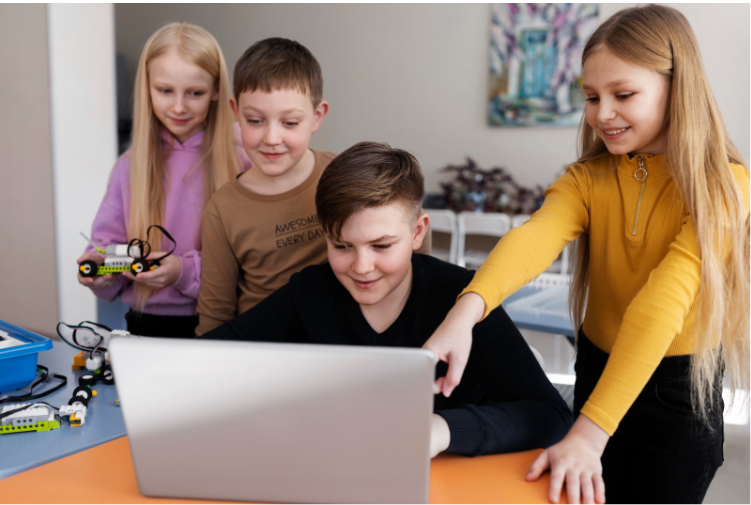
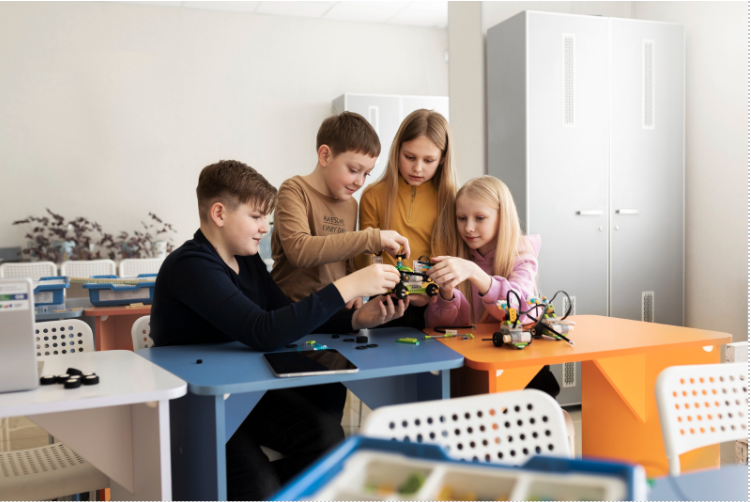
The Breakout Box is designed around teamwork.
Participants work across stations and have to communicate while responding to changing
conditions within the simulation. That makes collaboration part of the learning experience rather
than an additional lesson.
Modern STEM career readiness depends on more than technical knowledge.
Professionals frequently need to communicate decisions, work with colleagues and respond to problems that
do not have straightforward answers.
A game environment can provide a low-risk setting in which students practise those behaviours.
Failure Becomes Part of the Learning Process
Another feature of the model is the way it treats mistakes.
Learning Undefeated’s education team describes game-based experiences as environments where students can fail, try again and continue working on a problem without feeling that failure has ended the learning process.
This is particularly useful in STEM. Scientific investigation, engineering design and technical work rarely proceed perfectly on the first attempt. Students need to understand that an
unsuccessful result can provide information about what to change next.
That makes immersive STEM learning useful not only for career awareness but also for
developing a more resilient approach to problem-solving.
The mobile model allows the experience to travel from school to school, bringing hands-on STEM education to students who may not otherwise have access to specialised learning
environments.
SXSW EDU Put Game-Based STEM Education in the
Spotlight
The Breakout Box’s appearance at SXSW EDU provided an opportunity to demonstrate the
model to a wider education audience.
The event included a panel titled “Game On: Reimagining Career Exploration Through
Play”, featuring leaders from Learning Undefeated, the Caterpillar Foundation and K–12 education.
The discussion focused on how immersive and game-based experiences can make career
exploration more engaging.
The significance extends beyond manufacturing.
The underlying idea can potentially be applied to other STEM fields where students struggle to
understand what professionals actually do.
Mobile Learning Can Extend the Reach of STEM
One of the more practical aspects of Manufacture Your Path is its mobile format.
Rather than requiring every school to build a specialised facility, Learning Undefeated takes the experience to schools.
The programme also provides classroom kits, teacher training and access to career resources.
Teachers receive standards-aligned lesson plans and materials that can extend the learning beyond the Breakout Box experience.
This creates a more sustained model of career-connected learning. The immersive activity creates initial interest.
Classroom activities can reinforce the concepts. Career resources can then help students explore internships and future opportunities.
From Game to Career Awareness
The strongest argument for game-based STEM education is not simply that games make
lessons entertaining.
The real value lies in what students do while playing. They make decisions. They communicate.
They respond to problems. They see how technical concepts connect to a functioning system.
Those experiences can help students understand their own interests. A student might discover an attraction to quality control. Another might prefer maintenance, logistics, data or design.
That kind of self-discovery can make STEM career exploration more meaningful than simply
reading about occupations.
What This Means for STEM Education
The Breakout Box represents a broader movement towards career-connected STEM education.
Instead of separating academic learning from career awareness, programmes like Manufacture Your Path connect the two.
Students can encounter technical concepts while simultaneously learning about the people and professions that use them. For educators, the lesson is that career exploration does not
necessarily need to be another lecture.
It can be built into experiments, simulations, challenges and projects. When students are given the opportunity to experience STEM skills in action, they may gain a clearer understanding of
where those skills could take them.
FAQs
Game-based STEM education uses structured challenges, simulations or gameplay to teach
scientific and technical concepts while developing skills such as problem-solving,
communication and teamwork.
The Breakout Box is an immersive mobile learning environment from Learning Undefeated
that uses interactive technology and game-style challenges to introduce students to
manufacturing concepts and careers.
Manufacture Your Path is a Learning Undefeated programme supported by the Caterpillar
Foundation that provides immersive career exploration, classroom resources and hands-on
experiences focused on manufacturing careers.
Students experience technical tasks and workplace-style challenges directly, allowing them
to identify interests and understand the skills used in different STEM professions.
Hands-on experiences allow students to practise problem-solving, teamwork and
communication while connecting classroom concepts with real-world technical and professional
environments.