

Higher education is undergoing a noticeable shift in how science and technology are taught.
Across India, colleges are placing greater emphasis on practical work, emerging technologies,
research and career preparation.
The change is not simply about adding new subjects to an existing curriculum. It is about
changing what students do with what they learn. Recent developments in Indian higher
education show a move towards inquiry-led learning, AI-assisted work, real-world datasets and
undergraduate research.
At the policy level, the government has also pushed for more experiential, inquiry-driven and
multidisciplinary education. AI, data science, machine learning, robotics, cybersecurity and
quantum computing are being incorporated into technical curricula through revised AICTE
model curricula.
These developments point to five major STEM education trends that are changing the college
experience.
1. Classrooms Are Becoming More Practical
For years, one of the biggest criticisms of STEM education has been the distance between
classroom theory and practical application. Colleges are now trying to close that gap.
Instead of asking students to reproduce concepts in examinations, institutions are giving them
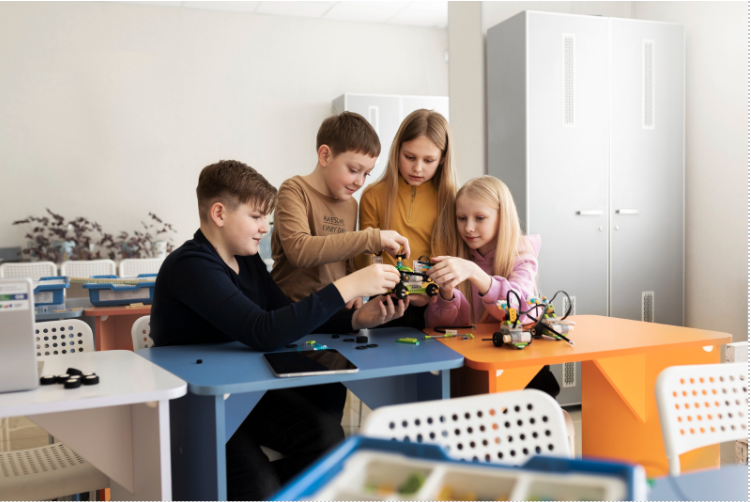
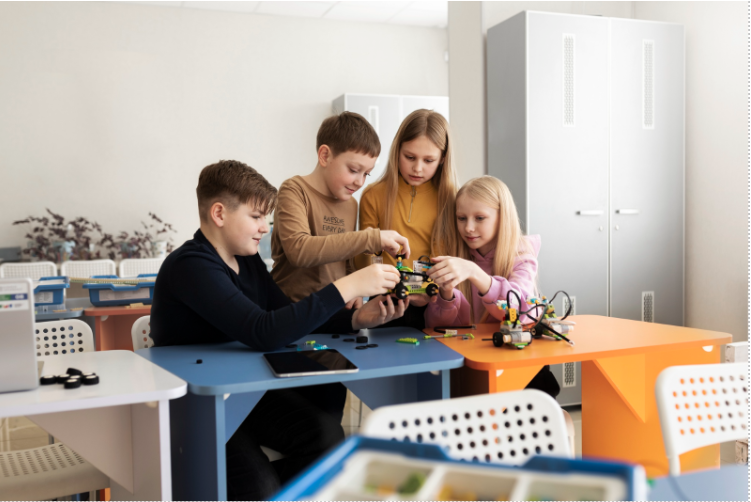
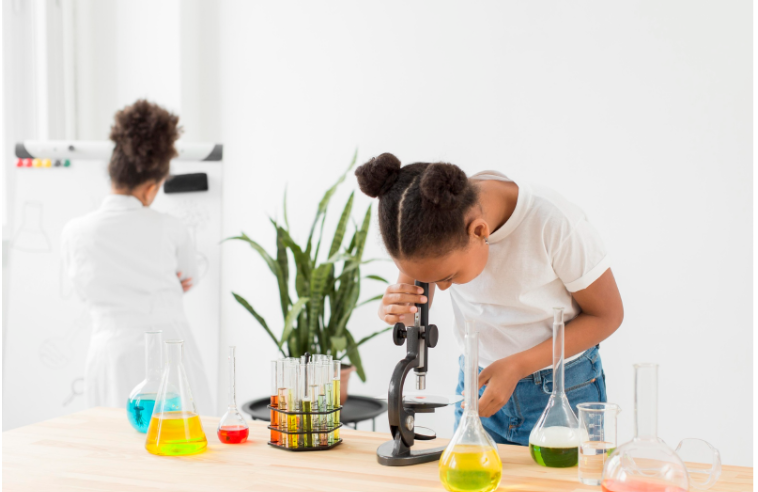
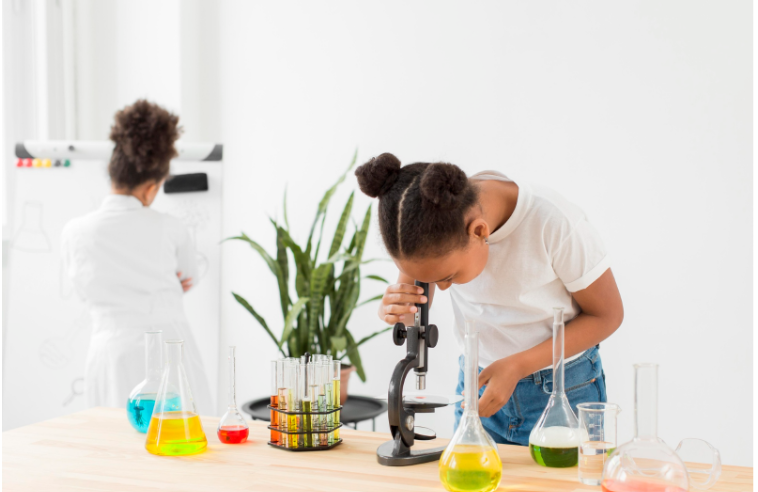
problems to investigate. Laboratory work, field studies, datasets, simulations and project-based
assignments are becoming more prominent forms of experiential STEM learning.
The shift can be seen in Indian colleges as well. Recent examples include students working with
real datasets, AI-assisted analytical tools and policy problems rather than relying entirely on
conventional assignments.
This matters because technical competence is rarely built through memorisation alone.
Students need opportunities to make decisions, encounter unexpected results and work out how
to improve their approach.
Research supports this direction. A recent study of industry-integrated project-based learning
found that combining real-world projects, industry engagement and interdisciplinary work can
strengthen students’ problem-solving, teamwork and adaptability.
That makes practical exposure an increasingly important part of STEM skills development.
2. AI Is Moving From a Specialised Subject to a Broader
Skill
Artificial intelligence is another major force behind current STEM education trends.
Colleges are no longer treating AI solely as a specialist area for computer science students.
Students across disciplines are beginning to encounter AI tools as part of research, analysis
and everyday academic work.
The approach is visible internationally. Santa Clara University, for example, introduced AI
Kitchen, a weekly workshop where students, faculty and professionals experiment with AI tools
through hands-on activities. The sessions are deliberately designed to be accessible to
participants without advanced coding experience.
India is seeing similar movement. In June 2026, UPES and Salesforce announced a
collaboration to develop a B.Tech programme focused on data science and AI-related skills,
alongside an industry-backed centre of excellence.
The implication for higher education STEM is significant. Students will need more than the
ability to operate an AI tool. They will need to understand where it is useful, question its output
and apply it appropriately within their discipline.
3. Colleges Are Bringing Industry Closer to Students
The traditional route from college to employment often involved a sharp transition. Students
learned concepts in classrooms and were expected to apply them once they entered the
workplace.
Colleges are increasingly trying to make that transition less abrupt.
Industry partnerships now appear in several forms, including internships, professional
mentoring, applied projects, certifications, guest sessions and jointly designed programmes.
A recent example is HPE’s Academic Alliance expansion across Indian universities. The
programme provides students with virtual laboratories, certifications and training in areas
including AI, cloud, networking and security.
The approach also has a research basis. A 2025 study on academic-STEM industry
partnerships noted a gap between classroom-acquired skills and workplace expectations,
particularly around adaptability, communication, project management and problem-solving.
This is why STEM career readiness is becoming a stronger consideration when colleges design
courses.
A good curriculum should not only answer the question, “What should students know?” It should
also ask, “What should students be able to do with that knowledge?”
4. STEM Education Is Becoming More Interdisciplinary
Scientific problems rarely respect departmental boundaries.
An environmental challenge might require biology, engineering, statistics and computer science.
A healthcare technology project could involve biotechnology, data analysis, electronics and
artificial intelligence.
Colleges are responding by creating more opportunities for students to work across disciplines.
This is one of the more important developments in interdisciplinary STEM education.
The Indian government’s higher education framework has also placed emphasis on
multidisciplinary education and flexible curricular structures. The latest higher education
initiatives specifically highlight experiential, inquiry-driven and learner-centred approaches.
Research points in the same direction. A 2025 review of STEM partnerships examined
hundreds of studies and programmes, finding that collaboration across educational and
community settings is increasingly being used to enrich STEM learning.
For students, interdisciplinary learning can change how they approach a problem. Instead of
looking for an answer within one subject, they learn to combine different forms of knowledge.
That is an important part of modern STEM curriculum innovation.
5. Undergraduate Students Are Getting Closer to
Research
Research is also moving further into undergraduate education.
In the past, students often encountered serious research work only during postgraduate study.
Colleges are increasingly giving undergraduates opportunities to investigate questions, work
with faculty and contribute to original projects.
Recent reporting from Indian colleges shows this transition. St. Xavier’s College, Mumbai, for
instance, has multiple recognised research centres, while undergraduate students are
increasingly involved in research and field-based work.
This can change the way students understand science.
Research does not always produce an immediate or predictable answer. Students have to deal
with incomplete information, unexpected results and the possibility that their initial assumption
may be wrong.
Those experiences build a different kind of academic confidence.
They also create a direct connection between classroom learning and STEM research,
particularly when students work with laboratories, faculty researchers or external organisations.
Why These STEM Education Trends Matter
The changes taking place across colleges point towards a broader redefinition of what a STEM
graduate should look like.
Technical knowledge remains essential. But it is increasingly being accompanied by
communication, adaptability, collaboration, research ability and digital fluency.
This is particularly important as AI and automation alter the nature of entry-level work. Recent
higher education reporting has highlighted the growing need for graduates to combine technical
qualifications with applied experience, real-world projects and industry exposure.
For colleges, the challenge is therefore not simply to modernise their syllabus.
They need to rethink how students learn.
A strong STEM program may involve lectures, but it should also give students opportunities to
build, test, analyse, research and collaborate. That combination can make higher education
more relevant to both scientific inquiry and employment.
What the Shift Means for Students
For students, these changes could make college more demanding in a productive way.
Instead of preparing only for examinations, they may have to work on longer projects, interpret
datasets, use new technologies, collaborate with students from other disciplines and explain
their findings.
That requires a different set of habits.
Students need to become comfortable with uncertainty, learn how to ask useful questions and
develop the confidence to revise their ideas when evidence points in another direction.
This is where STEM skills development becomes broader than technical training. A student who
can code but cannot communicate findings, work in a team or understand the context of a
problem may still struggle in a professional environment.
Colleges are increasingly recognising that distinction.
FAQs
Major trends include experiential learning, AI integration, industry collaboration,
interdisciplinary courses and greater undergraduate participation in research.
Experiential STEM learning involves applying concepts through experiments, projects,
fieldwork, simulations and real-world problem-solving rather than relying only on lectures.
Industry collaboration can expose students to workplace expectations, professional tools and
practical projects while helping colleges align courses with changing employment requirements.
It combines knowledge from different STEM fields to address complex problems that cannot
be effectively approached through a single discipline.
Undergraduate research gives students experience with investigation, evidence, analysis
and scientific communication while helping them understand how new knowledge is developed.