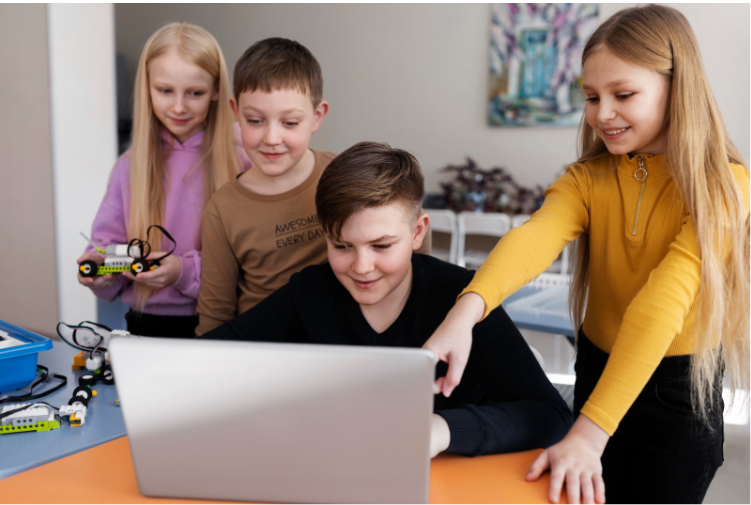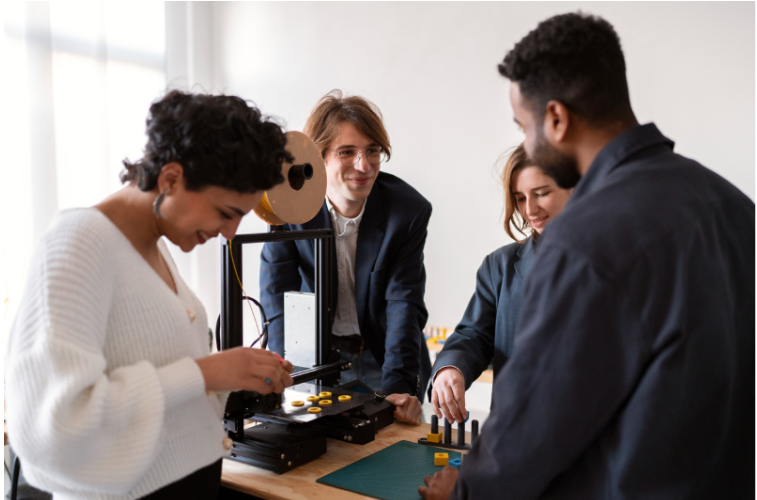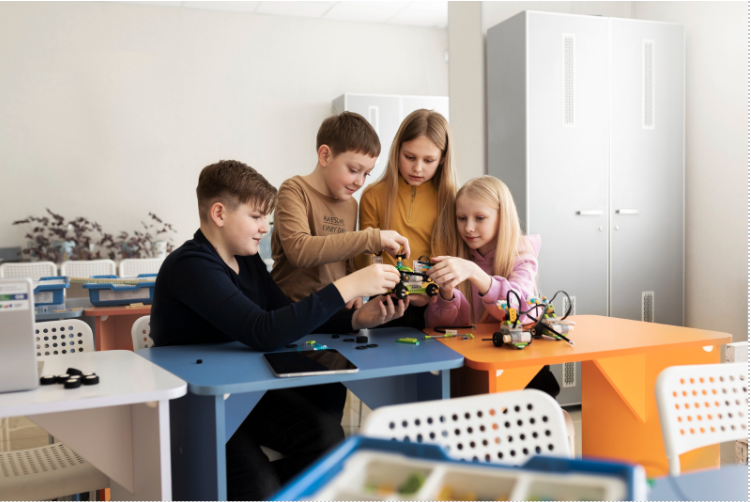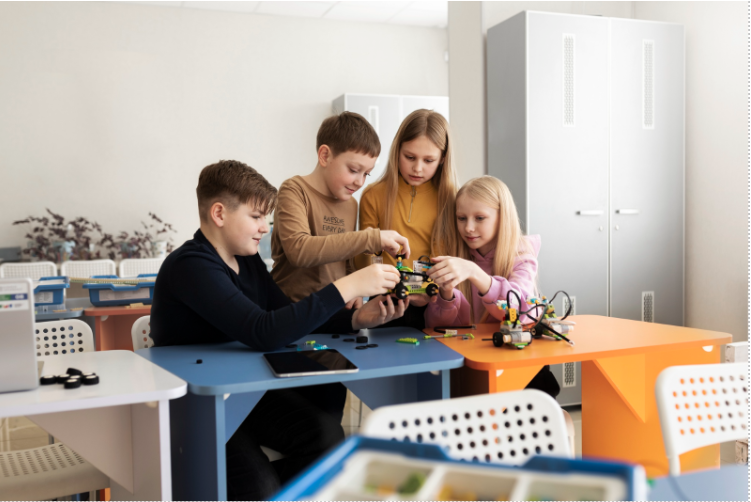


A coordinator once walked a mentor through her school’s lab, proud of the shelf lined with finished robots, every one built from the same kit, following the same manual, producing the same result. Impressive to look at.
Not research. Not even really learning past the first build.
Owning a lab and running an actual learning program are two different things, and the gap between them is exactly what determines whether STEM labs for student research live up to their name or just become expensive display cases.
What Separates a Lab From a Learning Program
This is the whole question behind STEM labs for student research: does the room actually teach, or just sit there looking capable?
A room full of equipment teaches nothing on its own. What turns STEM labs for student research into something real is a repeatable learning cycle: observe, question, plan, build or investigate, measure, analyze, improve, document, and present. Skip the observing and questioning stages, jump straight to building from a manual, and students learn to follow instructions, not to think.
Testing Ideas, Not Just Copying Demonstrations
The real value of student prototyping in STEM labs shows up when students use tools to test their own ideas rather than replicate a demo project step by step. A sensor kit used to answer “which corner of our garden dries out fastest” teaches something a kit assembled exactly per the manual never will. The tool’s identical either way. What’s different is whether a real question is driving the work, and that difference is really the entire point of STEM labs for student research.
Evidence Comes From Measurement, Not Impressions
Sensor readings, timed trials, measured comparisons- these are what turn a hunch into something checkable. A student claiming their filter “worked better” without numbers behind it has an opinion. A student showing filtered water reduced turbidity by a measured amount across five trials has evidence. School research lab activities that build this habit early, insisting on actual measurement over vague impressions, are doing the real work STEM is meant to do.
The Paper Trail That Makes Work Credible
- A lab notebook, dated and specific, is worth more than a polished final report alone.
- Photos of early, failed prototypes. Code version history showing what changed and why.
- Data tables kept as they were collected, not tidied up after the fact.
- A failure log naming what didn’t work and why. Reflection connecting the failure to what changed next.
This documentation is what separates a genuine research process from a nice-looking finished object with no visible thinking behind it, and it’s exactly what strong STEM labs for student research insist on from day one.
From Cardboard to Something That Actually Works
Strong prototyping progresses in stages.
- A cardboard model tests the basic concept cheaply.
- A functional but rough version tests whether the idea actually works at all.
- A refined version tests performance against a real, defined goal.
Each stage produces its own evidence, and skipping straight to a polished final build skips the exact iteration that makes the work worth calling research in the first place, the whole reason STEM labs for student research exist rather than just STEM labs.
Where This Crosses Subjects, Not Just Stays in Science
The strongest projects rarely sit inside one subject. A water quality study connects science, math for the data analysis, and coding for logging results automatically.
A smart irrigation build connects engineering, environmental science, and basic electronics.
A school waste audit connects social science, data literacy, and design.
Makerspace learning for students works best when it’s genuinely cross-disciplinary, not confined to whichever subject happens to own the lab period.
Which Research Method Actually Fits the Question
Not every investigation needs the same approach. Experiments suit a clear cause-and-effect question.
- Observations suit patterns unfolding over time.
- Secondary data analysis suits questions answerable through existing public datasets.
- Simulations suit questions too complex or risky to test physically.
- User testing suits design questions about whether something actually solves the problem it was built for.
Matching format to question, rather than defaulting to whatever’s on the shelf, is central to genuine STEM lab projects for students actually doing their job.
What a Teacher Should Be Doing
A teacher’s role is to ask sharper questions, set real constraints, ensure safety, and protect the student’s actual ownership of the work. Not to hand over the answer the moment a student gets stuck. Setting a tight constraint, “solve this using only what’s already on the shelf,” often produces more creative thinking than an open-ended budget ever does, a small trick that makes STEM labs for student research work harder without spending more.
Assessing the Process, Not Just the Object on the Table
- Process matters: did the student iterate based on real evidence?
- Understanding matters: can they explain why a choice was made?
- Evidence matters: is there a documented trail behind the claim?
Teamwork and explanation matter just as much as whether the final build worked. This is what genuine evidence-based STEM learning actually rewards in an assessment rubric, not a single grade for whether the prototype functioned on demo day.
From Lab Bench to Portfolio, Exhibition, or Beyond
Not every prototype needs to become a research paper, and treating that as mandatory pressures students toward weak, rushed claims. Strong lab work can become a portfolio entry, a school exhibition piece, a competition submission, or an internal research report.
For work with a genuinely original question and solid evidence behind it, moving toward a more formal, publication-ready study becomes a real option, never a default requirement for every project that comes off the shelf.
Keeping the Lab Actually in Use
A lab earns its keep through regular classes, an optional club, open access time outside scheduled periods, a smaller research cohort for advanced students, and periodic showcases.
Schools that track actual usage, activity logs, prototype evidence collected over a term, teacher confidence running sessions independently, and student progression across grades keep their STEM labs for student research from quietly turning into storage, catching underuse early, before an expensive room quietly turns into storage.
Where This Tends to Go Wrong
A handful of patterns keep showing up in STEM labs for student research that never quite reach their potential.
- Repeating the same kit build every year with no progression.
- No documentation beyond a few photos taken on exhibition day.
- A lab that looks impressive but only gets used for display, not regular class time.
- Unsafe experimentation happening because supervision didn’t scale with actual risk.
- Adults quietly completing the tricky parts of a project themselves, leaving a student with a finished object they didn’t really build.
Where Makers’ Muse Fits In
Makers’ Muse helps schools move past lab installation into working STEM labs for student research, with a learning program, curriculum, teacher guidance, project frameworks, documentation, and a real research pathway for students ready to go further. Review your lab’s current utilisation or request a complete STEM plan.
Frequently Asked Questions
A STEM lab supports student research by giving students tools to test real questions through measurement, iteration, and documentation, rather than just a space to assemble demonstration kits following a fixed manual.
A STEM project usually demonstrates a working model or applies known concepts. A research investigation follows a real question through evidence, analysis, and honest documentation of what was actually found, whether or not it matched expectations.
Students can document prototype testing through a dated lab notebook, photos of early failed versions, saved code history, raw data tables, and a failure log explaining what didn’t work and why.
Experiments, observations, secondary data analysis, simulations, and user testing all work well in a school lab, and the right one depends entirely on the specific question being investigated, not on whatever equipment happens to be available.
Teachers should assess process and iteration, understanding shown through explanation, the evidence trail behind a claim, and teamwork, not just whether the final prototype functioned correctly on presentation day.
Yes, when the work involves a genuine original question and solid documented evidence, though this should stay an optional next step for students genuinely ready, not a requirement placed on every lab project.
Schools can prevent underuse by tracking real activity logs, prototype evidence, and teacher confidence over time, and by building in regular classes, club time, and open access rather than relying on occasional showcase events alone.
A strong STEM portfolio should include the original question, documented method, raw data or measurements, photos or logs showing iteration, and honest reflection on what worked, what failed, and what would change next time.