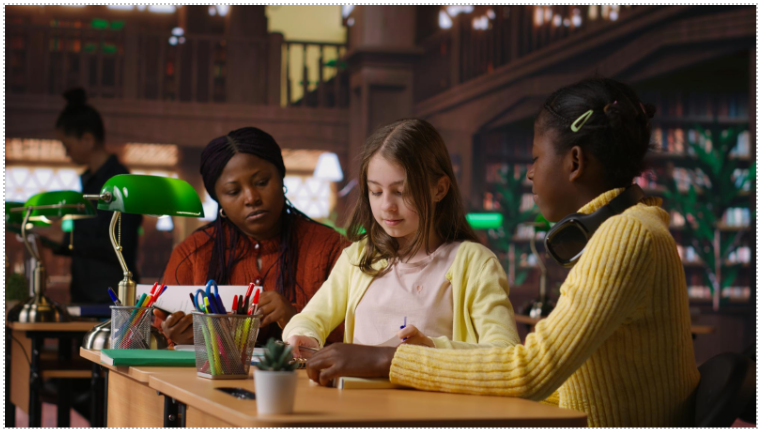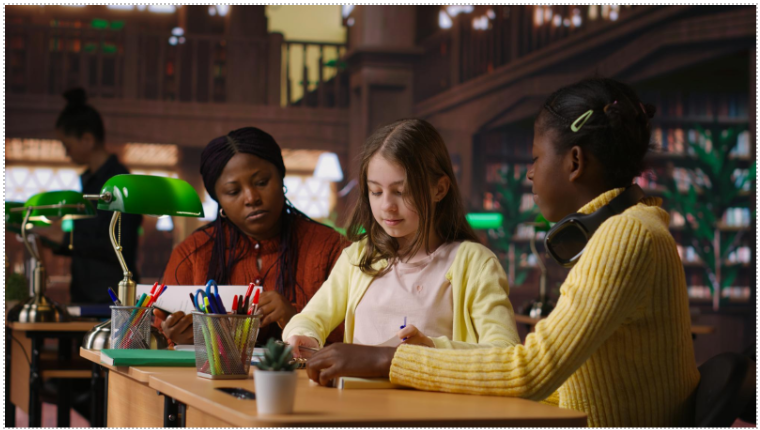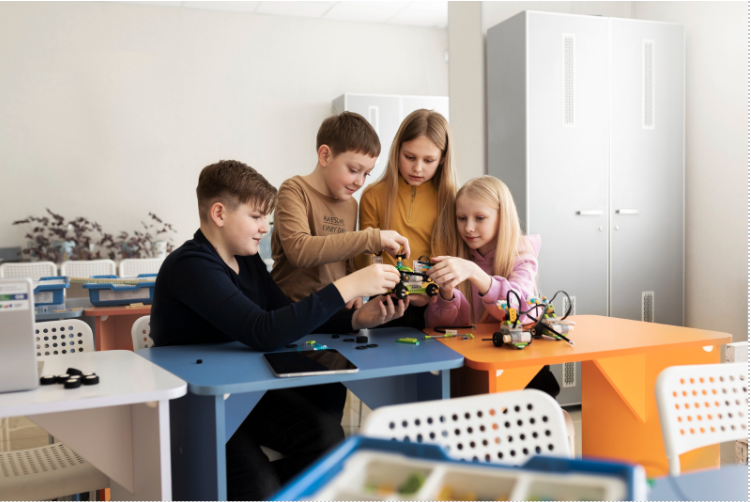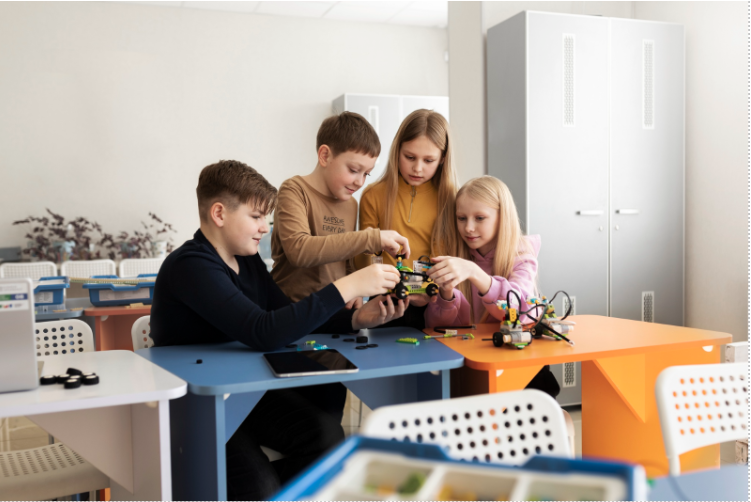


Four separate subjects taught back to back on a timetable is not STEM education for school students, whatever the label on the classroom door says. Real STEM education happens when science, technology, engineering, and mathematics get used together, inside one activity, to actually solve a problem, not four periods that happen to share a wall.
Before anything else, one must ask the question: what does “STEM education for students” really mean, in its truest sense, without the marketing terminology? This distinction becomes even more important than it seems, because it appears that many programs marketed as STEM education are actually just science classes with a coding worksheet attached to them.
What Counts as Real STEM Education for School Students
STEM education for school students is an integrated approach where students apply scientific thinking, mathematical reasoning, technology tools, and engineering design together, toward one real problem, rather than practicing each subject separately. A student measuring rainfall is doing science. A student measuring rainfall, building a simple sensor to log it automatically, calculating the average across a month, and redesigning the sensor housing after it fails in heavy rain, is doing STEM.
Six Levels of Student Work, and Why They’re Not the Same
- Demonstration. A teacher shows how something works. Students watch.
- Activity. Students follow set steps to reach a known, predetermined result.
- Project. Students build something over time, with more choice in how they get there.
- Prototype. Students design and test something meant to solve a specific problem.
- Investigation. Students explore a question without knowing the answer in advance.
- Research task. Students follow a structured process to answer an original question.
Genuine STEM learning in schools moves students up this ladder over time. A steady diet of demonstrations and activities alone rarely builds the greater skills STEM is actually meant to develop.
Why a Worksheet Isn’t Inquiry, Even a Good One
Hand a class a worksheet with clear steps and a known answer at the end, and most students will finish it correctly. They’ll also forget most of it by next month, because following instructions isn’t the same as actually thinking through a problem.
Project-based learning replaces the traditional worksheet with an actual task that has no single dependable way to finish. Inquiry replaces project-based learning. Whereas project-based learning starts off with a question everybody in the classroom knows how to answer, inquiry starts from a question that no one has the answer to and lets the evidence do the talking instead of the teacher teaching what’s already been taught at the start of the class.
Design thinking is the process to follow in inquiry. The processes involved in the three concepts do not conceptually cross each other. Stacked together, they’re the difference between hands-on STEM education and a class that’s just hands-on, with nothing deeper happening underneath.
STEM Education for School Students at Different Ages
- Primary. Answering what is STEM education for students at this age looks like exploring cause and effect through simple building and testing, a paper bridge tested with weights, a shadow tracked across a day. The science and math stay basic, but the design cycle- build, test, improve- starts here.
- Middle. Students take on more defined problems with real variables to manage, a water filter compared across different materials, a simple app built to solve one clear task. Data starts getting recorded and compared, not just observed.
- Secondary. Students handle genuinely open-ended problems close to real research, sensor-based systems, small-scale environmental studies, and computational models. This is also the stage where STEM work most naturally connects into formal student research.
What Students Actually Walk Away With
The core STEM skills for students that this approach is meant to build show up across several areas at once, not in a single subject:
- Curiosity and problem solving. Approaching an unfamiliar problem without needing to be told the answer first.
- Data literacy. This is one of the more overlooked STEM skills for students: reading, interpreting, and questioning numbers rather than accepting them at face value.
- Computational thinking. Breaking a large problem into smaller, manageable steps.
- Creativity within constraints. Designing a real solution inside real limits of time, material, and budget.
- Collaboration and communication. Among the STEM skills for students that transfer furthest, this one shows up constantly: working through disagreement in a team and explaining a decision clearly to someone outside it.
- Reflection. Being able to explain honestly what didn’t work and why, not just what did.
The Teacher’s Job: Structure Without Handing Over the Answer
A teacher’s role in strong STEM learning in schools is to set boundaries, define the problem clearly, set the timeframe, and provide the right tools, without pre-solving the problem for students. Give too little structure, and students flounder without direction. Give too much, and the “solution” becomes the teacher’s, not the students’. The actual skill sits in the middle, guiding without solving.
What Assessment Should Actually Look At
Assessing STEM work well means looking past whether the final prototype worked perfectly.
- Process matters: did the student iterate based on real evidence?
- Understanding matters: can the student explain why a choice was made, not just what was built?
- Documentation matters: is there a record showing the thinking behind the work, not just the finished object?
Teamwork and communication matter just as much as the physical result sitting on the table at the end.
Failure Is Not the Opposite of Learning Here
A prototype that fails on the first test isn’t a bad outcome. It’s often the most useful moment in the whole project. Iteration. Trying something, seeing it fail, adjusting, trying again, is where most of the actual learning happens, not in the version that worked on the first attempt. Documenting that failed attempt honestly, and explaining what it revealed, matters as much as the eventual working version.
From Classroom STEM Into Independent Research
Strong STEM education for school students doesn’t stop at the classroom door. The same skills- asking a real question, testing an idea, analyzing results honestly- extend naturally into independent student research, competition entries, and portfolio work once a student is ready for more sustained, self-directed projects.
Four Things Parents Get Told That Just Aren’t True
- “You need expensive kits to do this properly.” No, mostly not. Cardboard, a handful of basic sensors, and free software cover the vast majority of genuine STEM learning out there. What separates a strong programme from a weak one was never the price tag; it was always the structure behind it.
- “Every activity has to involve coding.” It doesn’t. Plenty of serious STEM work, testing a structure’s load limits, comparing materials for a filter, never touches a line of code and still teaches everything this article’s been describing.
- “This is really for the future engineers, not everyone.” The skills underneath- working through an unfamiliar problem, reading data honestly, explaining a decision to someone who disagrees- are useful in careers that have nothing to do with engineering at all.
- “A project isn’t successful unless it works perfectly.” Actually, the opposite is often closer to true. A polished result that worked on the first try teaches less than a rough one that failed twice and got fixed both times.
What Actually Separates a Real Program From a Marketing Pitch
Be sure to ascertain certain factors before registering a school for any program featuring the term STEM in its title.
- Does the program enhance what students are learning in their class or does it function as an unrelated extra activity?
- Are past unsuccessful projects of the student available for viewing, not just the final output?
- Is the assessment method more focused on the learning process rather than just the final product?
- Can the teacher or mentor articulate their own role in the process?
If a program cannot satisfy these simple questions, it might not be what it seems.
A programme that can’t answer those four cleanly probably isn’t doing what it claims to be doing.
Where Makers’ Muse Fits In
Makers’ Muse helps schools connect actual curriculum concepts to guided, hands-on projects, using accessible tools and visible, documented student outcomes rather than isolated single-day activities. If your school wants an approach for STEM education for school students built around real learning evidence, request a customised STEM program or book a conversation with our team.
Frequently Asked Questions
Combining science, technology, engineering, and mathematics inside one real activity, not teaching them as four separate classes that happen to share a subject label. That combination is the whole definition of STEM education for school students.
No, and that’s a common misreading. A traditional lesson teaches a concept and checks whether it stuck. STEM learning throws several subjects at one open-ended problem together, with real iteration built into how it unfolds, not tacked on at the end.
The real benefits of STEM education for students rarely show up on day one, but they build steadily: sharper problem solving, better instincts for reading and questioning data, the ability to break a big, messy problem into steps that are actually manageable, and comfort designing inside real constraints rather than unlimited ones.
Younger than most people assume. Simple building and testing activities work fine in primary school, and the complexity climbs naturally through middle and secondary as students take on problems with fewer guardrails.
Not even close. Testing water filters, comparing building materials, measuring structural load- none of that touches code, and all of it still teaches exactly what STEM is meant to teach.
Look at process, not just the finished object. Can a student explain why they made a specific choice? Is there documentation showing the thinking, not just the result? Those signals matter more than whether the final prototype looked impressive.
Yes, directly. The core moves from forming a real question, testing it, and reading the results. This is exactly what independent research asks for later, just at a more sustained, self-directed scale.
Check whether it ties into the actual curriculum or floats separately from it, whether failed early attempts are visible alongside the polished result, and whether the mentor describes their job as guiding rather than solving things for the student.