 Written by
Laiba Arif
·
Written by
Laiba Arif
·
STEM Education: Why Every Makers' Muse Project Must Solve a Real Problem - And What That Teaches Students
In STEM education, the strongest projects are the ones that begin with a real problem. Makers’ Muse builds learning around that idea because students learn more when they are creating something meant to solve, explain, or improve something in the world around them.
That approach changes the entire experience. Instead of treating STEM as a set of activities, students begin to see it as a process: identify a need, design a solution, test the idea, and improve the result. That is the kind of learning that builds confidence, curiosity, and practical skill in STEM education.
Real Problems Change How Students Learn
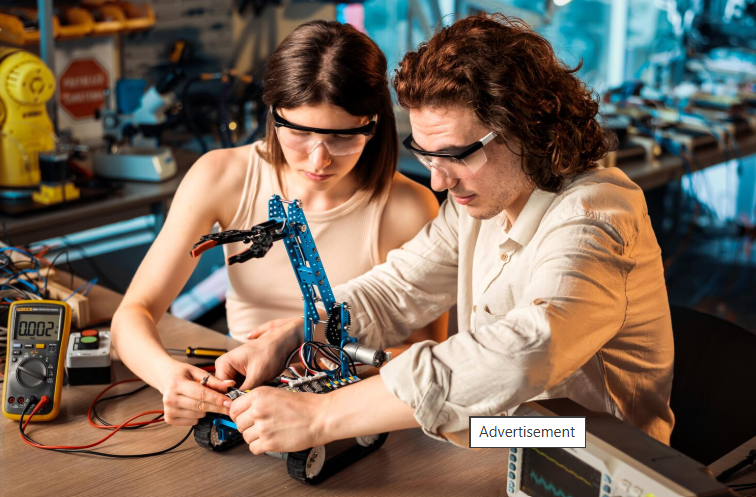
When a project is tied to a real problem, students think differently. They stop asking only, “What do I build?” and start asking, “What should this solve?” That shift matters because it pushes them into observation, analysis, and decision-making.
This is the core advantage of STEM education when it is done well. Students are not just making things. They are learning how to approach problems with structure and confidence.
| Project Type | What Students Learn |
| Kit assembly only | Following instructions and basic completion. |
| Problem-based project | Observation, design, testing, and improvement. |
| Real-world challenge | Critical thinking, collaboration, and purpose-driven building. |
The Makers' Muse Method
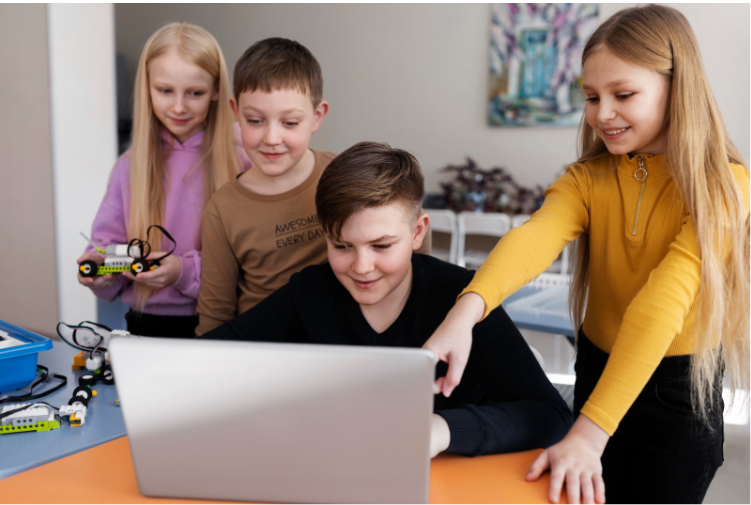
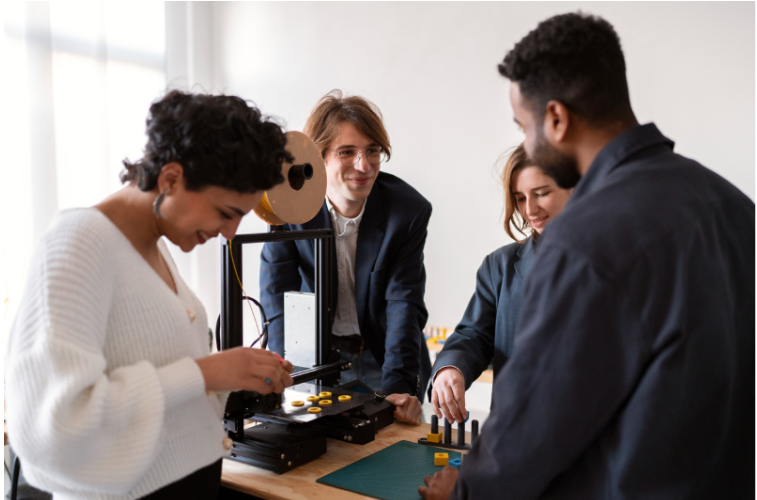
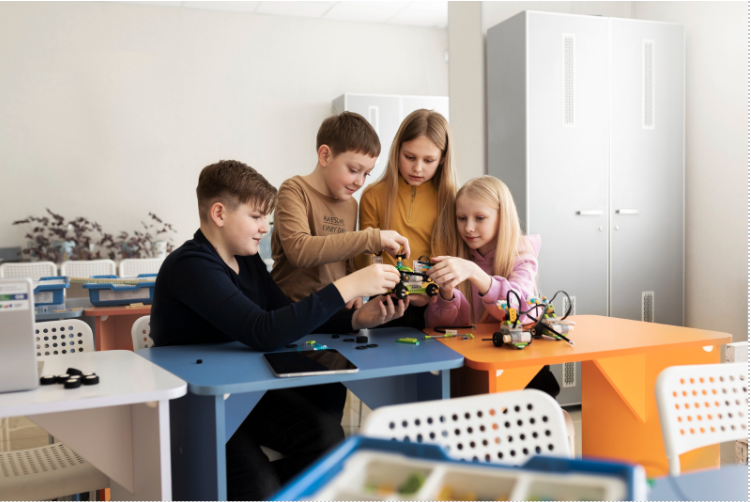
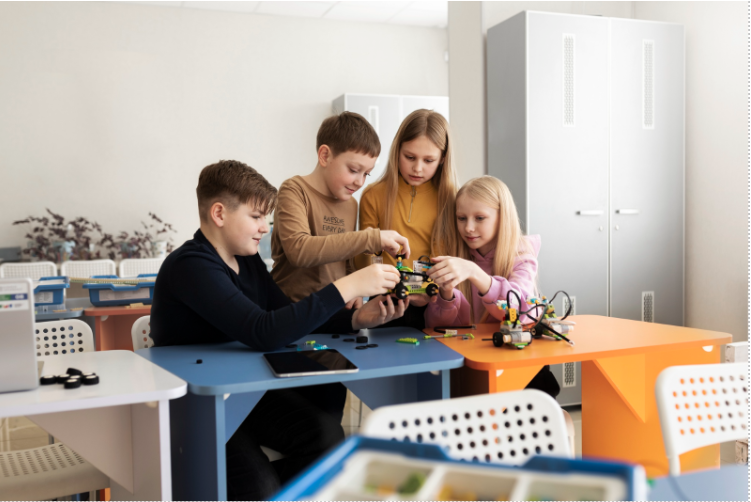
Makers’ Muse uses project-based learning as a central part of its model. Students move through a simple but powerful journey: idea, plan, build, and impact. That structure helps them understand that good projects are not random; they are intentional.
A robot that follows a line is not just a robot. It is a lesson in control, sensing, and logic. A smart home model is not just a classroom craft. It is an exercise in automation, systems thinking, and function. In STEM education, this kind of framing turns a project into a learning experience with depth.
What Students Gain with STEM Projects
The biggest lesson is not technical. It is mental. Students learn to observe carefully, make choices, test ideas, and revise their work when something does not go as planned. Some habits matter far beyond a single class. In STEM education, they shape how students approach future learning, teamwork, and problem-solving in any subject.
| Skill Built | Why It Matters |
| Observation | Helps students notice what needs improvement. |
| Planning | Teaches them to think before building. |
| Testing | Shows that good ideas need proof. |
| Iteration | Normalises failure as part of progress. |
| Communication | Helps students explain what they built and why. |
Fun Needs Purpose
Students enjoy making things, but fun alone is not enough. A project can be lively and still be shallow. Makers’ Muse avoids that trap by making sure every project has a reason to exist.
If the project is only fun, the student may enjoy the task but forget it later. If the project solves a problem, the student connects learning to purpose and remembers the process. This is why STEM education is most effective when it blends engagement with meaning. The excitement keeps students involved, and the problem gives the activity weight.
| Grade Band | Example Focus |
| Lower Primary | Simple movement and cause-and-effect builds. |
| Primary | Motion, mechanics, and basic robotics challenges. |
| Upper Primary | Sensor-based logic and guided problem-solving. |
| Secondary | Automation, systems, and real-world applications. |
What Schools Benefit from STEM Education
Schools benefit when students work on meaningful projects. The results are easier to show, easier to explain, and easier to connect to school goals. A project with a purpose gives parents and teachers something concrete to recognise. Many schools use STEM education as a bridge between classroom theory and real-world problems.
| School Benefit | What It Means |
| Visible outcomes | Students produce work they can explain and demonstrate. |
| Better engagement | Students are more invested when the task has purpose. |
| Stronger reputation | The school is seen as future-focused and practical. |
| Teacher confidence | Teachers can connect projects to broader learning goals. |
The Larger Lesson
Every real problem teaches students that technology is not magic. It is a tool. And like any tool, it becomes powerful when it is used with intention. That is one of the most important lessons STEM education can offer.
Students learn that:
- Problems are worth studying.
- Solutions need testing.
- Failure is part of the process.
- Good ideas improve through iteration.
- Technology can serve a real need.
Those ideas prepare students for more than exams. They prepare them for the world.
Why Makers' Muse Focuses on Purpose
Makers’ Muse believes that students learn best when their projects matter. That is why the platform keeps problem-solving at the centre of its STEM work. It is not about building for the sake of building. It is about creating with intention. That philosophy gives STEM education greater depth, because students leave with more than an object. They leave with a mindset.
| Makers' Muse Approach | Student Outcome |
| Problem-first projects | Deeper thinking and stronger design. |
| Hands-on making | Better understanding through action. |
| Guided iteration | Confidence to improve and retry. |
| Real-world connection | Learning that feels useful and lasting. |
Conclusion
A project that solves a real problem teaches more than a project that simply looks impressive. It teaches students how to think, how to adapt, and how to turn an idea into something useful. That is why every Makers’ Muse project should solve a real problem.
In the end, that is what STEM education is meant to do: help students become creators who can improve the world around them, one solution at a time.