 Written by
Laiba Arif
·
Written by
Laiba Arif
·
Top 10 STEM Projects School Students India with Real Outcomes
Today’s students are building obstacle-avoiding robots, designing smart sanitisers, programming calculators, and even creating assistive devices for visually impaired people. That shift matters because STEM education is no longer just about marks. It is about solving real-world problems with creativity, coding, electronics, and engineering.
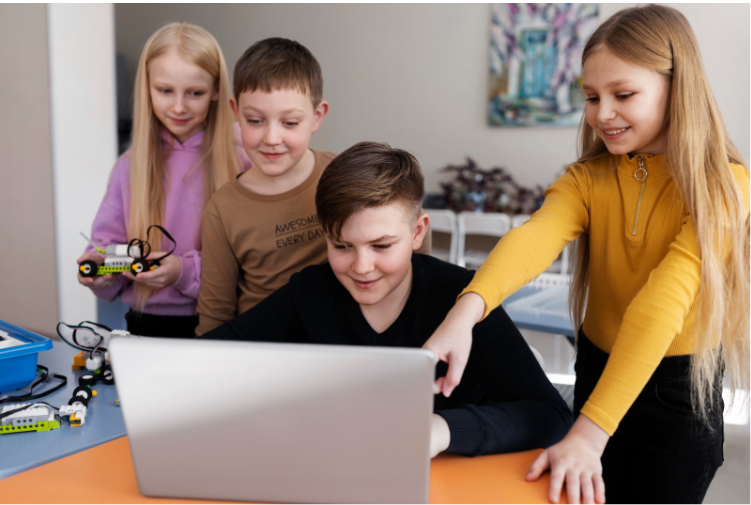
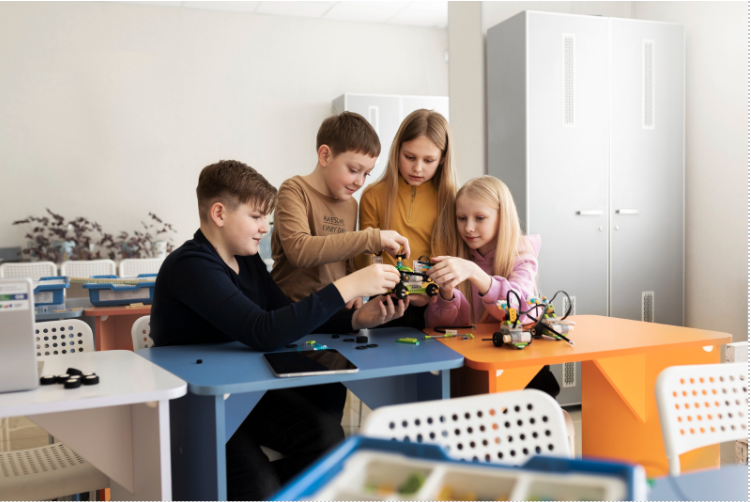
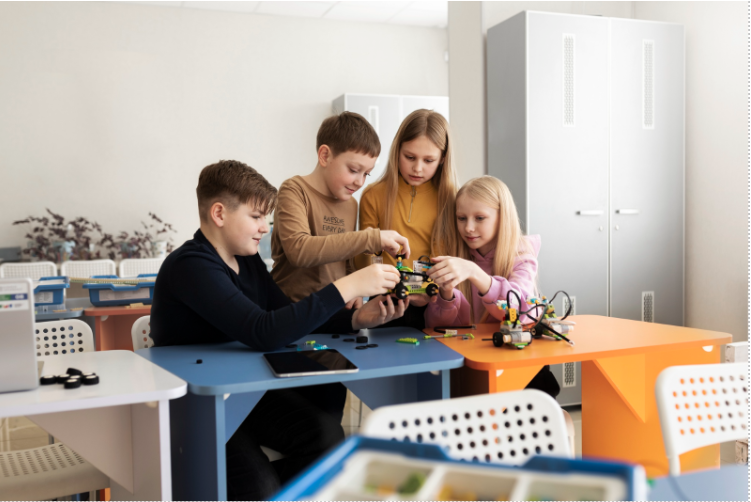
At Makers’ Muse, students work on hands-on STEM activities using Arduino, sensors, robotics kits, and IoT-based systems that align with school learning while preparing them for future careers. Their programs focus on coding, robotics, AI, and maker-based learning for Grades 1-12.
For students in Classes 8-10, project-based learning is often where confidence grows fastest. A single working prototype can teach programming, circuit design, teamwork, problem-solving, and presentation skills all at once.

Top 10 STEM Projects School Students India
Here are 10 practical STEM projects school students India can build, inspired by real Makers’ Muse classroom projects and student activities.
1. Indoor Obstacle Avoiding Robot
One of the best beginner robotics projects for secondary school students is an obstacle-avoiding robot. Using ultrasonic sensors, Arduino boards, motors, and wheels, students can build a robot that detects objects and changes direction automatically.
This project introduces students to:
- Arduino programming
- Sensor integration
- Distance measurement
- Motor control
- Logical decision-making
At Makers’ Muse, obstacle-avoiding robots are often used as an introduction to autonomous systems and robotics thinking. The project gives students a strong foundation for future robotics competitions and automation-based ideas.
Real Outcome: Students learn how machines “sense” their surroundings. Many later expand on the same concept to develop smart vehicles, delivery bots, or warehouse automation models.
2. Mini Smart Home System
Smart homes are no longer futuristic. Students can now build miniature versions using LEDs, sensors, relays, and Arduino-based automation systems.
A mini smart home project may include:
- Automatic room lights
- Motion detection
- Smart door systems
- Temperature monitoring
- Voice-controlled modules
This type of STEM project helps students understand the Internet of Things (IoT), which is becoming one of the fastest-growing technology sectors globally.
Real Outcome: Students understand how automation works in real homes and offices. They also learn how electronics and software interact in everyday life.
3. Automatic Door System
The automatic door project featured in Makers’ Muse activities uses motion-detection sensors to open a door when someone approaches.
The project typically includes:
- Arduino Uno
- Servo motor
- Ultrasonic sensor
- Breadboard and jumper wires
Students write Arduino code that triggers the servo motor whenever movement is detected.
This project introduces students to:
- Coding logic
- Motion sensing
- Automation systems
- Mechanical movement
Real Outcome: Students understand how malls, elevators, airports, and smart buildings automate movement systems.
4. Blind Stick for Visually Impaired People
Among the most meaningful STEM projects school students India can build is the smart blind stick. This project uses ultrasonic sensors and buzzers to alert users when obstacles are nearby. It combines empathy with engineering and teaches students how technology can solve social challenges.
Students work with:
- Distance sensors
- Buzzers
- Embedded programming
- Portable circuit design
Makers’ Muse highlights real-world STEM applications through such socially impactful models.
Real Outcome: Students begin thinking like innovators instead of only learners.
5. Automatic Hand Sanitizer Machine
This became one of the most popular student projects after the pandemic. The system detects hand movement and automatically dispenses sanitizer without touch.
The project introduces:
- Infrared sensors
- DC motors
- Hygiene automation
- Real-world electronics
Why Students Love It: The project is practical, easy to demonstrate, and immediately relatable.
Real Outcome: Students see how STEM directly impacts public health and safety systems.
6. Breath Analyzer System
The breath analyzer project uses gas sensors to measure alcohol levels in breath samples.
This project teaches students about:
- Chemical sensing
- Data reading
- Safety technologies
- Calibration systems
Students also understand how real traffic safety systems work.
Real Outcome: Students learn how engineering and public safety intersect in industries like transportation and law enforcement.
7. Automatic Shelter for Weather Protection
This project automatically closes a shelter or roof system during rain or harsh weather using sensors and motors.
It introduces students to:
- Weather sensing
- Automation logic
- Mechanical systems
- Environmental technology
Real Outcome: Students begin understanding smart infrastructure systems used in agriculture, stadiums, and modern architecture.
8. Arduino Calculator
The Arduino calculator project combines coding and electronics into a functional computing device.
Students build a calculator using:
- LCD display
- Keypad module
- Arduino board
- Embedded code
This project is excellent for strengthening logical thinking and debugging skills.
Real Outcome: Students understand how simple computing devices process inputs and generate outputs.
9. Robotic Arm
Robotic arms are among the most exciting STEM builds for Class 9 and 10 students. Using servo motors and programmable controls, students can design a working robotic manipulator.
Skills Developed:
- Mechanical engineering basics
- Servo motor control
- Programming precision movement
- Robotics coordination
Real Outcome: Students get exposure to industrial robotics concepts used in manufacturing and healthcare.
10. Robo Soccer Challenge
Robo soccer projects combine competition, teamwork, coding, and robotics into one engaging activity.
Students build robots capable of:
- Movement control
- Ball tracking
- Directional programming
- Team coordination
Competitions like these encourage innovation under pressure and improve communication skills.
Real Outcome: Students experience collaborative engineering and competitive problem-solving similar to real robotics leagues.
Importance of STEM Projects
Hands-on STEM learning helps students retain concepts better than passive memorization. Research on project-based STEM education shows that designing and building technical models improves creativity, interdisciplinary learning, and real-world problem-solving skills.
Projects like these help students:
- Develop critical thinking
- Learn teamwork
- Improve coding confidence
- Build presentation skills
- Explore engineering careers early
Most importantly, they make learning exciting.
How Makers’ Muse Helps Students Build Real STEM Skills
Makers’ Muse focuses on hands-on STEM education through robotics, coding, AI, electronics, and innovation labs. Their programs are curriculum-aligned and designed to help students move from theory to practical application.
Students get opportunities to:
- Build real working prototypes
- Learn Arduino and IoT systems
- Participate in competitions
- Explore AI and robotics
- Develop future-ready skills
From smart automation systems to socially impactful innovations, these STEM projects school students India can build are shaping a generation of creators, innovators, and problem-solvers instead of passive learners.
The future of education belongs to students who can think, build, test, fail, improve, and innovate. STEM projects are where that journey begins.