 Written by
Laiba Arif
·
Written by
Laiba Arif
·
STEM Enabled School: Parents on What Changed After Makers’ Muse - “He Stayed Up Late to Finish His Prototype”
“He stayed up late to finish his prototype.”
That is how one parent described what changed after their child joined Makers’ Muse in a STEM enabled school.
Not higher marks. Not more homework completed on time. But something far more telling, a shift in intent. A student who once needed reminders to study was now choosing to keep working, voluntarily, because the work finally felt meaningful.
This is the difference most parents struggle to articulate. The transformation is not loud or immediate. It shows up in behaviour. In curiosity. In the way a child starts thinking.
And at the centre of that change is not just curriculum or infrastructure. It is the right SES Programme.
Changes Parents, Principals, and Teachers Noticed in a STEM Enabled School
One of the earliest changes parents report is a shift in attitude. Before joining Makers’ Muse programs, many students treated STEM tasks as something to finish quickly. A checklist. A submission requirement.
After exposure to structured learning experiences like Live Projects and the Young Research Scholar Program (YSRP), that mindset begins to change.
Students start:
- Repeating experiments without being asked
- Fixing errors instead of ignoring them
- Asking what went wrong, instead of giving up
- Spending extra time improving their own work
The change is subtle at first. But it builds quickly. Eventually, learning stops being an obligation and becomes more like exploration.
A Different Kind of Student Transformation Begins
One of the earliest changes parents report is a shift in attitude. Before joining Makers’ Muse programs, many students treated STEM tasks as something to finish quickly. A checklist. A submission requirement.
After exposure to structured learning experiences like Live Projects and the Young Research Scholar Program (YSRP), that mindset begins to change.
Students start:
- Repeating experiments without being asked
- Fixing errors instead of ignoring them
- Asking what went wrong, instead of giving up
- Spending extra time improving their own work
The change is subtle at first. But it builds quickly. Eventually, learning stops being an obligation and becomes more like exploration.
How Live Projects and Workshops Change Student Behaviour
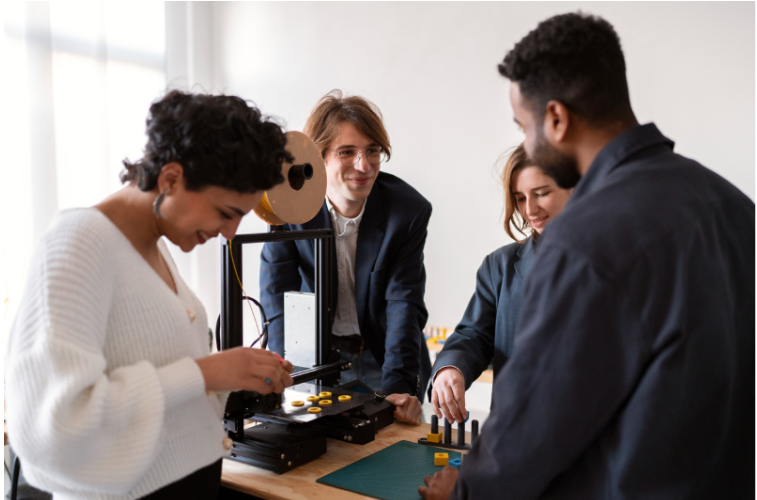
The Live Projects and Workshops at Makers’ Muse is built on one principle: students learn best when they are actively creating. Mentors structure the experience so that students move through stages of thinking rather than just execution.
A typical learning flow looks like this:
- A concept is introduced, but not fully explained
- Students are asked what they already know
- Real-world questions are posed to trigger thinking
- Students attempt solutions in small groups
- Mentors intervene only to guide, not to solve
- Outputs are tested, and errors are analysed
What changes here is subtle but powerful.
Students stop waiting for the “right answer.” They start forming their own.
From Questions to Working Systems
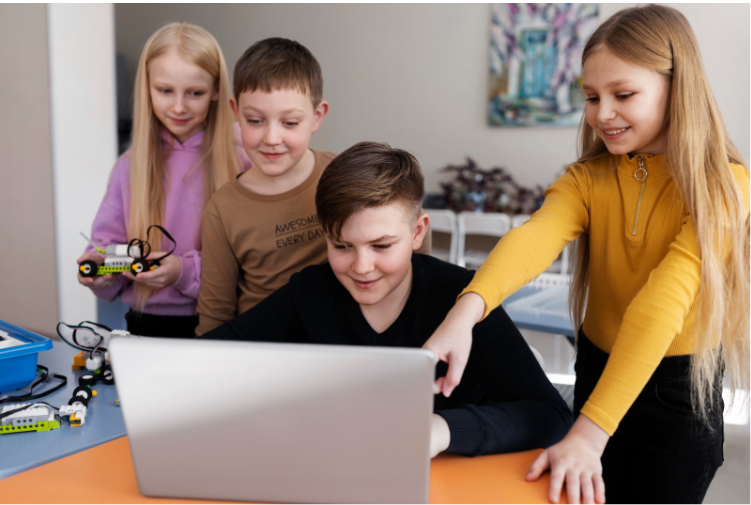
One of the most visible changes in students comes through the kind of projects they build. These are not textbook exercises. They are real systems designed to solve real problems:
- Cleaning Bot
- Flood Rescue Bot
- Fire Fighter Drone
- Robo Foresta Guard
- Bluetooth-Controlled Car
- Line Follower Robot
At first glance, these look like impressive outcomes. But the real transformation lies in how students get there.
Mentors do not build these projects for students. They guide them through decisions:
- What components are needed?
- How should the system respond to input?
- What happens when the prototype fails?
Students are encouraged to experiment, fail, and iterate. That process builds something far more important than a finished project. It builds problem-solving instinct.
From Linear Answers to Trial and Exploration
Traditional learning often trains students to find the correct answer. But in project-based environments, there is rarely one correct path.
Students begin to learn that:
- Multiple solutions can exist for one problem
- Failure is part of progress, not the end of it
- Observation is more important than guessing
- Improvement comes from testing, not memorising
This shift is most visible during group activities and build sessions where students are expected to test, reflect, and rebuild.
How YSRP Transforms Academic Direction
The Young Scholars Research Program (YSRP) takes the same curiosity-driven approach and applies it to academic research. Instead of building prototypes alone, students are guided to:
- Ask research-level questions
- Study existing academic work
- Design their own methodology
- Analyse real data
- Write structured research papers
The transformation here is deeper.
Students stop asking, “What is the answer?” and start asking, “What is not known yet?”
The 8-Stage Research Journey
Each stage of YSRP is mentor-driven, ensuring students do not get lost in complexity.
Stage 1: Interest Mapping
Mentors help students identify what genuinely interests them, not what looks impressive on paper.
Stage 2: Research Question Framing
Students learn to convert broad ideas into specific, researchable questions.
Stage 3: Literature Review
Mentors teach students how to read academic papers and identify knowledge gaps.
Stage 4: Methodology Design
Students design how they will test or validate their ideas.
Stage 5: Research Execution
The actual work begins, whether it is coding, experiments, or surveys.
Stage 6: Data Analysis
Students interpret findings using structured tools and reasoning.
Stage 7: Paper Writing
Mentors guide students through academic writing, section by section.
Stage 8: Review and Submission
The final output is prepared for real academic submission.
By the end of this journey, students do not just complete a project. They produce a research paper that reflects independent thinking.
Students Start Thinking Like Researchers
As students engage with structured programs like the Young Scholars Research Program (YSRP) at Makers’ Muse, the change goes far beyond learning a process. It gradually reshapes how they think, observe, and make sense of the world around them.
Students begin to shift away from simply completing projects toward understanding the problem behind the project itself. Instead of focusing only on “what to build,” they start asking “why this problem exists” and “what could be done differently.”
- They become more attentive to gaps in everyday systems, noticing details and inefficiencies that were earlier ignored.
- Their thinking becomes less dependent on fixed answers and more open to exploration, where multiple approaches are considered and tested mentally before execution.
- They also start drawing connections between different domains, linking scientific concepts with real-life applications, data with reasoning, and observation with analysis.
Learning stops feeling isolated by subject and starts becoming interconnected. At this point, science is no longer treated as information to remember. It begins to feel like something they can actively engage with and contribute to through their own thinking.
Even before they complete a formal research paper, a clear transformation becomes visible in their mindset. They start framing better questions, driven by curiosity, observation, and a growing ability to think beyond the obvious.
Conclusion
The transformation seen in students through Live Projects, STEM Enabled School (SES) programmes, and the Young Scholars Research Program (YSRP) at Makers’ Muse goes far beyond classroom learning. From building robots and solving real-world engineering problems to developing structured research papers, students gradually shift from passive learners to active problem-solvers.
What begins as guided projects evolves into independent thinking, persistence, and curiosity-driven exploration. Over time, students stop focusing only on completing tasks and start focusing on improving outcomes. This change is reflected consistently in homes and schools, where parents, teachers, and principals observe stronger engagement, deeper curiosity, and more responsible learning behaviour.